Have you ever seen a plant with so many different looks? Some are tiny. Others are huge. We are talking about begonia flowers! The diversity of begonia flowers is amazing. They come in all shapes, sizes, and colors. It is like a rainbow in the plant world.
Begonias are not just pretty faces. These plants have a lot of stories to tell. They grow in many places around the world. You can find them in rainforests and even in your grandma’s garden. Each type of begonia has its own special way of living.
Have you ever wondered why there are so many kinds? It is all about how they adapt to their homes. Some like the sun. Others prefer the shade. This helps create the wonderful diversity of begonia flowers we see today. Let’s learn more about these amazing plants.
Key Takeaways
- The diversity of begonia flowers includes thousands of unique species worldwide.
- Begonias are popular for their varied leaf shapes, colors, and flower types.
- These plants thrive in different environments, from tropical to subtropical regions.
- Begonias are easy to grow indoors, making them a favorite for home gardens.
- Understanding begonia care helps in appreciating their beauty and longevity.

Exploring the Diversity of Begonia Flowers
Begonias are a group of plants that belong to the Begoniaceae family. There are over 1,800 different species of begonias! This makes them one of the largest groups of flowering plants. The diversity of begonia flowers is truly incredible. They can be found in many parts of the world. These include tropical and subtropical regions. You can spot them in Africa, Asia, and the Americas. Each type of begonia has its own unique look and needs. Some have big, showy flowers. Others have interesting leaves. Some are easy to grow. Others need a lot of care. People love them because they add beauty to gardens and homes. Begonias come in many colors like red, pink, white, and yellow. Their leaves can be green, bronze, or even silver. The diversity of begonia flowers makes them a favorite among plant lovers.
- Begonias have over 1,800 different species.
- They grow in tropical and subtropical areas.
- Begonias have various flower colors and leaf shapes.
- Some begonias are easy to grow indoors.
- They are popular for gardens and homes.
Begonias are not just pretty to look at. They also play an important role in their ecosystems. In the wild, they provide food and shelter for animals. Their flowers attract pollinators like bees and butterflies. These pollinators help the plants reproduce. Begonias also help to keep the soil healthy. Their roots prevent soil erosion. They also add nutrients to the soil as they decompose. People have also used begonias for medicinal purposes. In some cultures, they are used to treat skin problems and other ailments. The diversity of begonia flowers means they have many different uses. They are a valuable part of our natural world. Whether you are a gardener or just enjoy nature, begonias have something to offer. They are a reminder of the beauty and complexity of the plant kingdom.
Fun Fact or Stat: The American Begonia Society recognizes 12 different classifications of begonias!
What Makes Begonias So Diverse?
Have you ever wondered why there are so many different types of begonias? The answer lies in their ability to adapt. Begonias have evolved to survive in many different environments. Some grow in rainforests with high humidity. Others grow in drier areas with less water. This has led to the diversity of begonia flowers. Plants that live in shady areas often have larger leaves. This helps them capture more sunlight. Those in sunny areas may have smaller, thicker leaves. This helps them conserve water. The shape and size of their flowers also vary. Some have large, showy flowers to attract pollinators. Others have smaller, less noticeable flowers. Their roots also differ. Some have shallow roots that spread out. Others have deep roots that anchor them to the ground. All these adaptations contribute to the incredible diversity of begonia flowers.
How Do Begonias Adapt to Their Environments?
Imagine you are a plant living in a rainforest. It is hot and humid, and there is a lot of rain. You need to find a way to survive in this environment. Begonias have developed several ways to do this. Some have leaves with drip tips. These tips help water run off the leaves quickly. This prevents the leaves from rotting in the wet conditions. Others have special hairs on their leaves. These hairs help to trap moisture from the air. This is especially useful in dry environments. The diversity of begonia flowers also includes variations in their stems. Some have thick, fleshy stems that store water. Others have thin, flexible stems that can bend in the wind. These adaptations allow begonias to thrive in many different conditions. They are a testament to the power of evolution.
Can Begonias Grow in Different Climates?
Begonias are known for their adaptability. They can grow in a wide range of climates. However, they do have some preferences. Most begonias prefer warm temperatures and high humidity. They do not like frost or extreme heat. Some varieties are more tolerant of cold than others. These are often grown as annuals in colder climates. This means they are planted in the spring and die in the fall. Other types of begonias can be grown indoors year-round. These are often kept in pots or hanging baskets. The diversity of begonia flowers means there is a begonia for almost every climate. With the right care, you can enjoy these beautiful plants no matter where you live. Just remember to protect them from extreme temperatures and provide them with plenty of moisture.

Classifying the Different Types of Begonias
With over 1,800 species, it can be hard to keep track of all the different types of begonias. Scientists have classified them into several groups based on their growth habits and characteristics. These include cane-like, rhizomatous, tuberous, and semperflorens begonias. Cane-like begonias have upright stems that look like bamboo. Rhizomatous begonias have thick, creeping stems called rhizomes. Tuberous begonias grow from underground tubers. Semperflorens begonias are also known as wax begonias. They are popular for their continuous blooming. Each group has its own unique features. Cane-like begonias can grow quite tall. Rhizomatous begonias are known for their interesting leaf patterns. Tuberous begonias produce large, showy flowers. Semperflorens begonias are easy to grow and maintain. Understanding these classifications can help you choose the right begonia for your garden or home. The diversity of begonia flowers is reflected in these different categories. They show how varied and adaptable these plants can be.
- Cane-like begonias have upright, bamboo-like stems.
- Rhizomatous begonias have creeping rhizomes.
- Tuberous begonias grow from underground tubers.
- Semperflorens begonias bloom continuously.
- Each group has unique characteristics and needs.
Classifying begonias is not just for scientists. It can also be helpful for gardeners. By knowing which group a begonia belongs to, you can better understand its needs. For example, tuberous begonias need a period of dormancy in the winter. This means they need to be stored in a cool, dry place. Rhizomatous begonias, on the other hand, do not need a dormancy period. They can be grown year-round. Understanding these differences can help you provide the best care for your begonias. This will result in healthier, happier plants. The diversity of begonia flowers is a testament to the power of adaptation. Each type of begonia has evolved to thrive in its own unique environment. By learning about these different types, you can appreciate the incredible variety of the plant kingdom.
Fun Fact or Stat: Some begonia species are native to only one specific location on Earth!
What are Cane-Like Begonias?
Imagine a plant that looks like bamboo but has beautiful flowers. That is a cane-like begonia! These begonias have tall, upright stems that resemble bamboo canes. They can grow quite tall, sometimes reaching several feet in height. Cane-like begonias are known for their elegant appearance. They often have large, showy flowers that come in a variety of colors. These include pink, red, and white. Their leaves can also be quite striking. Some have spotted leaves, while others have deeply lobed leaves. Cane-like begonias are relatively easy to grow. They prefer bright, indirect light and well-drained soil. They also need regular watering, but be careful not to overwater them. The diversity of begonia flowers is clearly seen in this group. They are a popular choice for gardeners who want to add a touch of elegance to their homes.
What are Rhizomatous Begonias?
Have you ever seen a plant with a thick, creeping stem that grows along the surface of the soil? That is a rhizomatous begonia! These begonias have rhizomes, which are modified stems that grow horizontally. Rhizomes store water and nutrients, which helps the plant survive in dry conditions. Rhizomatous begonias are known for their interesting leaf patterns. Some have leaves that are covered in tiny hairs. Others have leaves that are deeply textured. The diversity of begonia flowers is evident in the variety of leaf shapes and colors. Rhizomatous begonias are relatively easy to care for. They prefer bright, indirect light and well-drained soil. They also need regular watering, but be careful not to let the soil get too wet. They are a great choice for gardeners who want to add some texture to their gardens.
What are Tuberous Begonias?
Imagine a plant that grows from an underground tuber. That is a tuberous begonia! These begonias are known for their large, showy flowers. The flowers come in a wide range of colors, including red, pink, orange, yellow, and white. Tuberous begonias are popular for their long blooming season. They can bloom from spring to fall, providing a continuous display of color. However, they do require a bit more care than other types of begonias. They need a period of dormancy in the winter. During this time, the tubers should be stored in a cool, dry place. The diversity of begonia flowers is on full display in the tuberous group. They are a favorite for gardeners who want to make a statement with their flowers.

Understanding Begonia Flower Colors and Forms
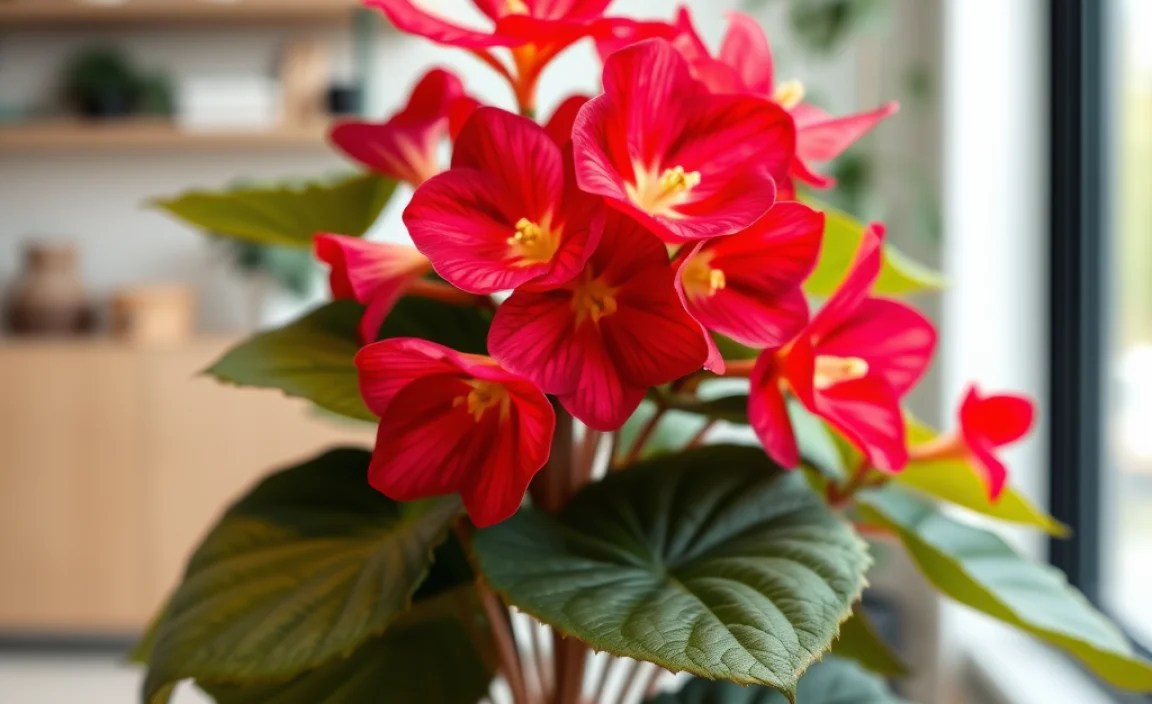
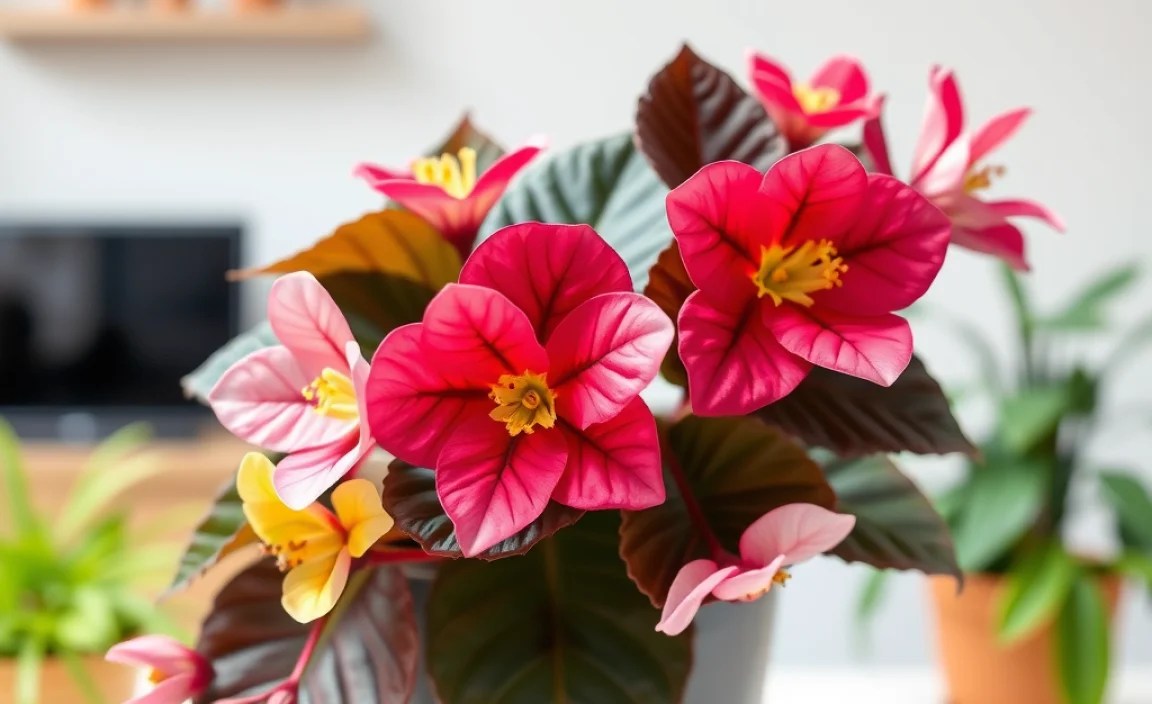
Begonia flowers come in a rainbow of colors. You can find them in shades of red, pink, orange, yellow, white, and even green. The colors can be intense and vibrant or soft and pastel. The shape of the flowers also varies greatly. Some are single, with just a few petals. Others are double, with many layers of petals. Some are large and showy, while others are small and delicate. The diversity of begonia flowers extends to their form as well. Some have simple, rounded petals. Others have fringed or ruffled petals. Some have flowers that hang down, while others have flowers that stand upright. The color and form of a begonia flower can tell you a lot about the plant. For example, red and orange flowers are often pollinated by hummingbirds. White and yellow flowers are often pollinated by moths. The shape of the flower can also indicate the type of pollinator it attracts. The diversity of begonia flowers is a testament to the power of evolution.
- Begonias come in red, pink, orange, yellow, and white.
- Some flowers are single, others are double.
- Flower shapes vary from simple to fringed.
- Colors and forms attract different pollinators.
- Diversity of begonia flowers is amazing.
The color and form of begonia flowers can also be affected by environmental factors. For example, the amount of sunlight a plant receives can affect the intensity of its colors. Plants grown in full sun tend to have more vibrant colors than plants grown in shade. The temperature can also affect the color of the flowers. Some begonias produce darker flowers in cooler temperatures. The diversity of begonia flowers is not just determined by genetics. It is also influenced by the environment. This makes each begonia unique. Even two plants of the same variety can look different depending on their growing conditions. The next time you see a begonia, take a close look at its flowers. Notice the color, shape, and form. You will be amazed at the diversity of these beautiful plants.
Fun Fact or Stat: Some begonia flowers can change color as they mature!
Why Do Begonias Have So Many Colors?
Have you ever wondered why begonias come in so many different colors? The answer is related to pollination. Begonias need to attract pollinators to reproduce. Pollinators are animals that help to transfer pollen from one flower to another. This allows the flowers to produce seeds. Different pollinators are attracted to different colors. For example, hummingbirds are attracted to red and orange flowers. Bees are attracted to blue and yellow flowers. Moths are attracted to white and fragrant flowers. By producing flowers in a variety of colors, begonias can attract a wider range of pollinators. This increases their chances of successful reproduction. The diversity of begonia flowers is a result of this evolutionary pressure. Plants that produced flowers that were more attractive to pollinators were more likely to survive and reproduce. Over time, this led to the wide range of colors that we see in begonias today.
How Does Flower Shape Affect Pollination?
Imagine you are a bee trying to find nectar in a flower. The shape of the flower can make it easier or harder to get to the nectar. Some flowers have long, tubular shapes that only certain pollinators can access. Others have wide, open shapes that are accessible to a wider range of pollinators. The shape of a begonia flower can affect which pollinators it attracts. For example, begonias with long, tubular flowers are often pollinated by hummingbirds. These birds have long beaks that can reach the nectar at the bottom of the flower. Begonias with wide, open flowers are often pollinated by bees. These insects can easily land on the flower and collect nectar and pollen. The diversity of begonia flowers includes a variety of flower shapes, each adapted to attract specific pollinators. This ensures that the begonias are successfully pollinated and can reproduce.
Can Environmental Factors Change Flower Color?
The color of a begonia flower is not just determined by its genes. Environmental factors can also play a role. For example, the amount of sunlight a plant receives can affect the intensity of its color. Plants grown in full sun tend to have more vibrant colors than plants grown in shade. This is because sunlight stimulates the production of pigments, which are the compounds that give flowers their color. Temperature can also affect flower color. Some begonias produce darker flowers in cooler temperatures. This is because cooler temperatures can slow down the production of certain pigments. The diversity of begonia flowers is influenced by both genetics and the environment. This means that even two plants of the same variety can look different depending on their growing conditions. The next time you see a begonia, consider the environment it is growing in. This can give you clues about why its flowers are the color they are.
Growing Begonias: Tips and Tricks
Growing begonias can be a rewarding experience. These plants are relatively easy to care for. They can add beauty to your home or garden. To grow healthy begonias, you need to provide them with the right conditions. This includes proper light, water, and soil. Begonias prefer bright, indirect light. Avoid placing them in direct sunlight, which can scorch their leaves. Water them regularly, but be careful not to overwater. Begonias do not like to sit in wet soil. Use well-drained soil that is rich in organic matter. You can also fertilize your begonias regularly. This will help them produce more flowers. With the right care, your begonias will thrive. They will reward you with their beautiful flowers and foliage. The diversity of begonia flowers means there is a begonia for every gardener. Whether you are a beginner or an experienced gardener, you can find a begonia that suits your needs. Enjoy the beauty and versatility of these amazing plants.
- Provide bright, indirect light.
- Water regularly, avoid overwatering.
- Use well-drained soil.
- Fertilize regularly for more flowers.
- Choose a begonia that suits your needs.
One of the most common problems with begonias is overwatering. Begonias are susceptible to root rot. This is a fungal disease that can kill the plant. To prevent overwatering, make sure your pot has drainage holes. Also, allow the soil to dry out slightly between waterings. Another common problem is powdery mildew. This is a fungal disease that can cause white spots on the leaves. To prevent powdery mildew, provide good air circulation. Avoid wetting the leaves when watering. If you notice any signs of disease, treat your begonias promptly. There are many fungicides available that can help to control these problems. By taking good care of your begonias, you can prevent many common problems. This will help you enjoy their beauty for years to come. The diversity of begonia flowers makes them a favorite among gardeners.
Fun Fact or Stat: Begonias can be propagated from leaf cuttings, stem cuttings, or seeds!
What Kind of Light Do Begonias Need?
Imagine you are a begonia plant. You need light to grow, but you do not want to get sunburned. Begonias prefer bright, indirect light. This means they should be placed in a location where they receive plenty of light, but not direct sunlight. Direct sunlight can scorch their leaves, causing them to turn brown and crispy. A good place for a begonia is near a window that faces east or west. These windows provide plenty of light without the harshness of direct sunlight. If you do not have a window that provides enough light, you can use artificial light. Grow lights are a great way to supplement the natural light. They will help your begonias thrive. The diversity of begonia flowers means they can adapt to different light conditions. However, they will always do best with bright, indirect light.
How Often Should You Water Begonias?
Have you ever wondered how often you should water your begonias? The answer depends on several factors. These include the type of begonia, the size of the pot, and the climate. In general, you should water your begonias when the top inch of soil feels dry to the touch. Be careful not to overwater them. Begonias do not like to sit in wet soil. Overwatering can lead to root rot, which can kill the plant. It is better to underwater than to overwater. During the winter, when the plants are not actively growing, you can reduce the frequency of watering. The diversity of begonia flowers means some types need more or less water. Always check the soil moisture before watering. This will help you keep your begonias healthy and happy.
What Kind of Soil is Best for Begonias?
Imagine you are a begonia root. You need soil that is well-drained and rich in nutrients. Begonias prefer soil that is slightly acidic. A good potting mix for begonias is a combination of peat moss, perlite, and vermiculite. Peat moss helps to retain moisture. Perlite and vermiculite help to improve drainage. You can also add some compost or other organic matter to the soil. This will provide your begonias with the nutrients they need to grow. Avoid using heavy clay soil, which can retain too much water. The diversity of begonia flowers means some types are more sensitive to soil conditions. Always use a high-quality potting mix that is specifically designed for begonias. This will help them thrive and produce beautiful flowers.
Begonia Care: Common Problems and Solutions
Even with the best care, begonias can sometimes experience problems. Common issues include pests, diseases, and environmental stress. Pests like aphids, mealybugs, and spider mites can attack begonias. These pests suck the sap from the leaves, causing them to become yellow and distorted. Diseases like powdery mildew and root rot can also affect begonias. Powdery mildew causes white spots on the leaves. Root rot causes the roots to decay. Environmental stress can be caused by too much or too little light, water, or humidity. To prevent problems, inspect your begonias regularly. Look for signs of pests or diseases. Provide them with the right growing conditions. If you notice any problems, treat them promptly. There are many insecticides and fungicides available that can help to control pests and diseases. By taking good care of your begonias, you can keep them healthy and happy. The diversity of begonia flowers means they can be susceptible to different problems.
- Inspect begonias regularly for pests.
- Watch for signs of diseases like mildew.
- Provide the right light and water.
- Treat problems promptly with solutions.
- Maintain humidity for healthy growth.
One of the best ways to prevent problems with begonias is to provide them with the right growing conditions. This includes proper light, water, humidity, and temperature. Begonias prefer bright, indirect light. They do not like direct sunlight. Water them regularly, but be careful not to overwater. Begonias prefer high humidity. You can increase the humidity by placing them on a tray of pebbles filled with water. They also prefer warm temperatures. Avoid exposing them to cold drafts. By providing your begonias with the right growing conditions, you can help them stay healthy and resist pests and diseases. The diversity of begonia flowers means they have different needs. Always research the specific needs of your begonia variety. This will help you provide the best possible care.
Fun Fact or Stat: Some begonias can live for many years with proper care!
How to Deal with Pests on Begonias?
Imagine you are a begonia plant being attacked by tiny insects. You need help! Pests like aphids, mealybugs, and spider mites can be a problem for begonias. These pests suck the sap from the leaves, causing them to become yellow and distorted. To get rid of pests, you can try several methods. One method is to wash the leaves with soapy water. This will help to remove the pests from the plant. Another method is to use an insecticide. There are many insecticides available that are safe for use on begonias. Always follow the instructions on the label. You can also try using natural pest control methods. For example, you can introduce beneficial insects like ladybugs, which will eat the pests. The diversity of begonia flowers does not affect how pests attack. Always inspect your begonias regularly for signs of pests. This will help you catch problems early and prevent them from becoming serious.
What Causes Powdery Mildew on Begonias?
Have you ever seen white spots on the leaves of your begonias? That is probably powdery mildew. Powdery mildew is a fungal disease that can affect many plants, including begonias. It is caused by a fungus that thrives in humid conditions. To prevent powdery mildew, provide good air circulation around your begonias. Avoid wetting the leaves when watering. If you notice any signs of powdery mildew, treat it promptly. There are many fungicides available that can help to control powdery mildew. You can also try using natural methods. For example, you can spray the leaves with a solution of baking soda and water. The diversity of begonia flowers does not make them immune to powdery mildew. Always keep an eye on your begonias and take action if you see any signs of this disease.
How to Prevent Root Rot in Begonias?
Imagine you are a begonia root sitting in soggy soil. You cannot breathe, and you are starting to rot. Root rot is a fungal disease that can kill begonias. It is caused by overwatering and poor drainage. To prevent root rot, make sure your pot has drainage holes. Also, use well-drained soil. Allow the soil to dry out slightly between waterings. Avoid letting your begonias sit in water. If you suspect that your begonia has root rot, take action immediately. Remove the plant from the pot and inspect the roots. Cut off any rotted roots. Repot the plant in fresh, well-drained soil. The diversity of begonia flowers does not protect them from root rot. Always be careful not to overwater your begonias. This is the best way to prevent this deadly disease.
The Role of Begonias in Gardens and Homes
Begonias are popular plants for gardens and homes. They add beauty and color to any space. They are relatively easy to grow. They come in a wide variety of shapes, sizes, and colors. Begonias can be used in many different ways. They can be planted in flower beds, containers, or hanging baskets. They can be grown indoors or outdoors. They can be used as ground cover, edging plants, or focal points. The diversity of begonia flowers makes them a versatile choice for any gardener. They are also popular for their long blooming season. Many begonias bloom from spring to fall, providing a continuous display of color. Whether you are a beginner or an experienced gardener, you can find a begonia that suits your needs. Enjoy the beauty and versatility of these amazing plants.
- Begonias add beauty to gardens and homes.
- They are easy to grow with the right care.
- Use them in flower beds or containers.
- Grow them indoors or outdoors.
- Enjoy their long blooming season.
Begonias are not just beautiful plants. They also provide several benefits. They help to purify the air. They add humidity to the air. They attract pollinators like bees and butterflies. They can also be used for medicinal purposes. In some cultures, begonias are used to treat skin problems and other ailments. The diversity of begonia flowers means they have many different uses. They are a valuable part of our natural world. Whether you are a gardener or just enjoy nature, begonias have something to offer. They are a reminder of the beauty and complexity of the plant kingdom. Consider adding some begonias to your garden or home. You will be amazed at the beauty and benefits they provide.
| Begonia Type | Light Needs | Water Needs | Best Use |
|---|---|---|---|
| Cane-like | Bright, indirect | Regular, avoid overwatering | Tall backgrounds, containers |
| Rhizomatous | Bright, indirect | Regular, let soil dry slightly | Ground cover, interesting foliage |
| Tuberous | Bright, indirect | Regular, avoid wet soil | Hanging baskets, showy flowers |
| Semperflorens | Full sun to part shade | Regular, well-drained soil | Edging, flower beds |
Fun Fact or Stat: Begonias are named after Michel Bégon, a French botanist!
How Do Begonias Enhance Garden Aesthetics?
Imagine walking into a garden filled with colorful begonias. They can transform any space into a beautiful oasis. Begonias come in a wide variety of shapes, sizes, and colors. This makes them a versatile choice for any garden. They can be used to create focal points, add texture, or fill in empty spaces. Their long blooming season ensures that your garden will be colorful from spring to fall. The diversity of begonia flowers means you can find a begonia to match any style. Whether you prefer a formal garden or a more natural look, begonias can help you achieve your vision. They are a great way to add beauty and interest to your outdoor space.
What are the Benefits of Growing Begonias Indoors?
Have you ever thought about growing begonias indoors? There are many benefits to doing so. Begonias can help to purify the air in your home. They can also add humidity to the air, which can be especially helpful during the winter. Growing begonias indoors can also be a great way to connect with nature. Caring for plants can be a relaxing and rewarding experience. The diversity of begonia flowers means you can find a begonia to match your decor. Whether you prefer a small, delicate begonia or a large, showy one, you can find a begonia that will thrive in your home. Enjoy the beauty and benefits of growing begonias indoors.
How Can Begonias Attract Pollinators to Your Garden?
Imagine your garden buzzing with bees and butterflies. Begonias can help to attract these important pollinators. Many begonias produce flowers that are rich in nectar and pollen. These attract bees, butterflies, and other pollinators. Pollinators are essential for the reproduction of many plants. By attracting pollinators to your garden, you are helping to support the ecosystem. The diversity of begonia flowers means you can choose begonias that are particularly attractive to pollinators. For example, begonias with bright colors and fragrant flowers are more likely to attract pollinators. Plant a variety of begonias in your garden to attract a wide range of pollinators. This will help to keep your garden healthy and thriving.
Summary
Begonias are a diverse and beautiful group of plants. They offer a wide range of colors, shapes, and sizes. This makes them a popular choice for gardens and homes. With over 1,800 species, the diversity of begonia flowers is truly amazing. They can be found in tropical and subtropical regions around the world. Begonias are relatively easy to grow. They require bright, indirect light, well-drained soil, and regular watering. Common problems include pests, diseases, and overwatering. However, these can be prevented with proper care. Begonias are not just beautiful plants. They also provide several benefits. They help to purify the air, add humidity, and attract pollinators. Whether you are a beginner or an experienced gardener, you can enjoy the beauty and versatility of begonias.
Conclusion
Begonias are truly remarkable plants. They offer something for everyone. Their ease of care and stunning variety make them a favorite among gardeners. They brighten our homes and gardens with their vibrant colors and unique forms. The diversity of begonia flowers is a testament to the adaptability and beauty of the natural world. So, go ahead and explore the world of begonias. You might just find your new favorite plant!
Frequently Asked Questions
Question No 1: What makes the diversity of begonia flowers so special?
Answer: The diversity of begonia flowers is special because of their wide range of colors, shapes, and sizes. With over 1,800 species, there’s a begonia for almost every taste and environment. This incredible variety allows gardeners and plant lovers to find unique and beautiful additions to their collections. The adaptation of begonias to different climates and conditions has resulted in a fascinating array of forms, from cane-like stems to rhizomatous structures, each with its own charm and appeal.
Question No 2: How do I choose the right type of begonia for my garden?
Answer: Choosing the right begonia depends on your garden’s conditions and your personal preferences. Consider the amount of sunlight your garden receives. Some begonias prefer full sun, while others thrive in shade. Think about the soil type and drainage. Begonias generally prefer well-drained soil. Also, consider the size and shape of the plant. Do you want a tall, upright plant or a low-growing ground cover? Research different begonia species to find one that matches your needs. The diversity of begonia flowers ensures you can find a plant that fits your garden perfectly.
Question No 3: What are the most common problems when growing begonias?
Answer: The most common problems when growing begonias include overwatering, pests, and diseases. Overwatering can lead to root rot. Pests like aphids and mealybugs can damage the leaves. Diseases like powdery mildew can cause white spots on the leaves. To avoid these problems, water your begonias carefully. Inspect them regularly for pests and diseases. Provide them with the right growing conditions. The diversity of begonia flowers means different types may have different susceptibilities, so research your specific variety.
Question No 4: Can I grow begonias indoors?
Answer: Yes, you can grow begonias indoors! Many begonias thrive indoors with the right care. Provide them with bright, indirect light. Water them regularly, but avoid overwatering. Maintain high humidity by placing them on a tray of pebbles filled with water. Choose a pot with drainage holes to prevent root rot. The diversity of begonia flowers means there are many types that are well-suited for indoor growing. Consider tuberous or rhizomatous begonias for indoor containers.
Question No 5: How does begonia flower color affect pollination?
Answer: Begonia flower color plays a crucial role in attracting pollinators. Different colors attract different pollinators. Red and orange flowers attract hummingbirds. Blue and yellow flowers attract bees. White and fragrant flowers attract moths. By producing flowers in a variety of colors, begonias can attract a wider range of pollinators. This increases their chances of successful reproduction. The diversity of begonia flowers is a result of this evolutionary advantage.
Question No 6: Are begonias good for attracting wildlife to my garden?
Answer: Yes, begonias can attract wildlife to your garden! Their colorful flowers and abundant nectar attract pollinators like bees, butterflies, and hummingbirds. These pollinators are essential for the health of your garden. By planting begonias, you can help to support the ecosystem. The diversity of begonia flowers means you can choose varieties that are particularly attractive to wildlife. Consider planting a mix of colors and flower shapes to attract a wide range of pollinators to your garden.
