Do you love colorful flowers in winter? Cyclamen can brighten your home! These pretty plants have unique, swept-back petals. They come in shades of pink, red, white, and purple. But how do you *care cyclamen indoors* so they thrive? It’s easier than you think!
These flowers need special attention. Too much or too little water can hurt them. Getting the right light is also important. Let’s learn how to keep your cyclamen happy and healthy. You will enjoy their beauty all season long.
Key Takeaways
- Proper watering is key to successful *care cyclamen indoors*; avoid overwatering.
- Bright, indirect light helps cyclamen bloom and keeps them healthy.
- Cool temperatures between 60-65°F are ideal for indoor cyclamen.
- Remove dead leaves and flowers to encourage new growth and prevent rot.
- Use well-draining soil and a pot with drainage holes for healthy roots.
Best Location to Care Cyclamen Indoors

Finding the right spot is key when you *care cyclamen indoors*. Cyclamen love bright, indirect light. A north-facing window is often a good choice. East-facing windows can also work well. Avoid direct sunlight, especially during the hottest part of the day. Direct sun can scorch the leaves and damage the flowers. The ideal location should also be cool. Cyclamen prefer temperatures between 60-65°F (15-18°C). Avoid placing them near heat sources like radiators or fireplaces. These areas are often too warm and dry. This can cause the plant to wilt and the blooms to fade quickly. A cool, bright spot will help your cyclamen thrive and bloom longer.
- Place cyclamen near a north or east-facing window.
- Avoid direct sunlight to prevent leaf scorch.
- Keep cyclamen away from heat sources.
- Ensure good air circulation around the plant.
- Rotate the plant regularly for even light exposure.
Think of your cyclamen as a picky house guest. They like things just so! They don’t want to be too hot or too cold. They want enough light, but not too much. Finding the perfect location might take some experimenting. Observe your plant closely. If the leaves are turning yellow, it might be getting too much sun. If the plant is wilting, it might be too warm. Adjust the location as needed. With a little attention, you’ll find the perfect spot for your cyclamen to flourish. This will let you enjoy its beautiful blooms for weeks to come. Remember, a happy cyclamen is a beautiful cyclamen!
What Kind of Light Do Cyclamen Need?
Imagine you are playing hide-and-seek. You want to be seen a little, but not too much! Cyclamen are similar. They love bright light, but they don’t want to be in the direct sun. Too much direct sun can burn their leaves. Indirect light is best. This means the light is filtered or diffused. A sheer curtain can help filter sunlight. You can also place the plant a few feet away from a sunny window. If you don’t have enough natural light, you can use a grow light. Place the grow light about 12-18 inches above the plant. This will give the cyclamen the light it needs to grow and bloom.
How to Tell if My Cyclamen Gets Too Much Sun?
Have you ever been outside too long and gotten a sunburn? Plants can get sunburned too! If your cyclamen is getting too much sun, the leaves might turn yellow or brown. They might also feel dry and crispy. The flowers might fade quickly. If you see these signs, move your plant to a shadier spot. You can also try using a sheer curtain to filter the sunlight. Remember, it’s always better to give your cyclamen too little sun than too much. You can always add more light if needed, but you can’t undo sun damage.
Why is Air Circulation Important?
Think of a stuffy room. It doesn’t feel good, right? Plants need fresh air too! Good air circulation helps prevent diseases. It also helps the plant breathe. Make sure your cyclamen is not too crowded by other plants. This allows air to flow freely around it. You can also use a small fan to circulate the air. Just don’t point the fan directly at the plant. A gentle breeze is all it needs. Good air circulation will help your cyclamen stay healthy and happy.
Fun Fact or Stat: Cyclamen are native to the Mediterranean region and parts of the Middle East, where they grow in cool, shaded areas.
Watering Techniques to Care Cyclamen Indoors

Watering is super important when you *care cyclamen indoors*. Too much water can be as bad as too little! Cyclamen like their soil to be moist, but not soggy. Water the plant when the top inch of soil feels dry to the touch. The best way to water is from the bottom. Place the pot in a saucer of water for about 15-20 minutes. The plant will soak up the water it needs. Then, remove the pot from the saucer and let any excess water drain away. Avoid getting water on the leaves or crown of the plant. This can cause rot. During the blooming season, you might need to water more often. Check the soil regularly and adjust your watering schedule as needed. In the dormant season, when the plant is not actively growing, you’ll need to water much less frequently.
- Water cyclamen when the top inch of soil is dry.
- Water from the bottom to avoid wetting the leaves.
- Let excess water drain away after watering.
- Reduce watering during the dormant season.
- Use room temperature water, not cold water.
Imagine your cyclamen is a sponge. You want to wet it, but not soak it! Overwatering can lead to root rot, which is a big problem for cyclamen. The roots will start to decay, and the plant will eventually die. Underwatering can also be harmful. The leaves will wilt, and the flowers will droop. Finding the right balance is key. Pay attention to your plant’s signals. If the leaves are drooping even when the soil is moist, it might be a sign of root rot. If the leaves are crispy and dry, it probably needs more water. With a little practice, you’ll become a watering expert!
Why is Bottom Watering Best?
Have you ever tried to pour water on a pile of leaves? The water just runs off, right? Top watering can be similar for cyclamen. The water might not reach the roots. Bottom watering ensures the roots get the water they need. It also helps prevent water from sitting on the leaves, which can cause rot. To water from the bottom, simply place the pot in a saucer of water. Let the plant soak up the water for about 15-20 minutes. Then, remove the pot and let the excess water drain away. It’s a simple and effective way to keep your cyclamen happy.
How Often Should I Water My Cyclamen?
Think of watering like feeding your pet. They need food every day, but not too much at once! The frequency of watering depends on several factors. These include the temperature, humidity, and size of the pot. In general, you should water your cyclamen when the top inch of soil feels dry to the touch. This might be every few days or once a week. During the dormant season, you’ll need to water much less often. Check the soil regularly and adjust your watering schedule as needed. If you’re unsure, it’s always better to underwater than overwater.
What are Signs of Overwatering?
Imagine you’ve drunk too much water. You feel bloated and uncomfortable, right? Overwatering can make plants feel the same way! Signs of overwatering include yellowing leaves, wilting, and a mushy stem. The soil might also smell bad. If you see these signs, stop watering immediately. Let the soil dry out completely before watering again. You might also need to repot the plant in fresh soil. Overwatering can be a tricky problem, but with quick action, you can save your cyclamen.
Fun Fact or Stat: Cyclamen tubers store water, allowing them to survive periods of drought in their natural habitat.
Soil and Potting Tips to Care Cyclamen Indoors

The right soil and pot are key when you *care cyclamen indoors*. Cyclamen need well-draining soil. This means the soil should hold enough moisture, but not too much. A good potting mix for cyclamen is a combination of peat moss, perlite, and vermiculite. This mix allows for good drainage and aeration. Avoid using heavy garden soil, which can become compacted and waterlogged. The pot should also have good drainage. Make sure there are drainage holes in the bottom of the pot. This allows excess water to escape. A terracotta pot is a good choice because it allows the soil to breathe. Repot your cyclamen every year or two. This will refresh the soil and give the plant more room to grow. Choose a pot that is slightly larger than the previous one.
- Use well-draining potting mix.
- Choose a pot with drainage holes.
- Terracotta pots are a good option.
- Repot cyclamen every 1-2 years.
- Select a pot slightly larger than the previous one.
Think of the soil as your plant’s food source. It needs the right nutrients to grow and thrive. The pot is like your plant’s home. It needs to be comfortable and provide good drainage. Using the wrong soil or pot can lead to problems. Heavy soil can suffocate the roots. A pot without drainage holes can cause root rot. Choosing the right soil and pot is a simple way to ensure your cyclamen stays healthy. When repotting, be gentle with the roots. Avoid damaging them. Gently loosen the roots before placing the plant in the new pot. Water the plant well after repotting.
What Type of Potting Mix is Best?
Imagine you are making a cake. You need the right ingredients to make it taste good, right? Plants need the right potting mix too! A good potting mix for cyclamen should be light and airy. It should also retain some moisture. A mix of peat moss, perlite, and vermiculite is a good choice. You can also add some compost to the mix. Compost provides nutrients for the plant. Avoid using soil from your garden. It can contain pests and diseases. Use a high-quality potting mix for best results.
Why are Drainage Holes Important?
Have you ever tried to take a bath in a tub without a drain? The water would just overflow, right? Drainage holes are like the drain in a bathtub. They allow excess water to escape. This prevents the soil from becoming waterlogged. Waterlogged soil can lead to root rot. Make sure your pot has plenty of drainage holes. If it doesn’t, you can drill some holes yourself. Good drainage is essential for healthy cyclamen.
How to Repot a Cyclamen?
Think of repotting as moving your plant to a bigger house! It needs more room to grow. To repot a cyclamen, first choose a pot that is slightly larger than the previous one. Fill the new pot with fresh potting mix. Gently remove the cyclamen from its old pot. Loosen the roots gently. Place the plant in the new pot and fill in around the roots with potting mix. Water the plant well after repotting. Repotting is a simple way to give your cyclamen a fresh start.
Fun Fact or Stat: Cyclamen tubers can live for many years, growing larger and producing more flowers each year with proper care.
Temperature and Humidity to Care Cyclamen Indoors

Temperature and humidity are very important when you *care cyclamen indoors*. Cyclamen prefer cool temperatures. The ideal temperature range is between 60-65°F (15-18°C). Avoid placing them near heat sources, such as radiators or fireplaces. These areas are often too warm and dry. High humidity is also important. Cyclamen like humidity levels around 50-60%. If the air is too dry, the leaves can turn brown and crispy. You can increase humidity by placing the pot on a tray of wet pebbles. You can also use a humidifier. Avoid misting the plant directly. This can cause fungal diseases. Maintaining the right temperature and humidity will help your cyclamen thrive.
- Keep cyclamen in cool temperatures (60-65°F).
- Avoid placing near heat sources.
- Maintain humidity levels around 50-60%.
- Use a pebble tray or humidifier to increase humidity.
- Avoid misting the plant directly.
Imagine your cyclamen is a person who likes to be comfortable. They don’t want to be too hot or too cold. They also don’t want the air to be too dry. Maintaining the right temperature and humidity is like creating a cozy environment for your plant. Pay attention to the signs. If the leaves are turning brown and crispy, the air might be too dry. If the plant is wilting even when the soil is moist, it might be too warm. Adjust the temperature and humidity as needed. With a little attention, you can create the perfect environment for your cyclamen to flourish.
How Can I Lower the Temperature?
Have you ever felt too hot and needed to cool down? Plants feel the same way! If your cyclamen is in a warm room, try moving it to a cooler location. A basement or a north-facing room might be cooler. You can also try using a fan to circulate the air. Just don’t point the fan directly at the plant. You can also try placing ice cubes on the soil. This will help cool the soil and the air around the plant. Keeping your cyclamen cool will help it bloom longer.
How Can I Increase Humidity?
Think of humidity as moisture in the air. Plants love moisture! If the air is too dry, the leaves can turn brown and crispy. There are several ways to increase humidity. You can place the pot on a tray of wet pebbles. As the water evaporates, it will increase the humidity around the plant. You can also use a humidifier. A humidifier adds moisture to the air. Avoid misting the plant directly. This can cause fungal diseases. Increasing humidity will help your cyclamen stay healthy and happy.
Why is Constant Temperature Important?
Imagine you are trying to sleep in a room that keeps getting hotter and colder. It would be hard to get a good night’s sleep, right? Plants are similar. They like a constant temperature. Sudden changes in temperature can stress the plant. This can cause the leaves to drop or the flowers to fade. Try to keep the temperature as consistent as possible. Avoid placing the plant near drafty windows or doors. A stable temperature will help your cyclamen thrive.
Fun Fact or Stat: Cyclamen go dormant in the summer in their native habitat, resting during the hot, dry months.
Fertilizing Your Cyclamen
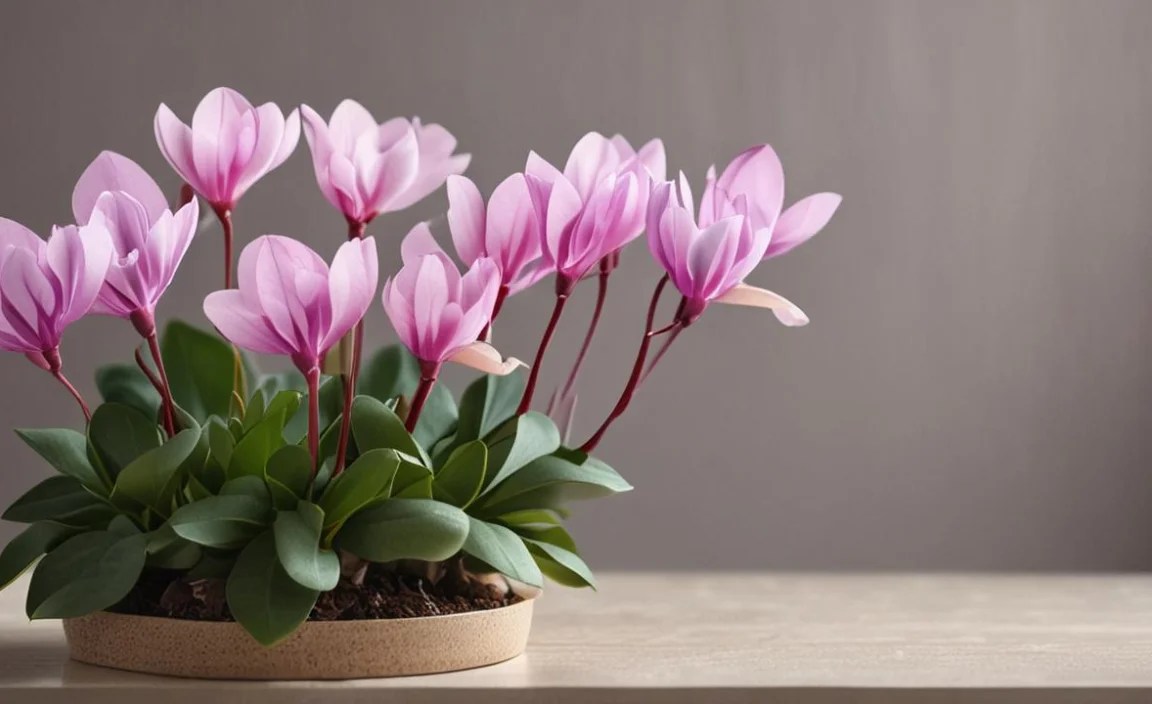
Fertilizing is important when you *care cyclamen indoors*. Cyclamen need nutrients to grow and bloom. Fertilize your cyclamen every 2-4 weeks during the blooming season. Use a balanced liquid fertilizer diluted to half strength. A fertilizer with a ratio of 10-10-10 is a good choice. Avoid over-fertilizing. This can burn the roots and damage the plant. During the dormant season, you don’t need to fertilize. The plant is not actively growing during this time. Resume fertilizing when new growth appears. Fertilizing will help your cyclamen produce beautiful blooms.
- Fertilize every 2-4 weeks during the blooming season.
- Use a balanced liquid fertilizer diluted to half strength.
- Avoid over-fertilizing.
- Do not fertilize during the dormant season.
- Resume fertilizing when new growth appears.
Think of fertilizer as vitamins for your plant. It gives them the extra boost they need to grow strong and healthy. But just like with vitamins, too much can be harmful. Over-fertilizing can damage the roots and even kill the plant. It’s always better to under-fertilize than over-fertilize. Pay attention to the signs. If the leaves are turning yellow or brown, it might be a sign of over-fertilizing. If the plant is not blooming, it might need more fertilizer. Adjust your fertilizing schedule as needed. With a little care, you can keep your cyclamen well-nourished.
What Kind of Fertilizer Should I Use?
Have you ever seen different types of vitamins at the store? Some are for energy, and some are for bones. Plants also need different types of nutrients! For cyclamen, a balanced fertilizer is best. This means it has equal amounts of nitrogen, phosphorus, and potassium. Look for a fertilizer with a ratio of 10-10-10. You can also use a fertilizer specifically formulated for flowering plants. These fertilizers are often higher in phosphorus, which promotes blooming. Choose a liquid fertilizer that is easy to dilute and apply.
How Often Should I Fertilize?
Imagine you are feeding a baby. They need to eat regularly, but not all the time! Plants are similar. They need to be fertilized regularly, but not too often. Fertilize your cyclamen every 2-4 weeks during the blooming season. During the dormant season, you don’t need to fertilize. The plant is not actively growing during this time. Resume fertilizing when new growth appears. Adjust the frequency based on the plant’s needs. If the plant is growing quickly and producing lots of flowers, you might need to fertilize more often. If the plant is growing slowly, you can fertilize less often.
What are Signs of Over-Fertilizing?
Think of over-fertilizing as giving someone too much sugar. They might get hyper and then crash! Plants can also react badly to too much fertilizer. Signs of over-fertilizing include yellowing leaves, brown tips, and a white crust on the soil. If you see these signs, stop fertilizing immediately. Flush the soil with water to remove excess fertilizer. You might also need to repot the plant in fresh soil. Over-fertilizing can be harmful, so be careful and follow the instructions on the fertilizer label.
Fun Fact or Stat: Cyclamen are sensitive to salt build-up from fertilizers, so flushing the soil periodically is a good practice.
Pruning and Deadheading to Care Cyclamen Indoors
Pruning and deadheading are important when you *care cyclamen indoors*. Removing dead leaves and flowers encourages new growth. It also prevents diseases. Use clean, sharp scissors or pruning shears. Cut the stems of dead flowers and leaves close to the base of the plant. Avoid pulling them off, as this can damage the tuber. Regularly inspect your cyclamen for any signs of disease or pests. Remove any affected leaves or flowers immediately. Pruning and deadheading will help your cyclamen stay healthy and beautiful.
- Remove dead leaves and flowers regularly.
- Use clean, sharp scissors or pruning shears.
- Cut stems close to the base of the plant.
- Avoid pulling off dead leaves or flowers.
- Inspect for pests and diseases regularly.
Think of pruning and deadheading as giving your plant a haircut. It removes the dead and damaged parts, allowing new growth to flourish. Regularly removing dead leaves and flowers not only makes the plant look better but also prevents diseases from spreading. Dead leaves and flowers can attract pests and provide a breeding ground for fungi. Keeping your cyclamen clean and tidy is a simple way to keep it healthy. When pruning, be careful not to damage the healthy parts of the plant. Cut cleanly and avoid tearing the stems.
Why is Deadheading Important?
Have you ever noticed how some flowers fade and drop their petals? These faded flowers are called deadheads. Removing them is called deadheading. Deadheading encourages the plant to produce more flowers. It also prevents the plant from wasting energy on producing seeds. To deadhead a cyclamen, simply cut the stem of the faded flower close to the base of the plant. Use clean, sharp scissors or pruning shears. Deadheading will help your cyclamen bloom longer and more profusely.
How to Remove Yellow Leaves?
Imagine you have a plant with yellow leaves. These leaves are not helping the plant. They need to be removed! Yellow leaves can be a sign of several problems. These problems include overwatering, underwatering, or lack of nutrients. Remove the yellow leaves as soon as you see them. Cut the stem of the yellow leaf close to the base of the plant. This will prevent the problem from spreading to other parts of the plant. Removing yellow leaves will help your cyclamen stay healthy.
How Often Should I Prune?
Think of pruning as tidying up your garden. You don’t need to do it every day, but you should do it regularly. Prune your cyclamen whenever you see dead leaves or flowers. Inspect the plant regularly for any signs of disease or pests. Remove any affected leaves or flowers immediately. The frequency of pruning depends on the plant’s growth rate and the environment. In general, you should prune your cyclamen every few weeks. Regular pruning will help your cyclamen stay healthy and beautiful.
Fun Fact or Stat: Removing spent flowers prevents the plant from putting energy into seed production, encouraging more blooms.
Pests and Diseases That Impact Care Cyclamen Indoors
Pests and diseases can be a problem when you *care cyclamen indoors*. Common pests include aphids, spider mites, and cyclamen mites. These pests can suck the sap from the leaves and flowers, causing them to wilt and die. Check your cyclamen regularly for signs of pests. Look for small insects on the leaves or stems. You might also see webbing or sticky residue. Common diseases include botrytis blight and root rot. Botrytis blight is a fungal disease that causes gray mold on the leaves and flowers. Root rot is caused by overwatering and poor drainage. It causes the roots to decay. To prevent pests and diseases, keep your cyclamen clean and well-ventilated. Avoid overwatering and ensure good drainage. If you see signs of pests or diseases, treat the plant immediately with an appropriate insecticide or fungicide.
| Pest/Disease | Symptoms | Prevention | Treatment |
|---|---|---|---|
| Aphids | Small insects on leaves, sticky residue | Keep plant clean, good ventilation | Insecticidal soap, neem oil |
| Spider Mites | Webbing, yellowing leaves | Increase humidity, good ventilation | Miticidal soap, neem oil |
| Botrytis Blight | Gray mold on leaves and flowers | Good ventilation, avoid wetting leaves | Fungicide, remove affected parts |
| Root Rot | Yellowing leaves, wilting, mushy roots | Well-draining soil, avoid overwatering | Repot in fresh soil, fungicide |
- Check for pests regularly.
- Look for aphids, spider mites, and cyclamen mites.
- Prevent overwatering to avoid root rot.
- Ensure good ventilation to prevent botrytis blight.
- Treat pests and diseases promptly.
Think of pests and diseases as unwanted guests in your home. They can cause damage and make your plant sick. Regularly inspecting your cyclamen for signs of pests and diseases is like checking your home for intruders. The sooner you catch them, the easier they are to get rid of. Prevention is key. Keeping your cyclamen clean and well-ventilated will help prevent pests and diseases from taking hold. If you do find pests or diseases, act quickly to treat them. There are many effective insecticides and fungicides available. With a little vigilance, you can keep your cyclamen healthy and pest-free.
How to Identify Common Pests?
Have you ever played detective? You need to look for clues to solve the mystery! Identifying pests is similar. You need to look for clues on your plant. Aphids are small, soft-bodied insects that can be green, black, or brown. They often cluster on the stems and leaves. Spider mites are tiny, spider-like creatures that create webbing on the plant. Cyclamen mites are microscopic and difficult to see. They cause distorted growth and yellowing leaves. Knowing what to look for will help you identify pests quickly.
How to Prevent Diseases?
Think of preventing diseases as staying healthy yourself. You need to eat well, exercise, and get enough sleep. Plants also need certain things to stay healthy. Good ventilation is important. This prevents fungal diseases from developing. Avoid overwatering. This can lead to root rot. Keep the plant clean by removing dead leaves and flowers. These simple steps will help prevent diseases from affecting your cyclamen.
What are Natural Pest Control Methods?
Imagine you want to get rid of ants in your kitchen. You might try using natural methods like vinegar or lemon juice. There are also natural methods for controlling pests on plants. Insecticidal soap is a natural insecticide that can kill many common pests. Neem oil is another natural insecticide that can also prevent fungal diseases. You can also try introducing beneficial insects, such as ladybugs, to your garden. Ladybugs eat aphids and other pests. Using natural pest control methods is a safe and effective way to protect your cyclamen.
Fun Fact or Stat: Cyclamen mites are so small they are nearly invisible to the naked eye and often require a magnifying glass to detect.
Summary
Taking *care cyclamen indoors* is easy. The right light, water, and temperature are very important. Bright, indirect light helps them grow. Water from the bottom when the top soil is dry. Keep them cool, around 60-65°F. Use well-draining soil in pots with holes. Fertilize every few weeks when they bloom. Remove dead leaves and flowers. Watch for pests and diseases. With these tips, your cyclamen will thrive. You will enjoy its beautiful flowers all season. Remember, a little care goes a long way.
Conclusion
Cyclamen are beautiful plants. They can brighten up any indoor space. Learning how to *care cyclamen indoors* is not hard. It requires attention to detail and consistency. By following the tips in this guide, you can keep your cyclamen healthy and blooming. Remember to provide the right light, water, and temperature. With a little effort, you will enjoy the beauty of cyclamen for many weeks. Enjoy the lovely colors and unique shape of these special flowers.
Frequently Asked Questions
Question No 1: How often should I water my indoor cyclamen?
Answer: You should water your indoor cyclamen when the top inch of soil feels dry to the touch. Water thoroughly until water drains from the bottom. Be sure to discard any excess water that collects in the saucer to prevent root rot. Overwatering is a common mistake when *care cyclamen indoors*, so it’s better to underwater than to overwater. During the blooming season, you might need to water more often, while during the dormant season, you’ll need to water less frequently. Always check the soil moisture before watering.
Question No 2: What kind of light does a cyclamen need indoors?
Answer: Cyclamen prefer bright, indirect light. Avoid placing them in direct sunlight, which can scorch their leaves. A north or east-facing window is often a good choice. If you don’t have enough natural light, you can supplement with a grow light. Make sure the light is not too intense. The leaves should be a healthy green color. If the leaves are turning yellow, it might be getting too much sun. Adjust the placement of your plant accordingly to ensure optimal growth when you *care cyclamen indoors*.
Question No 3: Why are the leaves on my cyclamen turning yellow?
Answer: Yellowing leaves on a cyclamen can be caused by several factors. These include overwatering, underwatering, too much direct sunlight, or a lack of nutrients. Check the soil moisture to see if you are watering correctly. Ensure the plant is not getting too much direct sunlight. Fertilize the plant every 2-4 weeks during the blooming season with a balanced liquid fertilizer. If the problem persists, consider repotting the plant in fresh soil. Diagnosing the cause of yellowing leaves is key when you *care cyclamen indoors*.
Question No 4: What temperature is best for cyclamen?
Answer: Cyclamen prefer cool temperatures between 60-65°F (15-18°C). Avoid placing them near heat sources like radiators or fireplaces. These areas are often too warm and dry. High temperatures can cause the plant to wilt and the blooms to fade quickly. Keeping the plant in a cool environment will help it thrive and bloom longer. Maintaining the correct temperature is vital when you *care cyclamen indoors* for successful growth.
Question No 5: How do I encourage my cyclamen to rebloom?
Answer: To encourage your cyclamen to rebloom, provide it with the right conditions. This includes bright, indirect light, cool temperatures, and proper watering. Remove dead leaves and flowers regularly to encourage new growth. After the blooming season, the plant will enter a dormant period. Reduce watering and allow the leaves to die back. Store the tuber in a cool, dark place for a few months. Then, repot it in fresh soil and resume watering. With proper care, your cyclamen should rebloom the following season. This cycle is important to understand when you *care cyclamen indoors*.
Question No 6: What are common pests that affect cyclamen?
Answer: Common pests that affect cyclamen include aphids, spider mites, and cyclamen mites. These pests can suck the sap from the leaves and flowers, causing them to wilt and die. Check your cyclamen regularly for signs of pests. Look for small insects on the leaves or stems. You might also see webbing or sticky residue. Treat the plant immediately with an appropriate insecticide or miticide. Keeping your cyclamen clean and well-ventilated can help prevent pest infestations when you *care cyclamen indoors*.
