Have you ever seen a tiny plant grow into something big? It is amazing, right? You can have that magic inside your house. It starts with caring basil plants indoors. Basil is a tasty herb. You can grow it right on your windowsill. It’s easier than you think!
Why buy basil when you can grow it yourself? Fresh basil tastes so much better. Plus, you get to watch it grow. It’s like having a little green pet that you can eat! Are you ready to learn how? Let’s get started and grow some basil!
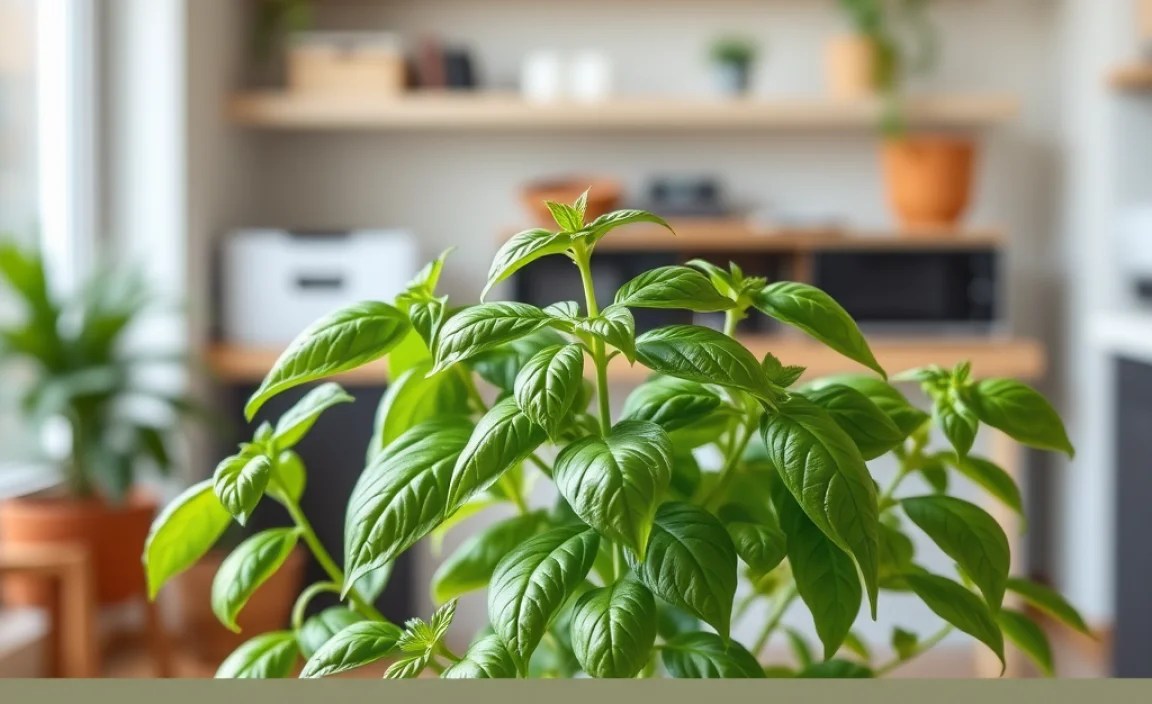
Key Takeaways
- Caring basil plants indoors needs lots of sunlight, at least six hours a day.
- Water your basil when the soil feels dry; do not water every day.
- Make sure your basil has good drainage to avoid root rot.
- Pinch off the top leaves to help your basil grow bushier.
- Keep your basil away from cold drafts and sudden temperature changes.

The Best Spot for Caring Basil Plants Indoors
Finding the right spot is key for caring basil plants indoors. Basil loves sunlight. It needs at least six hours of sun each day. A south-facing window is often the best. This window gets the most sunlight. If you don’t have a sunny window, don’t worry. You can use a grow light. Place the light a few inches above the plant. This gives your basil the light it needs. Rotate the plant regularly. This helps all sides get enough light. Basil that doesn’t get enough light will look pale. It might also get leggy. That means it grows tall and thin. A good spot makes all the difference. Your basil will be happy and healthy.
- Choose a sunny window that faces south.
- Use a grow light if you don’t have enough sun.
- Rotate your basil plant regularly.
- Watch for signs of not enough light.
- Keep the temperature warm, around 70°F.
Think of your basil like a sunbather. It loves soaking up the rays. The more light it gets, the happier it will be. A sunny spot helps it grow strong and flavorful. But what if you live in a place with short days? Or what if your windows don’t get much sun? That’s where grow lights come in handy. They act like the sun, giving your basil the light it needs to thrive. Just remember to keep the light close enough to the plant. But not so close that it burns the leaves! With the right spot, your basil will be off to a great start.
Fun Fact or Stat: Basil is native to tropical regions from central Africa to Southeast Asia.
How Much Light Does Basil Need?
Basil plants are like little solar panels. They use sunlight to make their food. This process is called photosynthesis. Without enough light, they can’t grow well. So, how much light is enough? Aim for at least six hours of direct sunlight each day. If you can’t provide that much, use a grow light. Keep the light on for 12-14 hours a day. Watch your basil closely. If the leaves look pale, it needs more light. If the leaves look burnt, it’s getting too much light. Adjust as needed. Remember, happy basil is bushy basil!
What If I Don’t Have a Sunny Window?
Not everyone has a perfect sunny window. That’s okay! You can still grow basil indoors. Grow lights are your best friend. They come in different shapes and sizes. Some are small and clip onto a table. Others are bigger and stand on the floor. Choose one that fits your space. LED grow lights are energy-efficient. They don’t get too hot. Position the light a few inches above your basil. Your basil will think it’s basking in the sun. Even on a cloudy day!
How to Tell If Basil Is Getting Enough Light
Your basil plant will tell you if it’s happy. Pay attention to its leaves. If the leaves are bright green, it’s getting enough light. If they are pale or yellow, it needs more light. If the stems are long and spindly, it’s also a sign of not enough light. The plant is stretching to find the sun. You might also notice fewer leaves. Move your plant to a sunnier spot. Or add a grow light. Your basil will thank you with lots of tasty leaves.

Soil and Pots for Healthy Indoor Basil
The right soil and pot are important for caring basil plants indoors. Basil needs soil that drains well. You don’t want the roots to sit in water. This can cause root rot. Use a potting mix designed for herbs. These mixes usually contain perlite or vermiculite. These help with drainage. As for pots, choose one with drainage holes. This lets extra water escape. Clay pots are a good choice. They help the soil dry out faster. Plastic pots are also okay. Just make sure they have drainage holes. The size of the pot matters too. Start with a small pot. As the basil grows, you can move it to a bigger one.
- Use a well-draining potting mix.
- Choose a pot with drainage holes.
- Clay pots are good for drainage.
- Start with a small pot and move to a bigger one.
- Avoid heavy soils that hold too much water.
- Consider adding a layer of gravel at the bottom of the pot.
Imagine your basil’s roots are like little feet. They don’t want to stand in puddles all day. They need to breathe! That’s why well-draining soil is so important. It lets the water flow through. The roots get the moisture they need. But they don’t get waterlogged. The pot is like a little house for your basil. It needs to be the right size. Not too small, not too big. Just right! And those drainage holes? They’re like the windows, letting out the excess moisture. With the right soil and pot, your basil will feel right at home.
Fun Fact or Stat: Basil is a member of the mint family.
Choosing the Right Potting Mix
The potting mix is your basil’s food source. It needs to be nutritious. But also well-draining. Look for a mix that contains peat moss, perlite, and vermiculite. These ingredients help with drainage. They also provide nutrients. Avoid using soil from your garden. It’s often too heavy. It can also contain pests and diseases. A good potting mix is worth the investment. Your basil will grow stronger and healthier.
Picking the Perfect Pot Size
The size of the pot matters. Start with a pot that’s about 4-6 inches in diameter. As your basil grows, you’ll need to move it to a bigger pot. A 8-10 inch pot is usually big enough for a mature basil plant. Don’t put a small plant in a big pot. The soil will stay too wet. This can lead to root rot. Choose a pot that’s just a little bigger than the root ball. This gives the roots room to grow.
Why Drainage Is So Important
Drainage is key to caring basil plants indoors. Basil roots don’t like to sit in water. Too much water can cause them to rot. This can kill your plant. Make sure your pot has drainage holes. When you water, water until you see water coming out of the holes. This means the soil is thoroughly watered. But the excess water is draining away. Empty the saucer under the pot. Don’t let the pot sit in water.

Watering Tips for Indoor Basil Plants
Knowing when and how to water is vital for caring basil plants indoors. Basil likes moist soil. But it doesn’t like to be soggy. Water your basil when the top inch of soil feels dry. Stick your finger in the soil to check. If it feels dry, it’s time to water. Water deeply, until water comes out of the drainage holes. Then, let the excess water drain away. Avoid watering the leaves. Wet leaves can lead to fungal diseases. Water in the morning. This gives the leaves time to dry during the day. Overwatering is a common mistake. It’s better to underwater than overwater.
- Water when the top inch of soil is dry.
- Water deeply until water comes out of the drainage holes.
- Avoid watering the leaves.
- Water in the morning.
- Don’t overwater.
- Use room-temperature water.
Imagine your basil is a thirsty friend. You want to give it a drink. But you don’t want to drown it! The trick is to check the soil. If it’s dry, give it a good watering. Think of it like giving your friend a big glass of water. But you don’t want the water to overflow. That’s why drainage is so important. It lets the extra water escape. Watering in the morning is like giving your friend a refreshing start to the day. It helps them stay happy and healthy.
Fun Fact or Stat: Basil is used in many different cuisines around the world.
How to Tell If You’re Overwatering
Overwatering is a common problem. It can be hard to tell if you’re doing it. Look for these signs. The leaves might turn yellow. They might also droop. The soil will feel wet and soggy. You might even see mold growing on the surface. If you see these signs, stop watering. Let the soil dry out completely. Then, start watering again. But water less often.
How to Tell If You’re Underwatering
Underwatering is also a problem. The leaves might wilt. They might also turn brown and crispy. The soil will feel dry and hard. If you see these signs, water your basil right away. Water deeply. Make sure the water reaches all the roots. Your basil should perk up within a few hours.
The Best Time of Day to Water
The best time to water basil is in the morning. This gives the leaves time to dry during the day. Wet leaves can lead to fungal diseases. Watering in the evening is not a good idea. The leaves will stay wet all night. This creates a perfect environment for fungus. Morning watering helps your basil stay healthy.

Temperature and Humidity for Basil Indoors
Temperature and humidity play a big role in caring basil plants indoors. Basil likes warm temperatures. Aim for 65-80°F (18-27°C). Avoid placing your basil near cold drafts. Keep it away from air conditioners. Basil also likes humidity. If your home is dry, you can increase the humidity. Use a humidifier. Or place the pot on a tray of pebbles filled with water. Make sure the bottom of the pot doesn’t touch the water. This can cause root rot. Misting the leaves can also help. But do it in the morning. This gives the leaves time to dry.
- Keep the temperature between 65-80°F (18-27°C).
- Avoid cold drafts.
- Increase humidity if your home is dry.
- Use a humidifier or pebble tray.
- Mist the leaves in the morning.
- Keep basil away from heaters in the winter.
Think of your basil as a tropical traveler. It’s used to warm, humid climates. It doesn’t like the cold. Or dry air. Keeping the temperature just right is like giving your basil a comfortable home. Adding humidity is like giving it a refreshing mist. It helps it feel like it’s back in the tropics. Your basil will be happy and thrive in the right conditions.
Fun Fact or Stat: Basil is believed to have originated in India.
How to Increase Humidity for Basil
If your home is dry, your basil might struggle. Dry air can cause the leaves to turn brown. It can also make the plant more susceptible to pests. There are several ways to increase humidity. Use a humidifier. This is the easiest way to control humidity. Place a tray of pebbles filled with water near the plant. As the water evaporates, it will increase the humidity. Mist the leaves with water. But do it in the morning. This gives the leaves time to dry.
What to Do in the Winter
Winter can be tough for basil plants. The air is often dry. The temperature can fluctuate. Keep your basil away from cold drafts. Don’t place it near a window that gets drafty. Use a humidifier to increase humidity. You might also need to supplement with a grow light. The days are shorter in the winter. Your basil might not get enough natural light.
Why Temperature Matters
Temperature is important for basil growth. If it’s too cold, the plant will stop growing. If it’s too hot, the plant might wilt. Basil likes a consistent temperature. Avoid sudden changes in temperature. Keep it away from heaters and air conditioners. A stable temperature helps your basil thrive.
Pruning and Harvesting Basil Plants Indoors
Pruning and harvesting are key to caring basil plants indoors. Pruning encourages the plant to grow bushier. It also prevents it from flowering too early. When basil flowers, the leaves become bitter. Pinch off the top leaves regularly. This encourages side growth. Harvest the leaves when they are big enough to use. Cut the stem just above a leaf node. This encourages new growth. Don’t remove more than one-third of the plant at a time. This can stress the plant. Regular pruning and harvesting keeps your basil healthy and productive.
- Pinch off the top leaves regularly.
- Harvest the leaves when they are big enough to use.
- Cut the stem just above a leaf node.
- Don’t remove more than one-third of the plant at a time.
- Remove any flowers that appear.
- Prune regularly to encourage bushy growth.
Imagine your basil is like a little tree. You want it to grow strong and full. Pruning is like giving it a haircut. It encourages new growth. Pinching off the top leaves is like telling the plant to grow sideways. This makes it bushier. Harvesting is like picking the ripe fruit. You get to enjoy the tasty leaves. And the plant keeps growing. Pruning and harvesting are a win-win!
Fun Fact or Stat: Basil is a symbol of love in some cultures.
How to Prune Basil for Bushier Growth
Pruning is essential for bushy growth. When you pinch off the top leaves, you’re telling the plant to grow sideways. This encourages new stems to grow from the leaf nodes. Use your fingers or scissors to pinch off the top leaves. Do this every few weeks. Your basil will become fuller and more productive.
When to Harvest Basil Leaves
Harvest basil leaves when they are big enough to use. This is usually when they are about 2-3 inches long. Harvest in the morning. The leaves will have the most flavor. Cut the stem just above a leaf node. This encourages new growth. Don’t be afraid to harvest often. The more you harvest, the more the plant will grow.
Why You Should Remove Flowers
Basil plants will eventually flower. When they do, the leaves become bitter. To prevent this, remove any flowers that appear. Pinch them off as soon as you see them. This will encourage the plant to keep producing tasty leaves. Removing flowers is important for flavor.
Common Pests and Problems with Indoor Basil
Even when you’re caring basil plants indoors, pests and problems can arise. Common pests include aphids, spider mites, and whiteflies. These pests suck the sap from the leaves. This can weaken the plant. Check your basil regularly for pests. Look under the leaves. If you see pests, try washing them off with water. You can also use insecticidal soap. Fungal diseases can also be a problem. These are often caused by overwatering or poor air circulation. Make sure your basil has good drainage. Provide plenty of air circulation. Remove any affected leaves.
| Problem | Symptoms | Solution |
|---|---|---|
| Aphids | Small green bugs on leaves | Wash off with water or use insecticidal soap |
| Spider Mites | Fine webs on leaves | Increase humidity or use insecticidal soap |
| Whiteflies | Small white flies that fly when disturbed | Use sticky traps or insecticidal soap |
| Root Rot | Yellowing leaves, mushy stems | Reduce watering, improve drainage |
- Check your basil regularly for pests.
- Wash off pests with water or use insecticidal soap.
- Provide good drainage and air circulation.
- Remove any affected leaves.
- Use organic pest control methods.
- Quarantine new plants before introducing them.
Imagine your basil is like a little fortress. You want to protect it from invaders. Pests are like tiny enemies trying to sneak in. Checking your basil regularly is like patrolling the walls. If you see any pests, you can wash them away. Or use a safe, natural spray. Good drainage and air circulation are like keeping the fortress clean and dry. This prevents diseases from taking hold. With a little care, you can keep your basil safe and healthy.
Fun Fact or Stat: Basil is considered a sacred herb in some religions.
How to Identify Common Basil Pests
Knowing what to look for is important. Aphids are small, green bugs. They cluster on the stems and leaves. Spider mites are tiny. They create fine webs on the leaves. Whiteflies are small, white flies. They fly away when you disturb the plant. Identifying pests early makes them easier to control.
Natural Pest Control Methods
You don’t have to use harsh chemicals to control pests. There are many natural methods. Wash the pests off with water. Use insecticidal soap. This is a natural soap that kills pests. Introduce beneficial insects. Ladybugs eat aphids. Neem oil is a natural insecticide. These methods are safe for your basil and the environment.
Preventing Fungal Diseases
Fungal diseases thrive in wet conditions. Prevent them by providing good drainage. Don’t overwater your basil. Water in the morning. This gives the leaves time to dry. Provide plenty of air circulation. Don’t overcrowd your plants. Remove any affected leaves. These steps will help keep your basil healthy.
Choosing Basil Varieties for Indoor Growing
When caring basil plants indoors, variety matters. Some basil types do better inside. Sweet basil is a popular choice. It has a classic basil flavor. Genovese basil is another good option. It’s often used in pesto. Thai basil has a spicy, anise-like flavor. Lemon basil has a citrusy flavor. Globe basil is compact and bushy. Choose a variety that you like to eat. Consider the size of the plant. Some varieties get bigger than others. Choose a variety that fits your space.
- Sweet basil is a popular choice for indoor growing.
- Genovese basil is great for pesto.
- Thai basil has a spicy flavor.
- Lemon basil has a citrusy flavor.
- Globe basil is compact and bushy.
- Consider the size of the plant when choosing a variety.
Imagine you’re at an ice cream shop. There are so many flavors to choose from! Basil is the same way. There are lots of different types. Each one has its own unique flavor. Sweet basil is like vanilla. It’s a classic. Thai basil is like a spicy sorbet. It has a kick. Lemon basil is like a refreshing lemonade. Choosing the right variety is like picking your favorite flavor. It makes growing basil even more fun.
Fun Fact or Stat: Basil is used in aromatherapy to reduce stress and anxiety.
Sweet Basil: The Classic Choice
Sweet basil is the most common type of basil. It has a classic basil flavor. It’s great in pasta sauces, salads, and pesto. Sweet basil is easy to grow indoors. It’s a good choice for beginners. It grows quickly and produces lots of leaves.
Thai Basil: A Spicy Twist
Thai basil has a spicy, anise-like flavor. It’s often used in Asian dishes. It’s a good choice for stir-fries and soups. Thai basil is also easy to grow indoors. It’s a bit more heat-tolerant than sweet basil.
Lemon Basil: A Citrusy Delight
Lemon basil has a citrusy flavor. It’s great in salads, teas, and desserts. It’s a refreshing addition to any dish. Lemon basil is also easy to grow indoors. It has a delicate flavor. It’s a good choice for adding a touch of brightness to your cooking.
Summary
Caring basil plants indoors can bring fresh flavor to your kitchen. You need to give it enough sunlight. Make sure the soil drains well. Water it when the top inch of soil feels dry. Prune it regularly to encourage bushy growth. Watch out for pests and diseases. Choose the right variety for your space. With a little care, you can enjoy fresh basil all year round.
Growing basil indoors is easier than you think. Find a sunny spot or use a grow light. Use a well-draining potting mix. Don’t overwater. Prune and harvest regularly. With these tips, you’ll be enjoying fresh basil in no time. It is a rewarding experience.
Conclusion
Growing basil indoors is a fun and rewarding hobby. You can enjoy fresh, flavorful basil all year round. Caring basil plants indoors is easy once you know the basics. Provide enough light, water, and nutrients. Protect your plants from pests and diseases. With a little effort, you’ll have a thriving basil garden. Enjoy the taste of fresh basil in your favorite dishes.
Frequently Asked Questions
Question No 1: How often should I water my indoor basil plant?
Answer: You should water your indoor basil plant when the top inch of soil feels dry to the touch. Stick your finger into the soil to check. If it feels dry, it’s time to water. Water deeply until you see water draining out of the bottom of the pot. Avoid letting the plant sit in standing water, as this can lead to root rot. Remember, it’s better to underwater slightly than to overwater your basil.
Question No 2: How much sunlight does my basil plant need indoors?
Answer: Basil plants need at least six hours of direct sunlight each day. Place your basil plant in a south-facing window if possible. This window provides the most sunlight. If you don’t have a sunny window, you can use a grow light. Position the grow light a few inches above the plant. Keep the light on for 12-14 hours a day. Rotate the plant regularly to ensure all sides receive adequate light. Without enough light, your basil will become leggy and weak.
Question No 3: What kind of soil should I use for my indoor basil plant?
Answer: You should use a well-draining potting mix for your indoor basil plant. Avoid using garden soil, as it can be too heavy and may contain pests or diseases. Look for a potting mix that contains peat moss, perlite, and vermiculite. These ingredients help with drainage and aeration. Good drainage is essential to prevent root rot. Your local garden center can help you find the right potting mix.
Question No 4: How do I prune my basil plant to encourage bushy growth?
Answer: Pruning is essential for encouraging bushy growth in your basil plant. When the plant is about 6 inches tall, pinch off the top set of leaves. This will encourage the plant to branch out and produce more leaves. Continue to pinch off the top leaves every few weeks. You can also harvest the leaves as needed. Cut the stem just above a leaf node. This will encourage new growth. Regular pruning will keep your basil plant healthy and productive. This also helps with caring basil plants indoors because you will not have to do it as often if the plant is kept trimmed.
Question No 5: How do I deal with pests on my indoor basil plant?
Answer: Common pests on indoor basil plants include aphids, spider mites, and whiteflies. Check your plant regularly for signs of pests. If you see pests, try washing them off with a strong stream of water. You can also use insecticidal soap. Follow the instructions on the label. For spider mites, increase the humidity around the plant. You can also try neem oil. This is a natural insecticide. With caring basil plants indoors it is important to stay vigilant and address pest problems promptly.
Question No 6: Why are the leaves on my basil plant turning yellow?
Answer: Yellowing leaves on a basil plant can be caused by several factors. Overwatering is a common cause. Make sure your soil drains well. Let the soil dry out between waterings. Underwatering can also cause yellowing leaves. Check the soil regularly and water when it feels dry. Nutrient deficiencies can also cause yellowing. Fertilize your basil plant regularly with a balanced fertilizer. Pests and diseases can also cause yellowing leaves. Inspect your plant for signs of pests or diseases. Caring basil plants indoors requires attention to detail to identify the cause of any problems.
