Have you ever seen a flower that blooms in winter? Cyclamen are special plants. They can bring color to your garden when other plants are sleeping. But how do you keep them happy outside? Caring for cyclamen outdoors needs some special tricks. Let’s learn how to make these winter blooms shine!
Key Takeaways
- Protect outdoor cyclamen from frost to prevent damage to their delicate blooms.
- Water cyclamen carefully, letting the soil dry slightly between waterings.
- Plant cyclamen in well-draining soil to avoid root rot and encourage healthy growth.
- Choose a spot with partial shade for caring for cyclamen outdoors effectively.
- Feed cyclamen lightly with a balanced fertilizer during their growing season.

Understanding Cyclamen for Outdoor Care
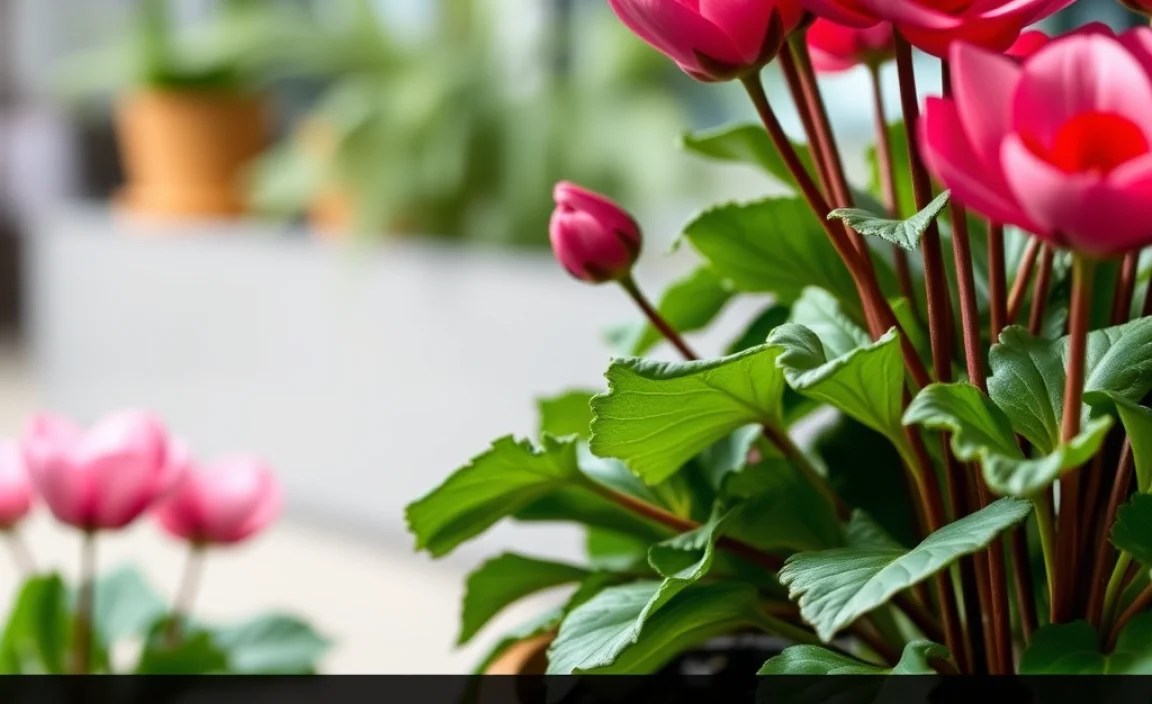
Cyclamen are pretty cool plants. They have unique, heart-shaped leaves. Their flowers are like little dancers. They come in pink, white, and red. Knowing where cyclamen come from helps. They grow in places with cool, wet winters and dry summers. This tells us what they like. When caring for cyclamen outdoors, remember their home. They need a spot that is not too hot or too cold. Think about what makes them happy in nature. This will make them happy in your garden too. It is fun to learn about plants and where they come from.
- Cyclamen like cool weather.
- They need soil that drains well.
- Too much sun can hurt them.
- They grow from a round bulb.
- Some types can handle colder weather.
Caring for cyclamen outdoors starts with knowing what they need. These plants are not like all the others. They have special needs for water, light, and soil. Understanding these needs is key. It helps you keep your cyclamen healthy and blooming. Think of it like learning a new language. Once you know the words, you can have a conversation. With cyclamen, knowing their needs lets you help them thrive. It’s like giving them the perfect home. They will thank you with beautiful flowers.
Fun Fact or Stat: Some cyclamen species are native to the Mediterranean region and can survive temperatures as low as 20°F if protected!
What Type of Cyclamen Should You Plant?
Have you ever wondered why some plants look different? It’s because there are different types! With cyclamen, some are better for outdoors than others. Cyclamen hederifolium is a good choice. It can handle colder weather. Cyclamen persicum is pretty, but needs more protection. Think about where you live. Does it get very cold? Choose a type that can handle the weather. This will make caring for cyclamen outdoors much easier. It’s like picking the right clothes for the weather. Choose the right cyclamen for your garden’s climate!
Where Do Cyclamen Like to Grow?
Imagine you are a cyclamen. Where would you want to live? Cyclamen like spots with morning sun and afternoon shade. Too much hot sun can burn their leaves. They also like soil that is not too wet. Wet soil can make their roots rot. Find a spot that is cool and shady. Make sure the soil drains well. This is the perfect home for your cyclamen. When caring for cyclamen outdoors, location is everything. It’s like finding the perfect spot to build a house!
How Can You Tell if a Cyclamen is Happy?
How do you know if your cyclamen is happy? Happy cyclamen have lots of flowers. Their leaves are a nice, deep green. If the leaves turn yellow, something is wrong. It could be too much sun or too much water. Check the soil. Is it too wet or too dry? Look for new growth. Are new leaves and flowers coming up? These are signs of a happy plant. Caring for cyclamen outdoors means paying attention. Watch your plant and learn what it needs. It’s like being a detective, solving the mystery of the happy cyclamen!

Best Soil for Thriving Outdoor Cyclamen
Soil is super important for plants. It gives them food and water. Cyclamen need soil that drains well. This means water does not sit around their roots. If the soil stays too wet, the roots can rot. You can buy special potting mix for cyclamen. Or you can make your own. Mix regular soil with some perlite and peat moss. This helps the soil drain better. Good soil is key to caring for cyclamen outdoors. It helps them grow strong and healthy. It’s like giving them a good foundation to build on.
- Use well-draining potting mix.
- Mix in perlite for better drainage.
- Avoid heavy clay soils.
- Add compost for nutrients.
- Test the soil’s pH level.
Think about the soil like a sponge. If the sponge is too dense, water will stay in it. This is like heavy clay soil. It holds too much water. Cyclamen roots don’t like that. They need a sponge that lets water flow through easily. This is like well-draining soil. It lets the roots breathe. When caring for cyclamen outdoors, remember the sponge. Choose soil that lets water drain. This will keep your cyclamen happy and healthy. Soil is not just dirt; it’s a home for the roots.
Fun Fact or Stat: The ideal soil pH for cyclamen is between 6.0 and 6.5, which is slightly acidic!
What is the Best Way to Improve Soil Drainage?
Does your soil hold too much water? There are ways to fix it. You can add things like perlite or sand. These help water drain faster. You can also add compost. Compost helps break up the soil. It also adds nutrients. Mixing these things into your soil can make a big difference. Your cyclamen will thank you. It’s like giving your soil a makeover! Caring for cyclamen outdoors sometimes means fixing the soil first.
Can You Use Garden Soil for Cyclamen?
Garden soil can be tricky. Sometimes it’s too heavy. It might not drain well. If you want to use garden soil, mix it with other things. Add perlite, peat moss, and compost. This will make it better for cyclamen. Test the soil first. See how well it drains. Make sure it’s not too heavy. Caring for cyclamen outdoors means being careful with soil. It’s like cooking a recipe. You need the right ingredients!
How Often Should You Change the Soil?
Over time, soil can lose its nutrients. It can also become compacted. This means it doesn’t drain as well. It’s a good idea to change the soil every year or two. This gives your cyclamen fresh nutrients. It also helps with drainage. When you change the soil, be gentle. Don’t hurt the roots. Fresh soil can give your cyclamen a boost. Caring for cyclamen outdoors includes refreshing the soil. It’s like giving your plant a new home!

Watering Needs for Outdoor Cyclamen Plants
Water is very important for plants. But too much water can be bad. Cyclamen like their soil to be a little dry. Water them when the top of the soil feels dry. Don’t water the leaves. This can cause problems. Water the soil around the base of the plant. Make sure the water drains out of the pot. Caring for cyclamen outdoors means watering just right. It’s like giving them a drink, not a bath.
- Water when the topsoil is dry.
- Avoid wetting the leaves.
- Water deeply and less often.
- Ensure good drainage.
- Reduce watering in dormancy.
Imagine you are giving your cyclamen a drink. You wouldn’t pour water all over its head. You would give it a sip at the base. This is how you should water your cyclamen. Water the soil, not the leaves. Let the water soak in. Then let the soil dry out a bit before watering again. This helps prevent root rot. When caring for cyclamen outdoors, think about giving a gentle drink. It’s like being a thoughtful friend. You give just what is needed.
Fun Fact or Stat: Cyclamen go dormant in the summer, so they need very little water during that time!
How Can You Tell if You’re Overwatering?
Overwatering is a common mistake. The leaves might turn yellow. They might also droop. The soil will feel very wet. If you see these signs, stop watering. Let the soil dry out completely. Make sure the pot has good drainage. Overwatering can lead to root rot. This can kill your plant. Caring for cyclamen outdoors means watching for these signs. It’s like being a doctor. You look for symptoms of illness.
What is the Best Time of Day to Water Cyclamen?
The best time to water is in the morning. This gives the leaves time to dry. If you water in the evening, the leaves stay wet all night. This can cause fungal problems. Watering in the morning helps prevent this. It also gives the plant a chance to soak up the water. Caring for cyclamen outdoors includes timing your watering. It’s like planning your day. You want to do things at the right time.
Should You Use Tap Water or Rainwater?
Rainwater is often better than tap water. Tap water can have chemicals in it. These chemicals can hurt your plants. Rainwater is natural and pure. If you can, collect rainwater to water your cyclamen. If you have to use tap water, let it sit out overnight. This helps some of the chemicals evaporate. Caring for cyclamen outdoors can be simple. Using rainwater is a great way to help your plants.

Sunlight and Shade for Healthy Cyclamen
Sunlight is important for plants, but too much can be bad. Cyclamen like bright, indirect light. This means they don’t want to be in the direct sun all day. A spot with morning sun and afternoon shade is perfect. Too much hot sun can burn their leaves. Shade helps keep them cool. Caring for cyclamen outdoors means finding the right balance. It’s like Goldilocks finding the perfect porridge. Not too hot, not too cold, just right.
| Light Condition | Description | Benefits for Cyclamen |
|---|---|---|
| Full Sun | Direct sunlight for 6+ hours per day | Can cause leaf burn and stress |
| Partial Sun | 3-6 hours of direct sunlight, mostly in the morning | Provides enough light for blooming without overheating |
| Partial Shade | 2-4 hours of direct sunlight, or filtered sunlight all day | Ideal for cyclamen; protects from harsh afternoon sun |
| Full Shade | Less than 2 hours of direct sunlight | Can lead to weak growth and fewer flowers |
Think about the sun like a spotlight. You wouldn’t want a spotlight shining on you all day. It would be too hot and bright. Cyclamen feel the same way. They like a gentle light, not a harsh spotlight. When caring for cyclamen outdoors, remember the spotlight. Give them a spot with soft, indirect light. This will keep them happy and healthy. Sunlight is important, but shade is just as important.
Fun Fact or Stat: Cyclamen flowers will turn towards the light, so rotate the pot regularly to ensure even growth!
How Do You Protect Cyclamen from Too Much Sun?
If you live in a sunny place, you need to protect your cyclamen. You can put them under a tree. You can also use shade cloth. This helps block some of the sun. Make sure they still get some light. Too much shade is also bad. Watch your plants. See how they react to the sun. Caring for cyclamen outdoors means being a sun protector. It’s like being a lifeguard, keeping them safe from harm.
Can Cyclamen Grow Indoors Near a Window?
Yes, cyclamen can grow indoors. They need a bright window. But don’t put them in direct sunlight. A north-facing window is often a good choice. Make sure the room is not too hot. Cyclamen like cool temperatures. Growing them indoors can be a challenge. But it’s possible with the right conditions. Caring for cyclamen outdoors can also mean bringing them inside. It’s like giving them a vacation from the weather.
What Happens if Cyclamen Don’t Get Enough Light?
If cyclamen don’t get enough light, they won’t bloom. Their leaves might turn yellow. They might also become weak. Light is important for making food. Without enough light, they can’t grow properly. Make sure your cyclamen get enough light. Move them to a brighter spot if needed. Caring for cyclamen outdoors means paying attention to light. It’s like making sure they have enough to eat.
Fertilizing Outdoor Cyclamen for Best Blooms
Fertilizer is like vitamins for plants. It gives them extra nutrients. Cyclamen don’t need a lot of fertilizer. Too much can hurt them. Use a balanced fertilizer. This means it has equal parts of nitrogen, phosphorus, and potassium. Fertilize them when they are actively growing. This is usually in the fall and winter. Stop fertilizing when they go dormant in the summer. Caring for cyclamen outdoors includes giving them the right food. It’s like making sure they have a healthy diet.
- Use a balanced fertilizer.
- Fertilize during the growing season.
- Dilute the fertilizer to half strength.
- Avoid fertilizing during dormancy.
- Water the soil after fertilizing.
Think about fertilizer like a snack. You wouldn’t eat snacks all day long. You would eat them in moderation. Cyclamen are the same way. They need fertilizer, but not too much. A little bit goes a long way. When caring for cyclamen outdoors, remember the snack. Give them a small dose of fertilizer. This will help them grow and bloom. It’s like giving them a little boost of energy.
Fun Fact or Stat: Over-fertilizing can lead to salt buildup in the soil, which can harm cyclamen roots!
What Kind of Fertilizer Should You Use?
A balanced fertilizer is best. Look for one that says 10-10-10 on the label. This means it has equal parts of nitrogen, phosphorus, and potassium. You can also use a fertilizer made for flowering plants. These often have more phosphorus. Phosphorus helps with blooming. Follow the instructions on the label. Don’t use too much fertilizer. Caring for cyclamen outdoors means choosing the right fertilizer. It’s like picking the right tool for the job.
How Often Should You Fertilize Cyclamen?
Fertilize cyclamen every few weeks during the growing season. This is usually in the fall and winter. Stop fertilizing when they go dormant in the summer. Don’t fertilize them too often. This can cause problems. Follow the instructions on the fertilizer label. A little bit of fertilizer is enough. Caring for cyclamen outdoors means fertilizing at the right time. It’s like setting a schedule. You do things at the right intervals.
What Are the Signs of Over-Fertilizing?
Over-fertilizing can cause problems. The leaves might turn brown. They might also become crispy. You might see white crust on the soil. These are signs of too much fertilizer. If you see these signs, stop fertilizing. Flush the soil with water. This helps remove some of the fertilizer. Caring for cyclamen outdoors means watching for these signs. It’s like being a detective, solving the mystery of the sick plant.
Protecting Cyclamen from Pests and Diseases Outdoors
Sometimes, pests and diseases can attack cyclamen. Pests are little bugs that eat plants. Diseases are caused by germs. To protect your cyclamen, check them often. Look for signs of pests or diseases. If you see something, take action. There are many ways to get rid of pests and diseases. Caring for cyclamen outdoors includes protecting them from harm. It’s like being a bodyguard, keeping them safe from danger.
- Inspect plants regularly for pests.
- Use insecticidal soap for pests.
- Ensure good air circulation.
- Remove dead leaves promptly.
- Use fungicide for fungal diseases.
Imagine your cyclamen is a castle. Pests and diseases are like invaders trying to attack the castle. You need to defend your castle. Check the walls for cracks. Look for invaders trying to sneak in. If you see something, take action. Protect your cyclamen from pests and diseases. When caring for cyclamen outdoors, think of yourself as a castle defender. It’s like being a knight, protecting your kingdom.
Fun Fact or Stat: Cyclamen mites are so small that they are almost invisible to the naked eye!
What Are Common Pests That Attack Cyclamen?
Some common pests are aphids, spider mites, and cyclamen mites. Aphids are small, green bugs. They suck the sap from plants. Spider mites are tiny, red bugs. They make webs on the leaves. Cyclamen mites are very small. They can cause leaves to become distorted. These pests can hurt your cyclamen. Caring for cyclamen outdoors means knowing your enemies. It’s like being a soldier, knowing who you are fighting.
How Can You Prevent Diseases in Cyclamen?
Good air circulation helps prevent diseases. Don’t let the leaves get wet. Remove dead leaves promptly. These can harbor diseases. Use a fungicide if you see signs of disease. Fungicides are like medicine for plants. They can help kill the germs that cause diseases. Caring for cyclamen outdoors means taking precautions. It’s like washing your hands to prevent getting sick.
Are There Natural Ways to Get Rid of Pests?
Yes, there are natural ways to get rid of pests. You can use insecticidal soap. This is a soap that kills bugs. You can also use neem oil. This is a natural oil that repels pests. Ladybugs eat aphids. You can release ladybugs in your garden. These natural methods are safe for the environment. Caring for cyclamen outdoors can be eco-friendly. It’s like using natural cleaning products in your house.
Dormancy and Seasonal Care for Cyclamen
Cyclamen go dormant in the summer. This means they stop growing. The leaves turn yellow and die back. This is normal. Don’t throw them away! Reduce watering during dormancy. Let the soil dry out. Store the bulb in a cool, dry place. In the fall, start watering again. New leaves will start to grow. Caring for cyclamen outdoors includes understanding dormancy. It’s like knowing when to rest. Even plants need a break.
- Reduce watering during dormancy.
- Store bulbs in a cool, dry place.
- Resume watering in the fall.
- Repot if necessary.
- Protect from frost in winter.
Think about dormancy like hibernation. Bears sleep all winter. Cyclamen rest all summer. They need this time to recharge. Don’t disturb them during dormancy. Let them rest. In the fall, they will wake up and start growing again. When caring for cyclamen outdoors, respect their sleep. It’s like letting someone sleep in. They need their rest.
Fun Fact or Stat: Cyclamen bulbs can live for many years if properly cared for during dormancy!
How Do You Know When Cyclamen Are Dormant?
The leaves will turn yellow and die back. This is the main sign. The plant will stop growing. There will be no new leaves or flowers. This usually happens in the summer. These are clear signs of dormancy. Don’t worry, it’s normal. Your plant is just resting. Caring for cyclamen outdoors means recognizing these signs. It’s like knowing when someone is tired. You can tell by their behavior.
What Should You Do with Cyclamen During Dormancy?
Reduce watering. Let the soil dry out. Store the bulb in a cool, dry place. You can leave it in the pot. Or you can take it out and store it in a paper bag. Don’t expose it to direct sunlight. Don’t fertilize it. Just let it rest. Caring for cyclamen outdoors during dormancy is easy. It’s like giving it a vacation. You don’t have to do much.
How Do You Wake Up Cyclamen from Dormancy?
In the fall, start watering again. This will wake up the bulb. New leaves will start to grow. You can also repot it in fresh soil. This gives it a boost of nutrients. Move it to a brighter spot. But don’t put it in direct sunlight. Caring for cyclamen outdoors includes waking them up gently. It’s like waking someone up with a gentle nudge. You don’t want to startle them.
Summary
Caring for cyclamen outdoors involves understanding their unique needs. They prefer cool temperatures, well-draining soil, and partial shade. Water them carefully, allowing the soil to dry slightly between waterings, and fertilize lightly during the growing season. Protect them from pests and diseases by inspecting them regularly and taking action when needed. During dormancy, reduce watering and store the bulbs in a cool, dry place. By following these tips, you can enjoy the beautiful blooms of cyclamen in your outdoor space.
Conclusion
Cyclamen are beautiful plants that can brighten up your garden. They need special care, but it is not too hard. Remember to give them the right amount of water, light, and food. Protect them from pests and diseases. Understanding their dormancy period is also important. With a little effort, caring for cyclamen outdoors can be a rewarding experience. You will be rewarded with beautiful blooms!
Frequently Asked Questions
Question No 1: How often should I water my outdoor cyclamen?
Answer: You should water your outdoor cyclamen when the top inch of soil feels dry to the touch. Avoid overwatering, as this can lead to root rot. Water deeply, but allow the excess water to drain away. During the growing season, this might be every few days, but reduce watering during dormancy. Remember, caring for cyclamen outdoors means finding the right balance in watering – not too much, not too little!
Question No 2: What kind of soil is best for outdoor cyclamen?
Answer: The best soil for outdoor cyclamen is well-draining and slightly acidic. A mix of potting soil, perlite, and peat moss works well. Avoid heavy clay soils, as they can retain too much moisture. Good drainage is essential to prevent root rot. The roots need to breathe, so think of the soil like a sponge that releases water instead of holding onto it. Healthy soil is key to caring for cyclamen outdoors.
Question No 3: How much sunlight do outdoor cyclamen need?
Answer: Outdoor cyclamen prefer partial shade. They need some sunlight, but too much direct sun can burn their leaves. A spot that gets morning sun and afternoon shade is ideal. If you live in a very sunny area, provide extra shade during the hottest part of the day. Sunlight is important for blooming, but protection from harsh sun is crucial. When caring for cyclamen outdoors, consider their need for gentle light.
Question No 4: How do I protect my outdoor cyclamen from frost?
Answer: Frost can damage cyclamen leaves and flowers. If frost is predicted, cover your plants with a blanket or move them to a sheltered location. You can also use frost cloth to protect them. If they are in pots, you can bring them indoors temporarily. Protecting from frost is an important part of caring for cyclamen outdoors, especially in colder climates. It helps prevent damage and keeps them healthy.
Question No 5: When do cyclamen go dormant, and what should I do then?
Answer: Cyclamen typically go dormant in the summer. During dormancy, the leaves will turn yellow and die back. Reduce watering and allow the soil to dry out. Store the bulb in a cool, dry place. In the fall, resume watering to encourage new growth. Dormancy is a natural part of their life cycle. Understanding this is key to caring for cyclamen outdoors properly. Let them rest and recharge for the next blooming season.
Question No 6: What are some common pests that attack cyclamen, and how can I get rid of them?
Answer: Common pests include aphids, spider mites, and cyclamen mites. You can use insecticidal soap to get rid of these pests. Neem oil is another effective natural treatment. Regularly inspect your plants for signs of pests and take action promptly. Good air circulation can also help prevent infestations. Caring for cyclamen outdoors includes being vigilant about pests. Keep them healthy and pest-free for best results.
