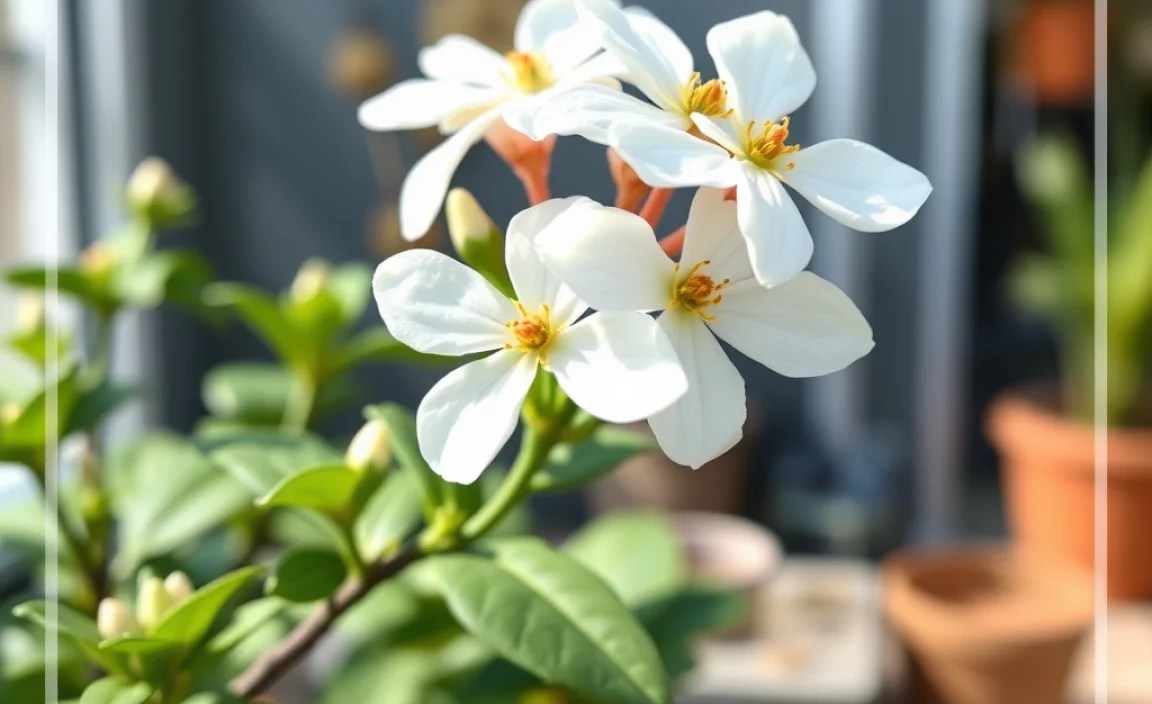
Do you love sweet smells? Have you ever seen tiny white flowers blooming? These might be jasmine! Caring jasmine outdoors can bring beauty to your yard. It fills the air with a lovely scent. Let’s learn how to grow this amazing plant.
Jasmine is a climbing vine. It can grow on fences or walls. Imagine your garden filled with jasmine. Wouldn’t that be wonderful?
Jasmine flowers are small but mighty. They have a strong, sweet smell. This smell is strongest at night. Many people use jasmine to make tea. The flowers add a special flavor. Let’s explore how you can grow jasmine!
Key Takeaways
- Caring jasmine outdoors requires well-drained soil and plenty of sunlight.
- Water jasmine regularly, especially during hot and dry weather.
- Prune jasmine after it flowers to encourage new growth and more blooms.
- Protect jasmine from frost and freezing temperatures.
- Use a trellis or support structure for jasmine to climb and thrive.

Understanding Jasmine Plant Care Outdoors
Jasmine is a beautiful flowering plant. It is known for its strong, sweet scent. Many people enjoy growing jasmine in their gardens. Caring jasmine outdoors involves several important steps. First, you need to choose the right location. Jasmine plants need plenty of sunlight. They also need well-drained soil. Soil that holds too much water can hurt the roots. You should also protect your jasmine from strong winds. Wind can damage the delicate flowers and leaves. Regular watering is also important. Jasmine plants need consistent moisture, especially during hot weather. Fertilizing your jasmine can help it grow strong and healthy. Use a balanced fertilizer in the spring. Pruning is another key part of jasmine care. Prune your jasmine after it finishes flowering. This will encourage new growth and more blooms next year. With the right care, your jasmine will thrive and bring you joy for many years.
- Choose a sunny location.
- Use well-drained soil.
- Water regularly, especially when it’s hot.
- Fertilize in the spring.
- Prune after flowering.
Growing jasmine can be very rewarding. The sweet scent fills the air. The beautiful flowers add charm to your garden. Remember to protect your jasmine from cold weather. Frost can damage the plant. You can cover it with a cloth or move it indoors if possible. Jasmine is a relatively easy plant to care for. With a little attention, it will flourish. You can enjoy its beauty and fragrance for years to come. Many people also use jasmine flowers for tea. They can also be used in perfumes and other products. Consider growing jasmine today. You will not be disappointed. Your garden will thank you for it. Jasmine is a wonderful addition to any outdoor space. It brings beauty and fragrance to your life.
Fun Fact or Stat: Jasmine flowers open at night, releasing their strongest fragrance to attract nocturnal pollinators like moths!
What Kind of Soil Does Jasmine Need?
Choosing the right soil is very important. Jasmine plants need well-draining soil. This means the soil should not hold too much water. Waterlogged soil can cause root rot. Root rot is a serious problem for jasmine. It can kill the plant. To improve drainage, you can add sand or perlite to the soil. These materials help water flow through the soil more easily. You can also use a raised garden bed. Raised beds provide better drainage than planting directly in the ground. When planting jasmine in a pot, make sure the pot has drainage holes. These holes allow excess water to escape. Using the right soil will help your jasmine thrive. It will also prevent many common problems. Remember, healthy soil equals a healthy plant! Good soil is the foundation for beautiful jasmine flowers and a sweet fragrance in your garden.
How Much Sunlight Does Jasmine Need?
Sunlight is essential for jasmine growth. Jasmine plants need at least six hours of sunlight per day. More sunlight is even better. Sunlight provides the energy jasmine needs to produce flowers. Without enough sunlight, jasmine may not bloom. The leaves may also turn yellow. Choose a location that gets plenty of sun. If you live in a very hot climate, some afternoon shade can be helpful. This can prevent the leaves from getting scorched. Morning sun is usually best. It is less intense than afternoon sun. If you are growing jasmine indoors, place it near a sunny window. A south-facing window is ideal. You can also use grow lights to supplement natural sunlight. Make sure the grow lights are positioned correctly. They should be close enough to provide light but not so close that they burn the leaves.
How Often Should I Water Jasmine?
Watering is a crucial part of jasmine care. How often you water depends on several factors. These include the weather, the type of soil, and the size of the plant. In general, jasmine plants need regular watering. Water deeply when the top inch of soil feels dry. Avoid overwatering, which can lead to root rot. During hot, dry weather, you may need to water more frequently. Check the soil moisture regularly. If the leaves start to wilt, it is a sign that the plant needs water. When watering, water at the base of the plant. Avoid getting the leaves wet. Wet leaves can attract fungal diseases. In the winter, you can reduce watering. The plant needs less water when it is not actively growing. Remember, consistent moisture is key to healthy jasmine growth. Adjust your watering schedule as needed based on the conditions.

Best Location for Jasmine Plants Outdoors
Choosing the right location is key to success. Jasmine plants need a spot that gets plenty of sunlight. They also need well-drained soil. The location should be protected from strong winds. Wind can damage the delicate flowers and leaves. A south-facing wall is often a good choice. It provides warmth and shelter. If you live in a colder climate, consider planting jasmine near a building. The building can provide some protection from frost. You can also grow jasmine in containers. This allows you to move the plant indoors during the winter. When choosing a location, think about the mature size of the plant. Jasmine vines can grow quite large. Make sure they have enough room to spread out. Providing the right location will help your jasmine thrive. It will also make caring jasmine outdoors much easier.
- South-facing wall is ideal.
- Protect from strong winds.
- Use containers in cold climates.
- Consider the mature size.
- Ensure good drainage.
The location you choose can also affect the fragrance of the jasmine. A sunny, sheltered spot will help the flowers produce more fragrance. If the plant is stressed, it may not bloom as much. It may also not produce as much fragrance. Consider the aesthetics of the location. Jasmine can be a beautiful addition to any garden. Choose a spot where it will be visible and enjoyed. You can train jasmine to climb on a trellis or pergola. This can create a stunning visual display. You can also plant jasmine near a patio or deck. This will allow you to enjoy the fragrance while relaxing outdoors. Remember to consider all these factors when choosing the best location for your jasmine plants. With the right location, your jasmine will thrive and bring you joy for many years.
Fun Fact or Stat: Jasmine is native to tropical and subtropical regions of the world, including Asia, Africa, and Australia!
How to Protect Jasmine from Wind?
Protecting jasmine from wind is very important. Strong winds can damage the plant. They can break stems and tear leaves. Wind can also dry out the soil quickly. This can stress the plant. To protect jasmine from wind, choose a sheltered location. Plant it near a wall or fence. This will provide a barrier against the wind. You can also use windbreaks. Windbreaks are trees or shrubs that block the wind. Plant them upwind of the jasmine. If you are growing jasmine in a container, you can move it to a more sheltered location during windy weather. You can also use a wind screen. Wind screens are made of fabric or plastic. They can be placed around the plant to block the wind. Regular watering is also important. Wind can dry out the soil, so make sure to water the plant regularly. Mulching around the base of the plant can also help retain moisture. This will protect the roots from drying out.
What are Good Companion Plants for Jasmine?
Companion planting can be very beneficial. Some plants can help jasmine grow better. They can provide shade, attract pollinators, or repel pests. Good companion plants for jasmine include roses, lavender, and marigolds. Roses and jasmine have similar needs. They both like sunny locations and well-drained soil. Lavender attracts pollinators like bees and butterflies. These pollinators can also help pollinate jasmine flowers. Marigolds repel pests like nematodes and aphids. These pests can damage jasmine plants. Other good companion plants include herbs like basil and rosemary. These herbs can help repel insects. When choosing companion plants, consider their size and growth habits. Make sure they do not overcrowd the jasmine. Also, choose plants that have similar needs for sunlight and water. Companion planting can help your jasmine thrive. It can also create a more beautiful and healthy garden.
Can Jasmine Grow in Pots Outdoors?
Yes, jasmine can grow in pots outdoors. Growing jasmine in pots has several advantages. It allows you to move the plant indoors during the winter. It also gives you more control over the soil conditions. When growing jasmine in a pot, choose a pot that is large enough. The pot should be at least 12 inches in diameter. Make sure the pot has drainage holes. Use a well-draining potting mix. Avoid using garden soil, which can become compacted in pots. Water the plant regularly. Check the soil moisture frequently. Fertilize the plant in the spring. Use a balanced fertilizer. Prune the plant after it flowers. This will encourage new growth. Repot the plant every few years. This will provide fresh soil and more room for the roots to grow. Growing jasmine in pots is a great way to enjoy its beauty and fragrance. It also makes caring jasmine outdoors easier.

How to Plant Jasmine Outdoors
Planting jasmine is a simple process. Choose a sunny location with well-drained soil. Dig a hole that is twice as wide as the root ball. Gently remove the plant from its container. Loosen the roots slightly. Place the plant in the hole. Make sure the top of the root ball is level with the ground. Fill the hole with soil. Water the plant thoroughly. Add a layer of mulch around the base of the plant. Mulch helps retain moisture and suppress weeds. If you are planting multiple jasmine plants, space them about 3-5 feet apart. This will give them enough room to grow. You can also plant jasmine near a trellis or fence. This will provide support for the vines to climb. After planting, water the plant regularly. Fertilize it in the spring with a balanced fertilizer. With proper planting and care, your jasmine will thrive and bring you joy for many years.
- Choose a sunny location.
- Dig a hole twice as wide as the root ball.
- Loosen the roots.
- Water thoroughly after planting.
- Add mulch.
Consider the type of jasmine you are planting. Some varieties are more cold-hardy than others. If you live in a colder climate, choose a cold-hardy variety. You can also protect the plant from frost by covering it with a cloth or moving it indoors during the winter. Jasmine plants can be susceptible to pests and diseases. Monitor your plants regularly for signs of problems. If you see any pests or diseases, take action quickly. You can use insecticidal soap or horticultural oil to control pests. You can also use a fungicide to control diseases. Proper planting and care will help your jasmine resist pests and diseases. It will also help it grow strong and healthy. Remember to enjoy the process of planting and caring jasmine outdoors. It is a rewarding experience that will bring beauty and fragrance to your garden.
Fun Fact or Stat: The name “jasmine” comes from the Persian word “yasmin,” which means “gift from God!”
What is the Best Time to Plant Jasmine?
The best time to plant jasmine is in the spring or fall. These seasons provide mild temperatures. This allows the plant to establish its roots before the hot summer or cold winter. In the spring, plant jasmine after the last frost. This will protect the plant from damage. In the fall, plant jasmine at least six weeks before the first frost. This will give the plant enough time to establish its roots before winter. Avoid planting jasmine during the heat of summer. The hot temperatures can stress the plant. They can also make it difficult for the roots to establish. If you must plant jasmine in the summer, provide extra shade and water. Water the plant regularly to keep the soil moist. You can also use a shade cloth to protect the plant from the sun. Planting jasmine at the right time will increase its chances of success. It will also make it easier to care for.
How Deep Should I Plant Jasmine?
Planting jasmine at the correct depth is very important. The top of the root ball should be level with the ground. Planting jasmine too deep can cause root rot. Planting it too shallow can cause the roots to dry out. When you remove the plant from its container, check the root ball. If the roots are circling around the bottom of the pot, gently loosen them. This will encourage them to grow outward into the soil. Dig a hole that is twice as wide as the root ball. This will give the roots plenty of room to spread out. Place the plant in the hole. Make sure the top of the root ball is level with the ground. Fill the hole with soil. Gently pat the soil around the plant. Water the plant thoroughly. This will help settle the soil and ensure good contact between the roots and the soil. Planting jasmine at the correct depth will help it thrive.
Should I Add Fertilizer When Planting Jasmine?
Adding fertilizer when planting jasmine can be beneficial. It can help the plant establish its roots and grow strong. Use a balanced fertilizer that is specifically formulated for flowering plants. Follow the instructions on the fertilizer package. Avoid using too much fertilizer. Too much fertilizer can burn the roots. You can also add compost to the soil when planting jasmine. Compost is a natural fertilizer that provides nutrients to the plant. It also improves the soil structure. Mix the compost with the soil before planting. After planting, water the plant thoroughly. This will help the fertilizer and compost reach the roots. Fertilize the plant again in the spring. This will provide additional nutrients for growth and flowering. Regular fertilization will help your jasmine thrive. It will also produce more beautiful flowers and a stronger fragrance.

Watering and Feeding Jasmine Plants
Watering and feeding are essential for healthy jasmine growth. Jasmine plants need regular watering. Water deeply when the top inch of soil feels dry. Avoid overwatering, which can lead to root rot. During hot, dry weather, you may need to water more frequently. Check the soil moisture regularly. If the leaves start to wilt, it is a sign that the plant needs water. When watering, water at the base of the plant. Avoid getting the leaves wet. Wet leaves can attract fungal diseases. Fertilize your jasmine in the spring. Use a balanced fertilizer that is specifically formulated for flowering plants. Follow the instructions on the fertilizer package. Avoid using too much fertilizer. Too much fertilizer can burn the roots. You can also use compost or other organic fertilizers. These fertilizers provide nutrients to the plant slowly over time. Regular watering and feeding will help your jasmine thrive. It will also produce more beautiful flowers and a stronger fragrance.
- Water deeply when the top inch of soil is dry.
- Avoid overwatering.
- Fertilize in the spring with a balanced fertilizer.
- Use compost or other organic fertilizers.
- Water at the base of the plant.
Consider the type of soil you are using. Sandy soils drain quickly. They may require more frequent watering. Clay soils retain water for longer. They may require less frequent watering. Adjust your watering schedule based on the type of soil you have. Also, consider the weather conditions. During rainy weather, you may not need to water at all. During hot, dry weather, you may need to water every day. Monitor your plants regularly for signs of stress. Yellowing leaves can indicate overwatering or underwatering. Wilting leaves can indicate underwatering. Adjust your watering and feeding schedule as needed. With proper watering and feeding, your jasmine will thrive and bring you joy for many years. Remember that caring jasmine outdoors requires attention and care.
Fun Fact or Stat: Jasmine flowers are often used in traditional medicine for their calming and antiseptic properties!
How to Tell if Jasmine Needs Water?
Knowing when to water jasmine is crucial. The best way to tell if jasmine needs water is to check the soil. Stick your finger into the soil. If the top inch of soil feels dry, it is time to water. You can also use a moisture meter to check the soil moisture. Another sign that jasmine needs water is wilting leaves. If the leaves are drooping or wilting, it is a sign that the plant is not getting enough water. The leaves may also turn yellow or brown. If you see these signs, water the plant immediately. Be careful not to overwater. Overwatering can lead to root rot. Check the soil moisture before watering. If the soil is already moist, wait until it dries out before watering again. Regular monitoring will help you determine when to water your jasmine. It will also help you avoid overwatering or underwatering.
What Kind of Fertilizer is Best for Jasmine?
Choosing the right fertilizer is important. A balanced fertilizer is best for jasmine. A balanced fertilizer contains equal amounts of nitrogen, phosphorus, and potassium. These nutrients are essential for plant growth and flowering. Look for a fertilizer that is specifically formulated for flowering plants. These fertilizers often have a higher phosphorus content. Phosphorus promotes flowering. Follow the instructions on the fertilizer package. Avoid using too much fertilizer. Too much fertilizer can burn the roots. You can also use compost or other organic fertilizers. These fertilizers provide nutrients to the plant slowly over time. They also improve the soil structure. Apply fertilizer in the spring. This will provide the plant with the nutrients it needs to grow and flower. Regular fertilization will help your jasmine thrive. It will also produce more beautiful flowers and a stronger fragrance.
How Often Should I Fertilize Jasmine?
Fertilizing jasmine should be done in the spring. Fertilize once in the spring. This will provide the plant with the nutrients it needs to grow and flower. Avoid fertilizing jasmine in the fall or winter. The plant is not actively growing during these seasons. Fertilizing at these times can lead to nutrient buildup in the soil. This can harm the plant. If you are using a slow-release fertilizer, you may only need to fertilize once a year. If you are using a liquid fertilizer, you may need to fertilize more frequently. Follow the instructions on the fertilizer package. Monitor your plants regularly for signs of nutrient deficiencies. Yellowing leaves can indicate a nitrogen deficiency. Small flowers can indicate a phosphorus deficiency. Adjust your fertilization schedule as needed. With proper fertilization, your jasmine will thrive.
Pruning and Training Jasmine Outdoors
Pruning and training are important for jasmine. Pruning helps to maintain the shape of the plant. It also encourages new growth and more blooms. Train your jasmine to climb on a trellis or fence. This will provide support for the vines. Prune jasmine after it finishes flowering. This is usually in the late spring or early summer. Remove any dead, damaged, or diseased branches. You can also prune to shape the plant. Cut back long, leggy branches to encourage bushier growth. When pruning, use sharp, clean pruning shears. This will prevent the spread of diseases. Wear gloves to protect your hands. Training jasmine involves guiding the vines along a support structure. You can use ties or clips to attach the vines to the trellis or fence. Train the vines to grow in the direction you want them to go. Regular pruning and training will help your jasmine thrive. It will also create a beautiful and fragrant display in your garden.
- Prune after flowering.
- Remove dead, damaged, or diseased branches.
- Shape the plant by cutting back long branches.
- Train the vines to climb on a support structure.
- Use sharp, clean pruning shears.
Consider the type of jasmine you are pruning. Some varieties are more vigorous than others. Vigorous varieties may require more frequent pruning. Less vigorous varieties may require less pruning. Also, consider the overall health of the plant. A healthy plant will be able to withstand more pruning. A stressed plant may not be able to tolerate as much pruning. Pruning and training are essential aspects of caring jasmine outdoors. Regular pruning and training will help your jasmine thrive and bring you joy for many years. It is an investment in the beauty and health of your garden. With a little effort, you can create a stunning display of jasmine flowers and fragrance.
| Pruning Tool | Best Use | Maintenance |
|---|---|---|
| Hand Pruners | Small branches, up to 1 inch diameter | Clean and sharpen blades regularly |
| Loppers | Larger branches, up to 2 inches diameter | Oil moving parts to prevent rust |
| Pruning Saw | Thick branches, over 2 inches diameter | Keep blade sharp for clean cuts |
| Hedge Trimmer | Shaping and trimming hedges and shrubs | Clean blades after each use |
Fun Fact or Stat: In some cultures, jasmine flowers symbolize love, beauty, and purity, and are often used in wedding ceremonies!
When is the Best Time to Prune Jasmine?
The best time to prune jasmine is after it flowers. This is usually in the late spring or early summer. Pruning at this time allows the plant to recover before the next growing season. It also encourages new growth and more blooms. Avoid pruning jasmine in the fall or winter. Pruning at these times can damage the plant. It can also make it more susceptible to cold damage. If you need to remove dead, damaged, or diseased branches, you can do so at any time of year. However, avoid doing any major pruning outside of the recommended time frame. Pruning at the right time will help your jasmine thrive. It will also ensure that it produces plenty of beautiful flowers and fragrance. Remember to use sharp, clean pruning shears. This will prevent the spread of diseases.
How to Train Jasmine to Climb?
Training jasmine to climb is a simple process. Start by providing a support structure. A trellis, fence, or arbor are all good options. Plant the jasmine near the support structure. As the vines grow, gently guide them towards the support. Use ties or clips to attach the vines to the support. Train the vines to grow in the direction you want them to go. You can also prune the vines to encourage them to grow in a specific direction. Regular training will help your jasmine climb successfully. It will also create a beautiful and fragrant display. Be patient. It may take some time for the vines to reach the top of the support. Continue to guide and prune the vines as needed. With a little effort, you can create a stunning jasmine display in your garden.
What to do With Yellow Leaves on Jasmine?
Yellow leaves on jasmine can indicate several problems. The most common causes are overwatering, underwatering, and nutrient deficiencies. Check the soil moisture. If the soil is too wet, the plant may be overwatered. If the soil is too dry, the plant may be underwatered. Adjust your watering schedule accordingly. If the soil moisture is correct, the plant may have a nutrient deficiency. Fertilize the plant with a balanced fertilizer. Follow the instructions on the fertilizer package. You can also add compost to the soil. Compost provides nutrients to the plant and improves the soil structure. If the yellow leaves are only on a few branches, the problem may be a localized issue. Prune off the affected branches. This will prevent the problem from spreading. Monitor the plant regularly for signs of improvement. With proper care, the plant should recover and the yellow leaves should disappear.
Protecting Jasmine From Pests and Diseases
Protecting jasmine from pests and diseases is important. Jasmine plants can be susceptible to several pests and diseases. Common pests include aphids, spider mites, and whiteflies. These pests can suck the sap from the leaves. This can weaken the plant. Common diseases include fungal infections and root rot. These diseases can damage the plant and even kill it. To protect your jasmine from pests and diseases, monitor your plants regularly. Look for signs of problems. If you see any pests, take action quickly. You can use insecticidal soap or horticultural oil to control pests. These products are safe for plants and the environment. You can also use natural predators to control pests. Ladybugs, for example, eat aphids. To prevent diseases, provide good air circulation. Avoid overwatering. Remove any dead or diseased leaves. You can also use a fungicide to control fungal infections. Regular monitoring and preventative measures will help your jasmine thrive.
- Monitor plants regularly for pests and diseases.
- Use insecticidal soap or horticultural oil to control pests.
- Provide good air circulation.
- Avoid overwatering.
- Remove dead or diseased leaves.
Consider the location of your jasmine. Plants that are grown in shady areas are more susceptible to diseases. Plants that are grown in sunny areas are less susceptible to diseases. Also, consider the overall health of your plant. A healthy plant is more resistant to pests and diseases. A stressed plant is more susceptible to pests and diseases. Proper caring jasmine outdoors includes protection from pests and diseases. With a little effort, you can keep your jasmine healthy and thriving. Remember to check your plants regularly and take action quickly if you see any problems. This will help you enjoy the beauty and fragrance of your jasmine for many years to come.
Fun Fact or Stat: Jasmine essential oil is widely used in aromatherapy for its calming and mood-boosting properties!
How to Identify Common Jasmine Pests?
Identifying common jasmine pests is the first step. Aphids are small, soft-bodied insects. They can be green, black, or brown. They often cluster on new growth. Spider mites are tiny, spider-like creatures. They are difficult to see with the naked eye. They create webs on the leaves. Whiteflies are small, white, flying insects. They often fly up when the plant is disturbed. Scale insects are small, armored insects. They attach themselves to the stems and leaves. Mealybugs are soft-bodied insects. They are covered in a white, waxy substance. Identifying these pests early will help you take action quickly. You can use a magnifying glass to help you see the pests. Check your plants regularly for signs of infestation. Early detection is key to controlling pests.
What are Natural Ways to Control Jasmine Pests?
Natural pest control methods are effective. Insecticidal soap is a safe and effective way to control many common jasmine pests. It works by disrupting the insect’s cell membranes. Horticultural oil is another safe and effective option. It works by suffocating the insects. Neem oil is a natural insecticide. It is derived from the neem tree. It can be used to control a variety of pests. Diatomaceous earth is a natural powder. It is made from the fossilized remains of diatoms. It can be used to control crawling insects. Ladybugs are natural predators of aphids. You can purchase ladybugs online or at your local garden center. Encourage natural predators in your garden. This will help control pests naturally. With these natural methods, you can protect your jasmine from pests. You can also avoid using harmful chemicals.
How to Prevent Jasmine Diseases?
Preventing jasmine diseases is important. Provide good air circulation. This will help prevent fungal infections. Avoid overwatering. Overwatering can lead to root rot. Remove any dead or diseased leaves. This will prevent the spread of diseases. Use a well-draining soil. This will help prevent root rot. Plant jasmine in a sunny location. Plants that are grown in shady areas are more susceptible to diseases. Water at the base of the plant. Avoid getting the leaves wet. Wet leaves can attract fungal diseases. Mulch around the base of the plant. Mulch helps to retain moisture and suppress weeds. It also helps to prevent soilborne diseases. By following these tips, you can prevent many common jasmine diseases. You can also keep your jasmine healthy and thriving.
Summary
Caring jasmine outdoors involves several key steps. You need to choose the right location. Jasmine needs plenty of sunlight and well-drained soil. Regular watering is also important. Jasmine plants need consistent moisture. Fertilize your jasmine in the spring. Use a balanced fertilizer. Pruning is another important aspect of jasmine care. Prune your jasmine after it finishes flowering. This will encourage new growth. Protect your jasmine from pests and diseases. Monitor your plants regularly for signs of problems. With the right care, your jasmine will thrive. It will also bring you joy for many years to come. Remember to enjoy the process of growing jasmine. It is a rewarding experience that will bring beauty and fragrance to your garden.
Conclusion
Growing jasmine outdoors can be a rewarding experience. The sweet fragrance and beautiful flowers make it a wonderful addition to any garden. Remember to provide the right conditions for your jasmine to thrive. Sunlight, well-drained soil, and regular watering are essential. Protect your jasmine from pests and diseases. Regular pruning will keep your plant healthy and encourage more blooms. By following these tips, you can enjoy the beauty of jasmine for many years. Caring jasmine outdoors is easier than you think!
Frequently Asked Questions
Question No 1: How often should I water my jasmine plant outdoors?
Answer: Water your jasmine plant deeply whenever the top inch of soil feels dry. During hot and dry weather, you may need to water more frequently, possibly every day. Make sure the soil is well-draining to avoid overwatering, which can lead to root rot. Check the plant regularly, and if the leaves start to wilt, that’s a clear sign it needs water. Caring jasmine outdoors means being attentive to its watering needs, especially during different weather conditions. Adjust your watering schedule based on the climate and the plant’s specific needs.
Question No 2: What kind of fertilizer is best for jasmine plants?
Answer: A balanced fertilizer with equal parts of nitrogen, phosphorus, and potassium (e.g., 10-10-10) is generally good for jasmine plants. You can also use a fertilizer specifically formulated for flowering plants, as these often have a higher phosphorus content to encourage more blooms. Caring jasmine outdoors also includes feeding it properly. Follow the instructions on the fertilizer package and avoid over-fertilizing, as this can harm the plant. Fertilize in the spring to support growth and flowering throughout the season.
Question No 3: How do I protect my jasmine plant from frost?
Answer: If you live in an area with frost, there are several ways to protect your jasmine plant. If it’s in a container, you can move it indoors to a sunny location. If it’s planted in the ground, you can cover it with a frost blanket or burlap to insulate it from the cold. Add a layer of mulch around the base of the plant to help protect the roots. Caring jasmine outdoors in colder climates requires taking these extra steps to prevent frost damage. Remove the coverings during the day if the weather warms up to allow the plant to breathe.
Question No 4: Why isn’t my jasmine plant flowering?
Answer: There are several reasons why your jasmine plant might not be flowering. One common reason is insufficient sunlight. Jasmine plants need at least six hours of sunlight per day to produce flowers. Another reason could be improper pruning. Prune your jasmine after it flowers to encourage new growth and more blooms. Also, make sure you are fertilizing your plant properly with a fertilizer that promotes flowering. Caring jasmine outdoors involves ensuring it gets enough light, proper pruning, and adequate nutrients. Check these factors to help your jasmine plant bloom.
Question No 5: How do I get rid of aphids on my jasmine plant?
Answer: Aphids can be a common problem for jasmine plants. You can get rid of them by spraying the plant with insecticidal soap or horticultural oil. These products are safe for plants and the environment. You can also try blasting the aphids off the plant with a strong stream of water from a hose. Another natural method is to introduce ladybugs to your garden, as they are natural predators of aphids. Regular monitoring and prompt action are key to caring jasmine outdoors and keeping it free from pests like aphids. Repeat treatments as needed until the aphids are gone.
Question No 6: Can I grow jasmine indoors during the winter?
Answer: Yes, you can grow jasmine indoors during the winter, especially if you live in a colder climate. Place the plant near a sunny window where it can get at least six hours of sunlight per day. Keep the soil moist but not waterlogged. Reduce watering slightly during the winter months. Maintain a temperature between 60-70°F (15-21°C). Providing these conditions will help your jasmine plant thrive indoors. This is an essential part of caring jasmine outdoors when the weather turns cold. With proper care, you can enjoy the beauty and fragrance of jasmine indoors during the winter.
