Did you know you can make your own soil? It is like magic! You can turn old food scraps into garden gold. This is done with composting. Setting up a compost bin might seem hard. But it is easier than you think! Let’s learn about compost bin setup.
Composting is great for the Earth. It helps plants grow strong and healthy. Plus, it reduces waste. Are you ready to become a composting superstar? Let’s get started!
Key Takeaways
- The right compost bin setup can transform kitchen waste into garden fertilizer.
- “Brown” materials like leaves provide carbon for healthy compost.
- “Green” materials such as fruit scraps add nitrogen to the mix.
- Regularly turning your compost pile helps speed up decomposition.
- Good compost smells earthy, not bad.
Choosing Your Compost Bin Setup
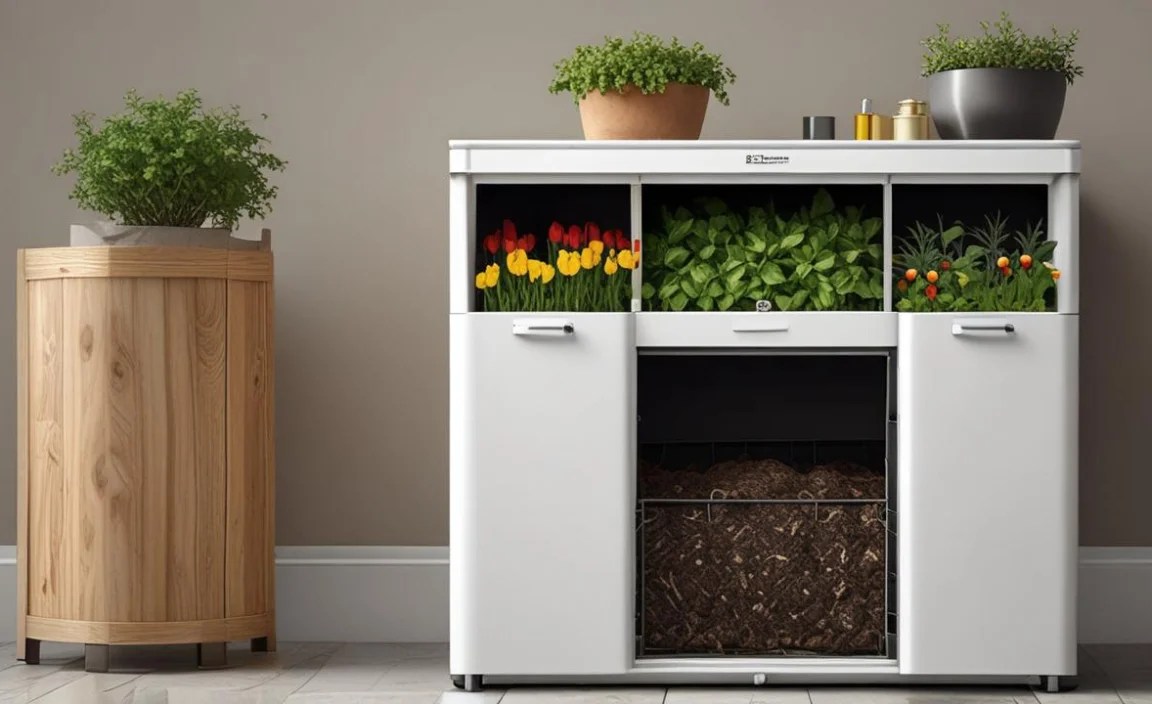
Choosing the right compost bin setup is important. It depends on your space and needs. Some people use simple piles in their backyard. Others prefer closed bins. Closed bins can keep out pests. They also hold in heat. This helps the compost break down faster. Open piles are cheaper and easier to build. But they might attract animals. Consider how much space you have. Think about how much waste you create. Do you want something easy or something fast? All these things will help you pick the best bin for you. Remember, the best compost bin is the one you will use!
- Open piles are easy and cheap.
- Closed bins keep pests away.
- Tumblers make turning easy.
- Worm bins are great for small spaces.
- Consider your space and needs.
No matter what kind of bin you choose, location matters. Place your bin in a spot that is easy to access. You don’t want to walk too far with your kitchen scraps! A spot with some shade is good. This keeps the compost from drying out too quickly. Make sure the area drains well. You don’t want your compost to get too soggy. If you live in an apartment, you can still compost. Worm bins are a great option for small spaces. With a little planning, anyone can have a successful compost bin setup.
What Size Compost Bin Do I Need?
Choosing the right size for your compost bin is important. If the bin is too small, it will fill up quickly. If it is too big, it might be hard to manage. Think about how much food waste your family makes. A small family might only need a small bin. A larger family will need a bigger bin. You can always start with a smaller bin and upgrade later. It is better to have a bin that is a little too big than one that is too small. A good size for a backyard bin is about one cubic yard.
Open or Closed Bin: Which Is Best?
Deciding between an open or closed compost bin can be tricky. Open bins are simple. They are just piles of organic matter. They are easy to turn and manage. Closed bins offer more control. They help keep animals out. They also retain moisture. This can speed up the composting process. If you live in an area with lots of rain, a closed bin might be better. If you want something simple and cheap, an open bin could be the way to go.
Can I Make My Own Compost Bin?
Yes, you can definitely make your own compost bin! It is a fun and easy project. You can use old wooden pallets to build a simple bin. Or, you can use a plastic trash can with holes drilled in it. There are many tutorials online that can guide you. Making your own bin is a great way to save money. It also lets you customize the bin to fit your needs. Get creative and have fun!
Fun Fact or Stat: Did you know that composting can reduce your household waste by up to 30%?
The Right Location for Compost Bin Setup
The right location is key for a successful compost bin setup. You need a spot that is easy to get to. You will be taking food scraps there often. Choose a place that is fairly level. This will keep your bin from tipping over. Some shade is good to prevent the compost from drying out. But you also want some sun to help it heat up. Make sure the spot has good drainage. You don’t want your compost to become waterlogged. Keep the bin away from your house to avoid attracting pests. With a little thought, you can find the perfect spot.
- Choose a spot that is easy to reach.
- Find a level area for your bin.
- Pick a spot with some shade and sun.
- Make sure the area has good drainage.
- Keep the bin away from your house.
Think about the wind when choosing a location. You don’t want your compost bin in a spot that gets a lot of wind. This can dry it out too quickly. If you live in a hot climate, more shade is better. If you live in a colder climate, more sun is better. Consider the type of soil in the area. If the soil is very sandy, it might not drain well. If the soil is clay, it might hold too much water. You can always add amendments to the soil to improve drainage. A little planning will help you find the best spot.
How Far Should the Bin Be from My House?
It is a good idea to keep your compost bin a little ways from your house. This can help prevent any unwanted odors from reaching your home. Also, it reduces the chance of pests being attracted to your house. A good rule of thumb is to keep the bin at least 20 feet away from your house. This should be far enough to avoid any problems. But it should also be close enough to be convenient.
Should I Put the Bin on Grass or Dirt?
It is usually best to put your compost bin directly on dirt. This allows worms and other helpful organisms to get into the bin. They help break down the compost. If you put the bin on grass, the grass might die. The compost can also stain concrete or other surfaces. Dirt is the most natural and beneficial option. Just make sure the area drains well.
What If I Live in an Apartment?
If you live in an apartment, you can still compost! There are special compost bins designed for indoor use. These are often called worm bins. Worms help break down the food scraps quickly and efficiently. Worm bins are small and don’t smell bad if they are maintained properly. You can keep a worm bin under your sink or in a closet. It is a great way to reduce waste even if you don’t have a yard.
Fun Fact or Stat: Worm composting, also known as vermicomposting, can produce nutrient-rich compost in just a few weeks!
What to Put in Your Compost Bin Setup

Knowing what to put in your compost bin setup is very important. You need a mix of “green” and “brown” materials. Green materials are things like fruit and vegetable scraps. They are high in nitrogen. Brown materials are things like leaves and cardboard. They are high in carbon. A good balance of these materials is key. Too much green can make the compost smell bad. Too much brown can make it break down too slowly. Aim for about equal parts of green and brown. You will be amazed at what you can compost!
- Fruit and vegetable scraps are great.
- Leaves and cardboard add carbon.
- Coffee grounds are good for nitrogen.
- Grass clippings are also good.
- Avoid meat and dairy products.
Some things should not go in your compost bin. Meat and dairy products can attract pests. They can also make the compost smell bad. Oily foods can also cause problems. They can slow down the composting process. Avoid putting in diseased plants. They can spread disease to your compost. It is also best to avoid composting pet waste. This can contain harmful bacteria. Sticking to fruits, vegetables, coffee grounds, and leaves is a safe bet.
What Are “Green” Materials?
“Green” materials are things that are high in nitrogen. They are often wet and fresh. Examples include fruit and vegetable scraps. Coffee grounds and tea bags are also green materials. Fresh grass clippings are another good source of nitrogen. These materials help to heat up the compost pile. They also provide food for the microorganisms that break down the compost. Using a good mix of green materials is important for healthy compost.
What Are “Brown” Materials?
“Brown” materials are things that are high in carbon. They are often dry and brittle. Examples include leaves, twigs, and cardboard. Shredded paper is also a good brown material. These materials provide structure to the compost pile. They also help to absorb excess moisture. A good balance of brown materials is important to prevent the compost from becoming too soggy.
Can I Compost Cardboard?
Yes, you can definitely compost cardboard! It is a great source of carbon. Just make sure to shred it into small pieces first. This will help it break down faster. Remove any tape or labels from the cardboard. These might not be compostable. Cardboard boxes, paper towel rolls, and cereal boxes are all good options. Composting cardboard is a great way to reduce waste and add valuable nutrients to your compost.
Fun Fact or Stat: Coffee grounds are a great addition to your compost. They are rich in nitrogen and other nutrients that plants love!
Compost Bin Setup: Mixing and Turning
Mixing and turning your compost bin setup is important for good results. Turning the compost helps to aerate it. This means getting air into the pile. Air is needed by the microorganisms that break down the compost. Turning also helps to distribute moisture evenly. This prevents the compost from becoming too dry or too soggy. You should turn your compost every few days. This will help it break down faster. If you don’t turn it often, it will still compost. It will just take longer.
| Compost Stage | Description | Turning Frequency | Moisture Level |
|---|---|---|---|
| Active Composting | Materials are actively breaking down. The pile is hot. | Every 2-3 days | Damp like a wrung-out sponge |
| Curing | Compost is cooling down and stabilizing. | Once a week | Slightly moist |
| Finished Compost | Compost is dark, crumbly, and smells earthy. | No turning needed | Dry to the touch |
| Slow Composting | Materials break down slowly due to lack of turning. | Every 1-2 weeks | Can vary; check regularly |
- Turn the compost every few days.
- Use a pitchfork or shovel to turn it.
- Mix the materials well.
- Add water if it is too dry.
- Avoid letting it get too wet.
There are different ways to turn your compost. You can use a pitchfork or a shovel. Some people use a compost turner tool. This is a long tool with a corkscrew-shaped end. You stick it into the compost and twist to turn it. If you have a tumbler bin, you can simply turn the handle. This will mix the compost. No matter how you do it, turning is an important part of composting. It helps you get rich, healthy compost for your garden.
How Often Should I Turn My Compost?
The frequency of turning depends on your compost bin setup and goals. If you want fast compost, turn it every 2-3 days. This will keep the pile aerated and hot. If you are not in a hurry, you can turn it less often. Once a week or even less is fine. Just be sure to check the moisture level regularly. If the compost is too dry, add some water. If it is too wet, add some dry materials.
How Do I Know If My Compost Is Too Wet or Too Dry?
It is important to keep your compost at the right moisture level. If it is too wet, it will smell bad. It will also break down slowly. If it is too dry, it will not break down at all. The ideal moisture level is like a wrung-out sponge. If you squeeze a handful of compost, it should feel damp. But no water should drip out. If it is too wet, add some dry materials like leaves or cardboard. If it is too dry, add some water.
What If I Can’t Turn My Compost Regularly?
If you can’t turn your compost regularly, don’t worry! It will still compost. It will just take longer. You can also add more brown materials to help with aeration. Twigs and branches can create air pockets in the pile. This will help to keep it from becoming too compacted. Just be patient and your compost will eventually be ready.
Fun Fact or Stat: Turning your compost regularly can speed up the composting process by as much as 50%!
Troubleshooting Your Compost Bin Setup
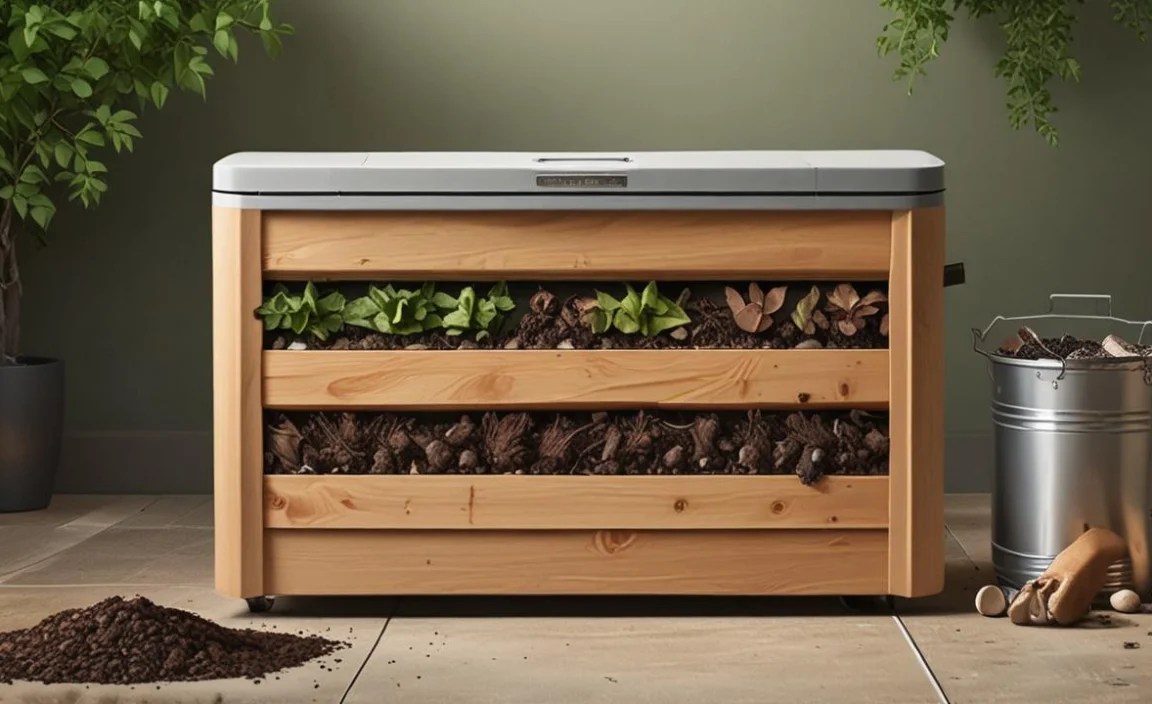
Sometimes, things can go wrong with your compost bin setup. The compost might smell bad. It might be too wet or too dry. Pests might be attracted to it. Don’t worry! These problems are usually easy to fix. A bad smell usually means there is too much nitrogen. Add more brown materials to balance it out. If the compost is too wet, add dry materials and turn it more often. To keep pests away, avoid composting meat and dairy. Make sure your bin is closed tightly.
- A bad smell means too much nitrogen.
- Too wet? Add dry materials.
- Pests? Avoid meat and dairy.
- Slow composting? Turn it more often.
- Be patient and persistent.
Sometimes, the compost might not be breaking down quickly enough. This could be because it is too dry. It could also be because it is not getting enough air. Try adding water and turning it more often. You can also add a compost starter. This contains microorganisms that will help to speed up the process. Don’t give up! With a little troubleshooting, you can get your compost back on track.
Why Does My Compost Smell Bad?
A bad smell is a common problem with compost bins. It usually means that there is too much nitrogen. This can happen if you add too many green materials. Or if the compost is not getting enough air. To fix this, add more brown materials like leaves or cardboard. Turn the compost more often to aerate it. The smell should go away within a few days.
Why Is My Compost Not Breaking Down?
If your compost is not breaking down, there could be several reasons. It might be too dry. It might not be getting enough air. Or it might not have enough nitrogen. Try adding water and turning it more often. You can also add some green materials to increase the nitrogen content. Be patient, composting takes time.
How Do I Keep Pests Away from My Compost Bin?
Pests can be a problem with compost bins. To keep them away, avoid composting meat, dairy, and oily foods. These attract animals and insects. Make sure your bin is closed tightly. You can also add a layer of brown materials on top of the compost. This will help to mask the smell of the food scraps. If you have a serious pest problem, you might need to move your compost bin to a different location.
Fun Fact or Stat: Adding a layer of brown materials, like leaves, on top of your compost can help to deter fruit flies!
Using Your Compost Bin Setup
Once your compost is ready, it is time to use it! You will know it is ready when it is dark, crumbly, and smells earthy. It should not have any recognizable food scraps in it. You can use compost in your garden to improve the soil. It adds nutrients and helps the soil retain moisture. You can also use it as a mulch around plants. This helps to suppress weeds and keep the soil cool. Compost is a great way to give your plants a boost!
- Use compost to improve your soil.
- Add it to your garden beds.
- Use it as a mulch around plants.
- Mix it with potting soil for containers.
- Give your plants a healthy boost.
There are many ways to use compost in your garden. You can mix it into the soil before planting. This will give your plants a good start. You can also top-dress your garden beds with compost. This means spreading a layer of compost on top of the soil. The nutrients will slowly leach into the soil. You can also use compost to make compost tea. This is a liquid fertilizer that you can spray on your plants.
How Do I Know When My Compost Is Ready?
Knowing when your compost is ready is important. It should be dark brown or black in color. It should be crumbly and easy to handle. It should smell earthy and fresh. You should not be able to recognize any of the original materials. If you are unsure, you can do a simple test. Plant a few seeds in a pot of compost. If they germinate and grow well, your compost is ready.
How Do I Apply Compost to My Garden?
There are several ways to apply compost to your garden. You can mix it into the soil before planting. You can spread it on top of the soil as a mulch. Or you can use it to make compost tea. When mixing it into the soil, use about 2-3 inches of compost. When using it as a mulch, use about 1-2 inches of compost. Be sure to water the compost after applying it.
Can I Use Too Much Compost?
Yes, you can use too much compost. Too much compost can make the soil too rich. This can burn the roots of your plants. It can also lead to nutrient imbalances. It is best to use compost in moderation. A good rule of thumb is to use no more than 25% compost in your soil mix. If you are unsure, start with a smaller amount and see how your plants respond.
Fun Fact or Stat: Compost can help your garden retain up to 50% more water, reducing the need for frequent watering!
Summary
Compost bin setup is a great way to reduce waste. It is also a great way to improve your garden soil. You can make your own compost at home. You need a compost bin, a mix of green and brown materials, and some patience. Choose a bin that fits your space and needs. Place it in a convenient location. Add fruit and vegetable scraps, leaves, and cardboard. Turn the compost regularly to aerate it. In a few months, you will have rich, healthy compost for your garden.
Remember to avoid composting meat, dairy, and oily foods. These can attract pests and make the compost smell bad. If you have problems, troubleshoot and adjust your methods. With a little practice, you will be a composting pro! Using compost in your garden can help your plants grow strong and healthy. It is a win-win for you and the environment.
Conclusion
Setting up a compost bin is a rewarding experience. You turn waste into something valuable. You help the environment. You also improve your garden. Composting is easy and fun. Anyone can do it. Start small and learn as you go. Before you know it, you’ll have amazing compost. Your plants will thank you.
Frequently Asked Questions
Question No 1: What is the best type of compost bin for beginners?
Answer: A simple open pile or a basic closed bin are great for beginners getting into compost bin setup. Open piles are easy to start. They don’t cost anything. Closed bins help control odors and pests. Choose what works best for your space and needs. You can always upgrade later as you learn more about composting. The most important thing is to start composting and learn the basics. It’s a fun and easy way to help the environment and improve your garden.
Question No 2: How long does it take to make compost?
Answer: The time it takes to make compost depends on several factors. These include the type of materials you are using, how often you turn the compost, and the temperature. In general, it takes about 3-6 months to make compost. If you turn the compost regularly and keep it moist, it will break down faster. You can also use a compost starter to speed up the process. Be patient, composting takes time, but it is worth the wait.
Question No 3: Can I compost in the winter?
Answer: Yes, you can compost in the winter! The composting process will slow down in cold weather. But it will still happen. To keep your compost working in the winter, insulate the pile. You can do this by covering it with a tarp or straw. You can also add more brown materials to help generate heat. Don’t worry if the compost freezes. It will thaw out in the spring and continue to break down.
Question No 4: What should I do if my compost bin attracts animals?
Answer: If your compost bin setup attracts animals, there are several things you can do. First, make sure you are not composting meat, dairy, or oily foods. These are the most attractive to animals. Second, use a closed bin with a tight-fitting lid. This will help to keep animals out. Third, you can try adding a layer of brown materials on top of the compost. This will help to mask the smell of the food scraps. If you have a serious animal problem, you might need to move your compost bin to a different location.
Question No 5: Can I use compost in my vegetable garden?
Answer: Yes, you can definitely use compost in your vegetable garden! Compost is a great way to improve the soil and provide nutrients to your plants. It can help your vegetables grow bigger and healthier. Mix the compost into the soil before planting. Or use it as a mulch around your plants. Be sure to water the compost after applying it.
Question No 6: How do I make compost tea?
Answer: Compost tea is a liquid fertilizer made from compost. It is easy to make and great for your plants. To make compost tea, you need a bucket, some compost, and some water. Fill the bucket with water. Add a few handfuls of compost. Let the mixture steep for 24-48 hours. Stir it occasionally. Then, strain the mixture through a cheesecloth or old t-shirt. Dilute the compost tea with water. Use it to water your plants. Compost tea is a great way to give your plants a boost of nutrients. Proper compost bin setup will help you make the best compost for your tea.
