Do you want to help the planet? Do you want to make your garden grow better? Composting is a great way to do both! It might sound hard. But it is easier than you think. This guide is for composting beginners. We will show you how to get started.
Composting turns food scraps into super soil. It is like magic! You can use this soil in your garden. Your plants will love it. Plus, you are helping the Earth. You are keeping waste out of landfills.
Even composting beginners can make a difference. It is a fun and easy way to help. Are you ready to learn more? Let’s get started with composting.
Key Takeaways
- Composting helps the environment by reducing waste in landfills.
- You can use compost to make your garden plants grow bigger and stronger.
- Composting beginners can start with a simple bin or pile in their backyard.
- Good compost needs a mix of “green” and “brown” materials for best results.
- Turn your compost regularly and keep it moist for faster decomposition.
Composting for Beginners: What You Need

Starting to compost is simple. You need a few basic things. First, you need a place to compost. This could be a bin or a pile. A bin keeps things tidy. A pile is easier to start. Next, you need “green” materials. These are things like food scraps and grass clippings. You also need “brown” materials. These are things like leaves and twigs. Green materials give nitrogen. Brown materials give carbon. You need both for good compost. You also need water. Compost should be damp, like a wrung-out sponge. Finally, you need a shovel or pitchfork. This helps you turn the compost. Turning mixes things up and adds air. Air helps the compost break down faster. With these things, composting beginners can start making great compost.
- A compost bin or pile
- “Green” materials (food scraps, grass)
- “Brown” materials (leaves, twigs)
- Water
- A shovel or pitchfork
Composting might seem hard at first. But it is really just about balance. You need the right mix of green and brown materials. Too much green can make your compost smelly. Too much brown can make it break down slowly. A good rule of thumb is to use about twice as much brown as green. Also, remember to keep your compost damp. If it is too dry, it will not break down. If it is too wet, it will also smell bad. Check your compost every few days. Add water if it is dry. Add more brown materials if it is too wet. Composting beginners should not be afraid to experiment.
Fun Fact or Stat: Did you know that food scraps and yard waste make up 20-30% of what we throw away? Composting can significantly reduce this waste!
What Size Bin Should I Choose?
Choosing a compost bin can be tricky. There are many sizes and types. A small bin is good for small yards. A large bin is good for big yards. Tumbler bins are easy to turn. They keep pests out. Open bins are cheaper. But they can attract animals. Think about how much space you have. Also, think about how much food you waste. If you waste a lot of food, get a bigger bin. If you only waste a little, get a smaller one. Remember, you can always start small. You can always add more bins later. Composting beginners often start with a small bin. Then, they get a bigger one as they learn.
Where Should I Put My Bin?
Where you put your compost bin matters. Choose a spot that is easy to reach. You will be adding food scraps often. Also, choose a spot that is not too sunny. Too much sun can dry out your compost. A shady spot is best. But make sure it still gets some sun. Some sun helps the compost break down. Also, think about smell. If you are worried about smell, put your bin away from your house. A good spot is near your garden. That way, it is easy to use the compost later. Composting beginners should think about these things when choosing a spot.
How Do I Keep Pests Away?
Pests can be a problem with composting. Rats and mice like to eat food scraps. Flies can also be annoying. To keep pests away, bury your food scraps. Cover them with brown materials. This makes it harder for pests to find them. Also, use a bin with a lid. This keeps pests out. Do not put meat or dairy in your compost. These attract pests. If you have a lot of pests, try a tumbler bin. Tumbler bins are sealed. This keeps pests out. Composting beginners should take steps to keep pests away.
What to Compost: A Beginner’s Guide

Knowing what to compost is important. Some things are great for compost. Other things are not. Good things to compost include fruit and vegetable scraps. Coffee grounds and tea bags are also good. Grass clippings and leaves are great. Shredded paper and cardboard can also be composted. Things you should not compost include meat and dairy. These can attract pests and cause smells. Oily foods should also be avoided. They can slow down the composting process. Diseased plants should not be composted. They can spread disease to your garden. When in doubt, leave it out. Composting beginners should stick to the basics.
- Fruit and vegetable scraps
- Coffee grounds and tea bags
- Grass clippings and leaves
- Shredded paper and cardboard
- Eggshells
- Bread and pasta (in small amounts)
Composting the right things makes a big difference. The more variety you have, the better your compost will be. Different materials add different nutrients. This makes your compost richer. Remember to chop things up before you add them. Smaller pieces break down faster. Also, mix things up well. This helps everything decompose evenly. Do not put too much of one thing in at once. This can throw off the balance. A little bit of everything is best. Composting beginners should experiment to see what works best for them.
Fun Fact or Stat: Coffee grounds are a great source of nitrogen for your compost and can also help improve soil drainage!
Can I Compost Cooked Food?
You can compost cooked food. But be careful. Cooked food can attract pests. It can also smell bad. Only compost cooked food if you bury it well. Cover it with plenty of brown materials. Do not compost cooked meat or dairy. These are especially likely to cause problems. Small amounts of cooked vegetables are usually okay. But keep an eye on your compost. If you notice pests or smells, stop composting cooked food. Composting beginners may want to avoid cooked food at first.
What About Citrus Peels?
Citrus peels can be composted. But they can also cause problems. Citrus peels contain oils. These oils can slow down the composting process. They can also kill beneficial microbes. Microbes are tiny creatures that help break down the compost. If you compost citrus peels, use them sparingly. Chop them up into small pieces. Mix them well with other materials. Some people avoid composting citrus peels altogether. It is up to you to decide if you want to use them. Composting beginners should use citrus peels with caution.
Is Cardboard Okay to Compost?
Cardboard is a great thing to compost. It is a good source of carbon. Carbon is important for composting. Cardboard helps balance out the nitrogen in food scraps. But you need to prepare cardboard before you compost it. Remove any tape or labels. These do not break down. Also, shred the cardboard into small pieces. Small pieces break down faster. Wet the cardboard before you add it to your compost. This helps it decompose. Composting beginners should definitely compost cardboard.
Green vs. Brown: Balancing Your Compost

Balancing green and brown materials is key. Green materials are rich in nitrogen. Brown materials are rich in carbon. Compost needs both to break down properly. Too much green can make your compost smelly. Too much brown can make it break down slowly. A good ratio is about two parts brown to one part green. This is just a guideline. You may need to adjust it based on your materials. If your compost is smelly, add more brown. If it is not breaking down, add more green. Composting beginners should learn to recognize the signs.
- Green materials provide nitrogen.
- Brown materials provide carbon.
- Aim for a 2:1 ratio of brown to green.
- Adjust the ratio based on your compost’s needs.
- Too much green causes smells.
- Too much brown slows decomposition.
Knowing the difference between green and brown is important. Green materials are usually wet and soft. They include food scraps, grass clippings, and coffee grounds. Brown materials are usually dry and hard. They include leaves, twigs, and cardboard. It is not always easy to tell the difference. Some materials can be both green and brown. For example, shredded paper can be considered a brown material. But it also contains some nitrogen. Do not worry too much about being exact. Just try to get the balance roughly right. Composting beginners will get better at this with practice.
Fun Fact or Stat: Leaves are an excellent source of carbon for your compost. Save them up in the fall to use throughout the year!
What Happens If I Add Too Much Green?
Adding too much green can cause problems. Your compost may become smelly. This is because the nitrogen is not being balanced by carbon. The compost may also become slimy. This is because there is too much moisture. If you add too much green, add more brown materials. This will help balance things out. You can also add some dry soil or sawdust. This will help absorb excess moisture. Turn the compost regularly to add air. Composting beginners should watch out for these signs.
What Happens If I Add Too Much Brown?
Adding too much brown can also cause problems. Your compost may not break down. This is because there is not enough nitrogen. The compost may also become dry. This is because brown materials absorb moisture. If you add too much brown, add more green materials. This will help balance things out. You can also add some water. This will help moisten the compost. Turn the compost regularly to add air. Composting beginners should also watch out for these signs.
How Can I Test My Compost Balance?
There are several ways to test your compost balance. One way is to use your senses. Smell the compost. Does it smell bad? If so, it probably has too much green. Feel the compost. Is it slimy? If so, it probably has too much green. Look at the compost. Is it breaking down? If not, it probably has too much brown. Another way to test your compost is to use a compost thermometer. This measures the temperature of the compost. A healthy compost pile should be warm. If it is not warm, it may need more green. Composting beginners can use these tests to improve their compost.
Turning and Watering: Compost Care Basics

Turning and watering are important for compost care. Turning adds air to the compost. Air helps the microbes break down the materials. Water keeps the compost moist. Moist compost breaks down faster. You should turn your compost every few days. Use a shovel or pitchfork to mix it up. Make sure to mix the outside with the inside. You should water your compost whenever it is dry. It should be damp, like a wrung-out sponge. Do not let it get too wet. Composting beginners should get into a routine.
- Turning adds air for microbes.
- Watering keeps compost moist.
- Turn compost every few days.
- Water when compost is dry.
- Do not let compost get too wet.
Turning and watering help your compost break down faster. They also prevent problems. Turning prevents the compost from becoming compacted. Compacted compost does not get enough air. Watering prevents the compost from drying out. Dry compost does not break down. If you do not turn and water your compost, it will take much longer to break down. It may also become smelly or attract pests. Composting beginners should make turning and watering a priority.
Fun Fact or Stat: A well-maintained compost pile can reach temperatures of 130-160°F, hot enough to kill many weed seeds and plant diseases!
How Often Should I Turn My Compost?
How often you turn your compost depends on several factors. If you have a lot of green materials, you may need to turn it more often. Green materials break down quickly and can cause the compost to become compacted. If you have a lot of brown materials, you may not need to turn it as often. Brown materials break down slowly and do not compact as easily. Also, consider the size of your compost pile. A larger pile will need to be turned more often than a smaller pile. Composting beginners should experiment to find the right frequency.
How Much Water Should I Add?
How much water you add depends on the weather. If it is raining, you may not need to add any water. If it is hot and dry, you will need to add more water. Check the moisture level of your compost regularly. It should be damp, like a wrung-out sponge. If it is dry, add water. If it is too wet, add more brown materials. You can also cover your compost pile with a tarp to prevent it from getting too wet. Composting beginners should learn to judge the moisture level.
What If My Compost Is Too Wet?
If your compost is too wet, it can become smelly. It can also attract pests. To fix this, add more brown materials. Brown materials absorb moisture. You can also turn the compost more often. This will help it dry out. If your compost is very wet, you may need to remove some of the wet materials. Spread them out to dry. Then, add them back to the compost. Composting beginners should act quickly if their compost is too wet.
Troubleshooting Common Compost Problems
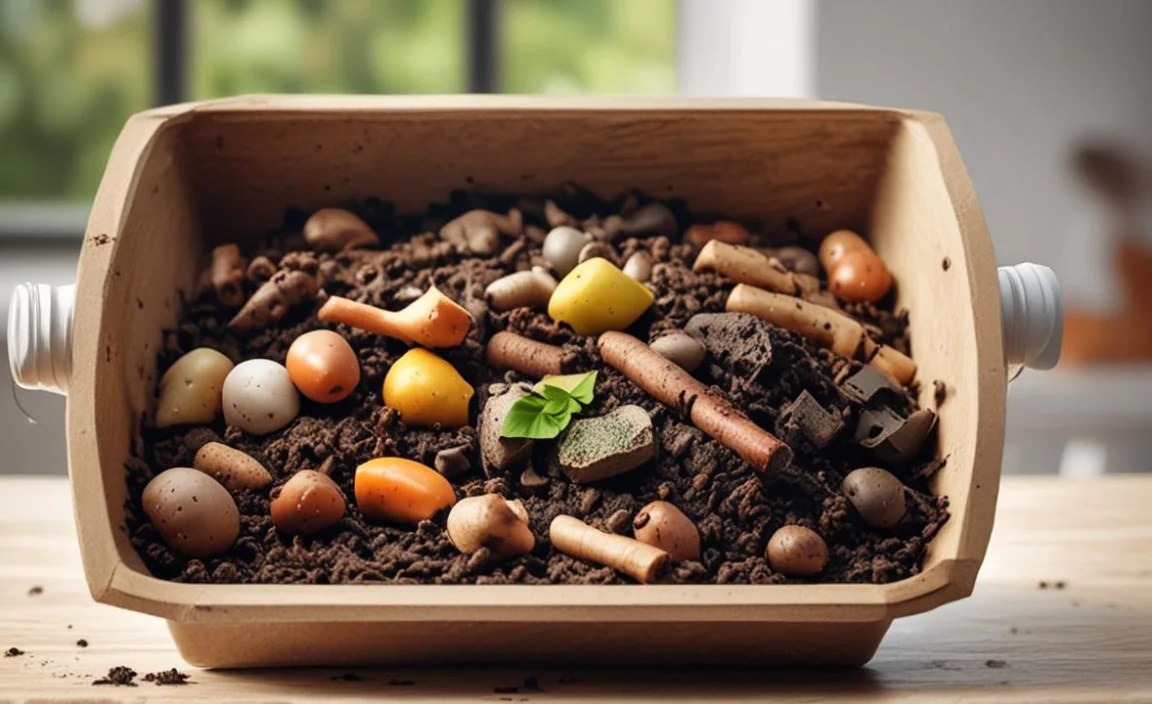
Composting can sometimes have problems. Your compost might smell bad. This can be caused by too much green material. Add more brown material to fix it. Your compost might not be breaking down. This could be from not enough water. Add water to make it damp. Pests can also be a problem. Bury food scraps to keep them away. Your compost might be too hot. This is rare, but it can happen. Turn it more often to cool it down. Composting beginners should know how to fix these problems.
| Problem | Possible Cause | Solution |
|---|---|---|
| Smelly Compost | Too much green material, not enough air | Add brown material, turn more often |
| Compost Not Breaking Down | Too dry, not enough nitrogen | Add water, add green material |
| Pests | Exposed food scraps | Bury food scraps, use a bin with a lid |
| Compost Too Hot | Too much nitrogen, not enough air | Turn more often, add brown material |
Knowing how to troubleshoot is important. Do not give up if you have problems. Composting takes practice. Every compost pile is different. What works for one person might not work for another. Experiment and learn from your mistakes. Ask for help if you need it. There are many resources available online. There are also local composting groups. Composting beginners should not be afraid to seek help.
Fun Fact or Stat: Composting can reduce the need for chemical fertilizers, which can harm the environment!
Why Does My Compost Smell Like Rotten Eggs?
A rotten egg smell means your compost lacks air. This creates anaerobic conditions. Anaerobic means without oxygen. To fix this, turn your compost more often. This adds air. Make sure to mix the materials well. You can also add bulky brown materials. These create air pockets. Examples include wood chips or shredded cardboard. Avoid adding too much wet food at once. Composting beginners should address this problem quickly.
Why Is My Compost Attracting Flies?
Flies are attracted to food scraps. To prevent flies, bury food scraps well. Cover them with brown materials. Use a compost bin with a tight-fitting lid. Avoid composting meat or dairy. These attract flies. You can also use a fly trap. Place it near your compost bin. Keep your compost bin clean. Remove any spilled food. Composting beginners should be proactive about fly control.
How Long Does It Take to Make Compost?
The time it takes to make compost varies. It depends on several factors. These include the materials you use. It also depends on how often you turn it. It can take anywhere from a few months to a year. Hot composting is faster. This involves turning the compost regularly. It also involves maintaining a high temperature. Cold composting is slower. This involves simply letting the compost sit. Composting beginners should be patient.
Using Your Compost: A Gardener’s Delight
Once your compost is ready, you can use it. Compost is great for your garden. It adds nutrients to the soil. It also helps the soil retain water. You can use compost in many ways. Mix it with potting soil for seedlings. Add it to planting holes when transplanting. Use it as a top dressing for your garden beds. Spread it around the base of your plants. You can also use it to make compost tea. Compost tea is a liquid fertilizer. It is made by steeping compost in water. Composting beginners will love using their compost.
- Mix with potting soil for seedlings.
- Add to planting holes when transplanting.
- Use as a top dressing for garden beds.
- Spread around the base of plants.
- Make compost tea.
Using compost is easy. Just remember to mix it well with the soil. Do not use too much compost. Too much compost can burn your plants. A little bit goes a long way. You can also test your soil before adding compost. This will help you determine how much compost you need. Composting beginners should start with small amounts.
Fun Fact or Stat: Compost can help improve soil structure, making it easier for plant roots to grow and access nutrients!
How Do I Know When My Compost Is Ready?
You will know your compost is ready when it is dark and crumbly. It should smell earthy. You should not be able to recognize the original materials. There may be some small pieces of twigs or leaves. But most of the material should be broken down. If you are not sure, wait a little longer. It is better to use compost that is fully decomposed. This will prevent problems in your garden. Composting beginners should look for these signs.
Can I Use Compost on All My Plants?
You can use compost on most plants. But some plants prefer different types of soil. Acid-loving plants like blueberries and azaleas prefer acidic soil. Compost can raise the pH of the soil. If you are using compost on acid-loving plants, use it sparingly. You can also add acidifying amendments to the soil. These include peat moss and sulfur. Composting beginners should research their plants’ needs.
What Is Compost Tea?
Compost tea is a liquid fertilizer made from compost. To make compost tea, steep compost in water. Use a ratio of about one part compost to five parts water. Let it steep for 24-48 hours. Stir it occasionally. Then, strain the tea. Use the tea to water your plants. Compost tea is a great way to add nutrients to your plants. It can also help prevent diseases. Composting beginners should try making compost tea.
Summary
Composting is a great way to recycle food scraps and yard waste. It is easy for composting beginners to get started. You need a compost bin or pile. You also need green and brown materials. Turn the compost regularly and keep it moist. Avoid composting meat, dairy, and oily foods. These attract pests and cause smells. If your compost smells bad, add more brown materials. If it is not breaking down, add more green materials.
Once your compost is ready, you can use it in your garden. Compost adds nutrients to the soil. It also helps the soil retain water. You can mix it with potting soil, add it to planting holes, or use it as a top dressing. You can also make compost tea. Composting is good for the environment. It reduces waste and helps your garden grow.
Conclusion
Composting is a fun and easy way to help the environment. It turns waste into valuable fertilizer. Gardens benefit from compost’s rich nutrients. Composting beginners can quickly learn the basics. Start with a simple bin and the right mix of materials. Regular turning and watering will speed up the process. Soon, you will have nutrient-rich compost. Use it to grow healthy, happy plants.
Frequently Asked Questions
Question No 1: What are the best materials for composting for beginners?
Answer: The best materials for composting beginners include fruit and vegetable scraps. Coffee grounds and tea bags are also great. Dry leaves, shredded paper, and cardboard can be added too. Just remember to balance these with green materials. These simple materials make a great start to building healthy compost.
Question No 2: How often should I turn my compost pile?
Answer: You should turn your compost pile every few days to once a week. This helps add air to the pile. Air is needed for the microbes to break down the materials. Turning it more often will speed up the composting process. Composting beginners should aim for at least once a week. Regular turning is key for good compost.
Question No 3: What should I do if my compost pile smells bad?
Answer: If your compost pile smells bad, it likely has too much nitrogen. This means too many green materials. Add more brown materials like dry leaves or shredded paper. Turning the pile can also help. It adds air and reduces the smell. Meat and dairy can also cause smells, so avoid those.
Question No 4: How do I know when my compost is ready to use?
Answer: Your compost is ready when it is dark and crumbly. It should also smell earthy. You should not be able to recognize the original materials. There may be some small twigs or leaves. But most of it should be broken down. Composting beginners will learn to recognize the signs with practice.
Question No 5: Can I compost in an apartment?
Answer: Yes, you can compost in an apartment! Use a small compost bin or a worm bin. Worm bins are great for small spaces. You can compost food scraps and paper. Just be sure to keep the bin clean. This will prevent odors and pests. Composting beginners in apartments can still make a difference.
Question No 6: What are the benefits of using compost in my garden?
Answer: Using compost in your garden has many benefits. It adds nutrients to the soil. It also helps the soil retain water. Compost improves soil structure. This makes it easier for plants to grow. It can also help prevent plant diseases. Composting is a natural way to improve your garden’s health.
