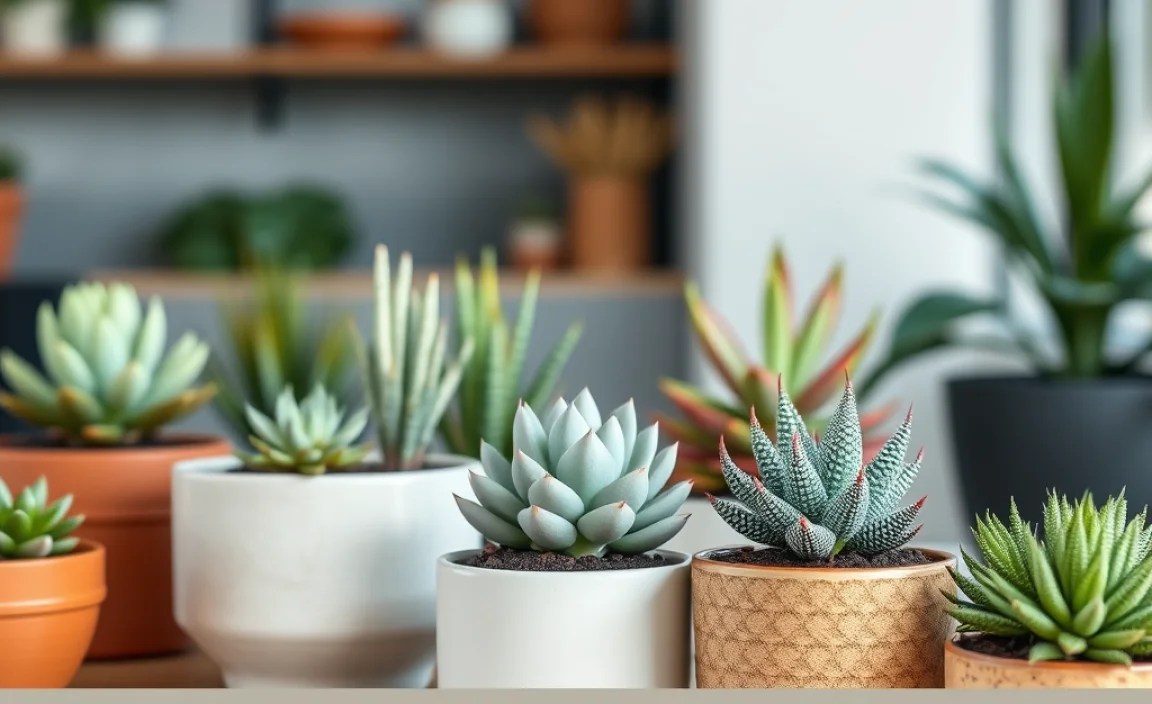
Do you love plants that are easy to care for? Succulents are a great choice. They come in many shapes and sizes. You can grow them in special pots. These containers for succulent gardens make your plants look even better. Let’s learn about choosing the right ones.
Succulents do not need much water. They store water in their leaves. This makes them perfect for busy people. You can create a beautiful garden with them. All you need are some succulents and the right containers for succulent gardens.
Key Takeaways
- Choosing the right containers for succulent gardens ensures proper drainage and healthy plants.
- Terracotta pots and ceramic containers are excellent choices due to their porous nature.
- Consider the size and shape of your succulents when selecting a container.
- Proper soil and sunlight are crucial for thriving succulent gardens.
- Decorating your containers adds a personal touch to your succulent display.

Choosing the Right Containers for Succulents
Choosing the right containers for succulent gardens is very important. The container affects how well your succulents grow. Good drainage is key. Succulents do not like to sit in wet soil. The container should have holes at the bottom. This lets extra water drain out. The size of the container matters too. If the pot is too big, the soil stays wet for too long. This can cause the roots to rot. A smaller pot is better for succulents. It allows the soil to dry out faster. Think about the material of the pot. Terracotta and ceramic pots are good choices. They let air and water move through the sides. This helps to keep the soil healthy. Plastic pots can also work if they have good drainage. Always make sure your chosen container is right for your plants.
- Drainage holes are essential.
- Terracotta pots are a good choice.
- Size the pot to the plant.
- Consider the pot’s material.
- Plastic pots can work with drainage.
Think about the look of the container too. It should match your style. You can find pots in many colors and designs. Some people like simple, plain pots. Others like pots with bright colors and patterns. You can even decorate your own pots. Paint them or add stones and shells. The container is part of your garden. It should make you happy. The most important thing is that the pot is good for your succulents. Make sure it has good drainage and is the right size. Then, you can have fun choosing a pot that looks great. This makes your containers for succulent gardens look amazing.
What Size Container Do Succulents Need?
Have you ever wondered what size pot your succulent needs? It is a common question! The size of the pot depends on the size of the succulent. A small succulent needs a small pot. A large succulent needs a larger pot. The pot should be a little bigger than the plant’s root ball. This gives the roots room to grow. If the pot is too big, the soil will stay wet too long. This can cause root rot. A good rule is to choose a pot that is one or two inches wider than the plant. For example, if your succulent is two inches wide, choose a pot that is three or four inches wide. Always check the roots of your succulent. If they are crowded, it is time to move it to a bigger pot. Choosing the right size pot helps your succulent thrive. It keeps the roots healthy.
How Important Is Drainage?
Imagine your feet stuck in wet socks all day. Not fun, right? Succulents feel the same way if their roots sit in wet soil. Drainage is super important for succulents. They need pots with holes in the bottom. These holes let extra water escape. Without drainage, the soil stays soggy. Soggy soil leads to root rot. Root rot is when the roots start to decay. This can kill your succulent. Always use pots with drainage holes. You can also add a layer of gravel at the bottom of the pot. This helps to improve drainage. Well-draining soil is also important. Use a special succulent and cactus mix. This type of soil drains quickly. Good drainage keeps your succulents happy and healthy. It prevents root rot and helps them grow.
What Materials Are Best for Succulent Pots?
Choosing the right material for your succulent pot is key. Terracotta is a popular choice. It’s made of baked clay and is porous. This means it lets air and water pass through. This helps the soil dry out quickly, which succulents love. Ceramic is another good option. It comes in many colors and designs. Make sure the ceramic pot has drainage holes. Plastic pots are lightweight and inexpensive. They don’t breathe as well as terracotta. But they can work if you are careful with watering. Metal pots can get very hot in the sun. This can damage the roots of your succulents. Glass containers can be pretty, but they don’t have drainage. You can use them if you add a layer of gravel and water very carefully. Each material has its pros and cons. Choose the one that works best for you and your succulents.
Fun Fact or Stat: Did you know that terracotta pots have been used for growing plants for thousands of years? They are a classic choice!

Terracotta Containers for Succulent Gardens
Containers for succulent gardens made of terracotta are very popular. Terracotta is a type of clay. It is baked at a high temperature. This makes it hard and strong. Terracotta pots are often reddish-brown in color. They have a natural, earthy look. One of the best things about terracotta is that it is porous. This means it has tiny holes that let air and water move through. This is good for succulents because it helps the soil dry out quickly. Succulents do not like to sit in wet soil. Terracotta pots help to prevent root rot. They also help to keep the soil cool in the summer. Terracotta pots are also inexpensive. You can find them at most garden stores. They come in many sizes and shapes. Terracotta pots are a great choice for any succulent garden. They are good for the plants and look beautiful.
- Terracotta is porous and breathable.
- It helps prevent root rot.
- Terracotta pots are inexpensive.
- They have a natural, earthy look.
- They come in many sizes and shapes.
Terracotta pots can also be decorated. You can paint them with bright colors. You can add designs with stencils. You can glue on stones or shells. This makes your succulent garden even more special. Terracotta pots are easy to clean. You can wash them with soap and water. Make sure to rinse them well before using them again. Terracotta pots can last for many years. They are a good investment for your succulent garden. If you live in a cold climate, bring your terracotta pots inside in the winter. This will protect them from freezing and cracking. With proper care, terracotta containers for succulent gardens will keep your succulents healthy and happy.
Why Is Terracotta So Popular?
Ever wonder why so many gardeners love terracotta pots? Terracotta is made from baked clay. This gives it a natural, earthy look. But its popularity goes beyond just looks. Terracotta is porous, meaning it has tiny holes. These holes let air and water move through the pot. This is great for succulents! It helps the soil dry out quickly. Succulents don’t like sitting in wet soil. The porous nature of terracotta helps prevent root rot. Terracotta pots also help regulate soil temperature. They keep the soil cooler in the summer and warmer in the winter. Plus, terracotta pots are affordable and easy to find. They come in many shapes and sizes. It’s no wonder terracotta is a top choice for succulent lovers!
How Do You Decorate Terracotta Pots?
Want to add some pizzazz to your terracotta pots? Decorating them is a fun and easy project! First, clean the pot with soap and water. Let it dry completely. Then, you can paint it with acrylic paints. Choose colors that you love. You can paint simple designs or create intricate patterns. Use stencils for clean lines. You can also glue on decorations. Try adding stones, shells, or glass beads. These add texture and sparkle. Another idea is to use twine or rope. Wrap it around the pot for a rustic look. Seal your decorated pot with a clear sealant. This will protect the paint and decorations from the weather. Let your creativity flow and make your terracotta pots unique!
How Do You Care for Terracotta Pots?
Taking care of your terracotta pots is easy. It helps them last longer. Before using a new terracotta pot, soak it in water. This helps prevent it from drying out too quickly. When planting, use well-draining soil. This is important for succulents. After planting, water the pot gently. Avoid overwatering. Clean your terracotta pots regularly. Use a brush and soapy water. Rinse them well. This removes dirt and algae. If you live in a cold climate, bring your terracotta pots indoors in the winter. This prevents them from cracking in the frost. With a little care, your terracotta pots will stay beautiful for years to come. They will keep your succulents happy and healthy.
Fun Fact or Stat: Terracotta means “baked earth” in Italian!
Ceramic Containers for Succulent Displays
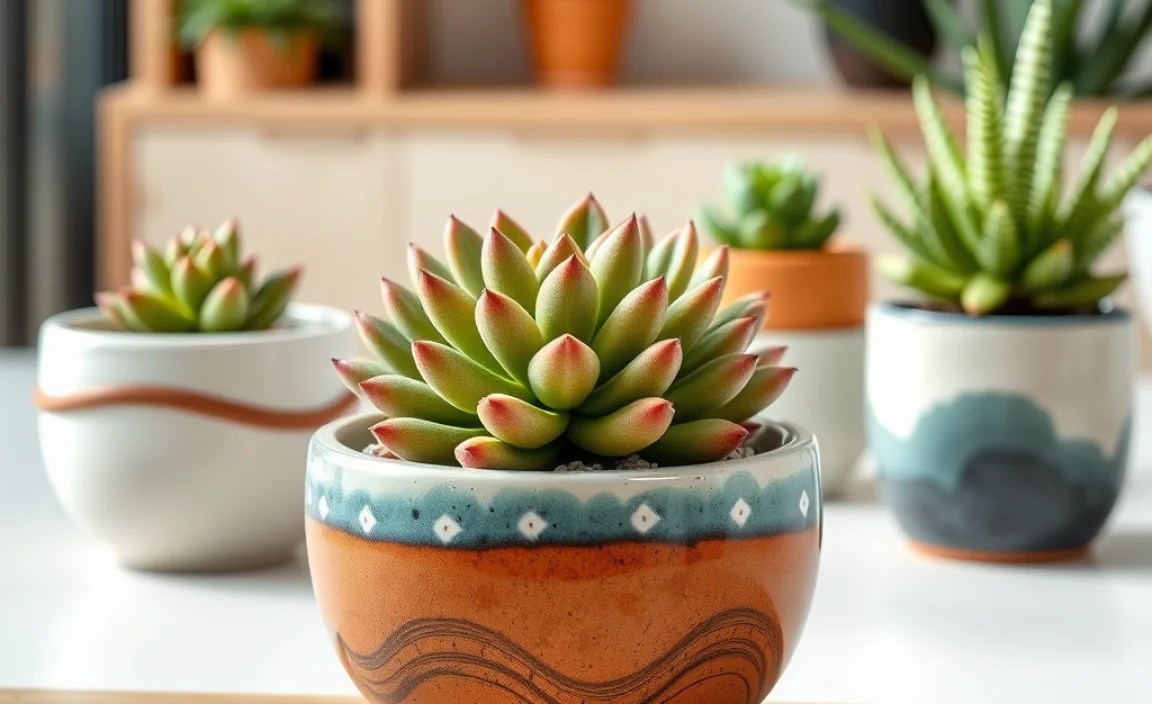
Ceramic containers for succulent gardens are another great option. Ceramic pots are made from clay. They are fired at a high temperature. This makes them strong and durable. Ceramic pots come in many colors and designs. You can find them with smooth or textured surfaces. They can be glazed or unglazed. Glazed ceramic pots have a shiny finish. Unglazed pots have a matte finish. One of the advantages of ceramic pots is that they hold moisture better than terracotta pots. This can be good for succulents that need a little more water. However, it is important to make sure that the pot has drainage holes. This will prevent the soil from becoming too soggy. Ceramic pots can be more expensive than terracotta pots. But they are a beautiful addition to any succulent garden.
- Ceramic pots come in many colors.
- They have smooth or textured surfaces.
- Glazed pots have a shiny finish.
- They hold moisture better.
- Drainage holes are still important.
When choosing ceramic containers for succulent gardens, consider the size and shape of your succulents. A tall, narrow pot is good for succulents with long stems. A shallow, wide pot is good for succulents that spread out. You can also mix and match different sizes and shapes to create an interesting display. Ceramic pots can be used indoors or outdoors. If you use them outdoors, make sure they are frost-resistant. This will prevent them from cracking in cold weather. Ceramic pots are easy to clean. You can wipe them down with a damp cloth. Avoid using harsh chemicals. With proper care, ceramic pots will last for many years and keep your succulents looking their best.
What Are the Benefits of Ceramic Pots?
Ceramic pots have many great qualities. They come in a wide range of colors and designs. This makes it easy to find one that matches your style. Ceramic pots also hold moisture well. This can be helpful if you sometimes forget to water your plants. But remember, succulents don’t like soggy soil. So, make sure your ceramic pot has drainage holes. Ceramic pots are also durable. They can last for many years with proper care. They are also easy to clean. Just wipe them down with a damp cloth. Plus, ceramic pots can add a touch of elegance to your succulent display. They are a stylish choice for any plant lover.
How Do You Choose the Right Ceramic Pot?
Choosing the right ceramic pot is important for your succulent’s health. First, consider the size of your succulent. The pot should be a little bigger than the root ball. This gives the roots room to grow. Next, check for drainage holes. These are essential for preventing root rot. Then, think about the style of the pot. Do you want a simple, classic look? Or something more modern and colorful? Choose a pot that complements your succulent. Also, consider the location of your succulent. If it will be outdoors, make sure the pot is frost-resistant. With a little thought, you can find the perfect ceramic pot for your succulent.
How Do You Clean Ceramic Pots?
Keeping your ceramic pots clean is simple. It helps them look their best. Start by removing any loose soil or debris. Then, fill a bucket with warm water and mild soap. Use a soft brush or sponge to scrub the pot. Pay attention to any stains or buildup. Rinse the pot thoroughly with clean water. Let it air dry completely before replanting. For stubborn stains, you can use a mixture of vinegar and water. Soak the pot in the mixture for a few hours. Then, scrub and rinse as usual. Avoid using harsh chemicals or abrasive cleaners. These can damage the ceramic. Regular cleaning will keep your ceramic pots looking beautiful.
Fun Fact or Stat: Some ceramic pots are hand-painted by artists, making them unique works of art!
Plastic Containers: A Budget-Friendly Option
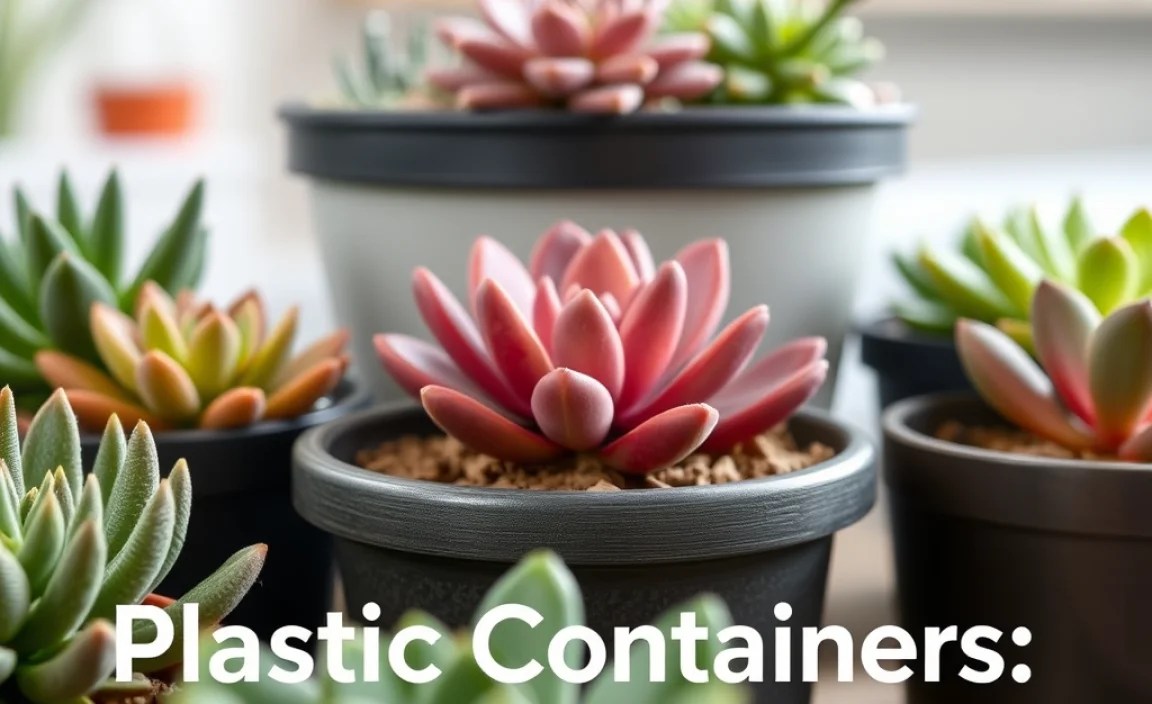
Plastic containers for succulent gardens are a budget-friendly choice. They are lightweight and easy to move around. Plastic pots come in many colors and shapes. You can find them at most stores that sell gardening supplies. One of the advantages of plastic pots is that they hold moisture well. This can be good for succulents that need a little more water. However, it is very important to make sure that the pot has drainage holes. This will prevent the soil from becoming too soggy. Plastic pots are also durable. They can last for many years if you take care of them. They are a good option for beginners who are just starting out with succulents.
- Plastic pots are budget-friendly.
- They are lightweight and easy to move.
- They come in many colors and shapes.
- They hold moisture well.
- Drainage holes are very important.
When using plastic containers for succulent gardens, be careful not to overwater your succulents. Check the soil regularly to see if it is dry. If the soil is still wet, wait a few more days before watering. You can also add a layer of gravel at the bottom of the pot to improve drainage. Plastic pots can get hot in the sun. This can damage the roots of your succulents. Try to keep them in a shady spot during the hottest part of the day. Plastic pots are easy to clean. You can wash them with soap and water. Avoid using harsh chemicals. With proper care, plastic pots can be a good option for your succulent garden.
Are Plastic Pots Good for Succulents?
Plastic pots can be a good choice for succulents, but with some caution. They are cheap and come in lots of colors. This makes them a popular option. But plastic holds moisture more than terracotta. This means the soil can stay wet longer. Succulents don’t like wet feet! So, drainage is super important. Make sure your plastic pot has plenty of drainage holes. You can also use a well-draining soil mix. This helps prevent root rot. Plastic pots are also lightweight. This makes them easy to move around. Just be careful not to overwater your succulents in plastic pots. With the right care, they can thrive.
How Do You Improve Drainage in Plastic Pots?
Improving drainage in plastic pots is easy. It’s super important for succulents. Start by making sure your pot has enough drainage holes. If it doesn’t, you can drill more. Use a drill bit that is the right size for plastic. Be careful not to crack the pot. Another trick is to add a layer of gravel or pebbles at the bottom of the pot. This helps water drain away from the roots. You can also use a well-draining soil mix. Look for a mix that is designed for succulents and cacti. These mixes have lots of sand and perlite. These ingredients help water drain quickly. With these tips, you can make sure your succulents stay healthy in plastic pots.
How Do You Decorate Plastic Pots?
Want to jazz up your plastic pots? Decorating them is a fun way to add personality to your succulent garden. You can paint them with acrylic paints. Choose bright colors or create fun patterns. Use stencils for clean lines. Another idea is to wrap the pot with twine or rope. This gives it a rustic look. You can also glue on decorations like shells or beads. Just make sure they are waterproof. You can also use mosaic tiles to create a colorful design. Use a strong adhesive to glue the tiles to the pot. Seal the decorated pot with a clear sealant. This will protect the paint and decorations from the weather. Let your imagination run wild and create unique plastic pots!
Fun Fact or Stat: Plastic pots are often made from recycled materials, making them an eco-friendly choice!
Unique and Creative Container Ideas
Looking for unique containers for succulent gardens? Think outside the box! You can use all sorts of things as planters. Old teacups make adorable homes for small succulents. Vintage tins add a touch of charm. Even an old shoe can become a quirky planter! The key is to make sure your container has drainage. If it doesn’t, you can drill holes in the bottom. You can also add a layer of gravel for drainage. Think about the style of your home. Choose containers that match your decor. A rustic wooden box is perfect for a farmhouse style. A sleek metal container is great for a modern look. Get creative and have fun with it! Your succulents will love their unique homes.
- Old teacups are adorable.
- Vintage tins add charm.
- Old shoes can be quirky.
- Ensure good drainage.
- Match your home’s style.
When choosing unique containers for succulent gardens, remember the size of your succulents. A tiny succulent will get lost in a large container. A large succulent will need a sturdy container. You can also create a terrarium for your succulents. Terrariums are glass containers that create a mini-ecosystem. They are perfect for small succulents. Be careful not to overwater terrariums. The glass traps moisture. You can also use driftwood as a planter. Driftwood adds a natural, organic touch to your garden. Just make sure the wood is treated to prevent rot. With a little imagination, you can create a one-of-a-kind succulent garden.
Can You Use Glass Containers for Succulents?
Glass containers can be tricky for succulents. They don’t have drainage holes. This means water can build up and cause root rot. But you can still use glass containers if you are careful. Start by adding a thick layer of gravel at the bottom. This helps with drainage. Then, add a layer of activated charcoal. This helps to absorb odors and toxins. Use a well-draining soil mix on top of the charcoal. When watering, be very careful not to overwater. Only water when the soil is completely dry. You can also use a spray bottle to mist the succulents. This helps to keep them hydrated without adding too much water. With the right care, succulents can thrive in glass containers.
What About Using Wood as a Planter?
Wood can be a beautiful and natural option for succulent planters. But it’s important to choose the right type of wood. Cedar and redwood are naturally rot-resistant. This makes them good choices for outdoor planters. You can also treat other types of wood with a sealant to prevent rot. Make sure the sealant is non-toxic. Drill drainage holes in the bottom of the wood planter. This is essential for succulents. You can line the inside of the planter with plastic. This helps to protect the wood from moisture. When planting, use a well-draining soil mix. Water sparingly. Wood planters add a rustic touch to any succulent garden.
How Do You Make a Succulent Terrarium?
Creating a succulent terrarium is a fun and easy project. Start with a clean glass container. Add a layer of gravel at the bottom for drainage. Then, add a layer of activated charcoal to absorb odors. Next, add a layer of well-draining soil mix. Choose small succulents that will fit in the terrarium. Gently remove the succulents from their pots. Loosen the soil around the roots. Plant the succulents in the terrarium. Arrange them in a way that is pleasing to you. Add decorative elements like rocks or sand. Water the terrarium sparingly. Place the terrarium in a bright location. Avoid direct sunlight. Enjoy your miniature succulent garden!
Fun Fact or Stat: Some people use old books as planters by hollowing out the pages!
Decorating Your Succulent Containers
Decorating your containers for succulent gardens adds personality to your display. You can paint your pots with bright colors and fun designs. Use acrylic paints that are waterproof. Add decorative stones or pebbles to the top of the soil. This adds texture and interest. You can also glue shells or glass beads to the pots. Use a strong adhesive that is weather-resistant. Wrap the pots with twine or ribbon for a rustic look. You can also create a mosaic design using broken tiles. Use grout to fill in the spaces between the tiles. Personalize your containers with stencils or stamps. Get creative and have fun with it! Your succulents will look even better in their decorated homes.
- Paint pots with bright colors.
- Add decorative stones.
- Glue on shells or beads.
- Wrap with twine or ribbon.
- Create mosaic designs.
When decorating your containers for succulent gardens, consider the style of your home. Choose decorations that complement your decor. A minimalist home might benefit from simple, clean designs. A bohemian home might embrace bright colors and eclectic patterns. You can also use plants to decorate your containers. Add trailing succulents that spill over the edges of the pot. Plant small flowers around the base of your succulents. Use different textures and colors to create visual interest. Don’t be afraid to experiment! The possibilities are endless when it comes to decorating your succulent containers.
What Kind of Paint Is Best for Pots?
Choosing the right paint is important for decorating your pots. Acrylic paints are a great choice. They are durable and waterproof. This means they can withstand the weather. Look for paints that are specifically designed for outdoor use. These paints are fade-resistant. This means they will stay vibrant for longer. You can also use spray paint. Spray paint is easy to apply and dries quickly. But be sure to use a primer first. This helps the paint adhere to the pot. You can also use chalk paint for a rustic look. Chalk paint is easy to distress and gives a matte finish. Seal your painted pots with a clear sealant. This protects the paint from chipping and fading.
How Do You Add Stones to Succulent Pots?
Adding stones to your succulent pots is easy. It adds texture and visual interest. You can use small pebbles or larger rocks. Choose stones that complement your succulents. Wash the stones before adding them to the pot. This removes any dirt or debris. Arrange the stones around the base of the succulents. You can create a border or scatter them randomly. Use stones of different sizes and shapes. This adds more interest. You can also use colored stones. This adds a pop of color to your display. You can even create a miniature rock garden in your succulent pot. Stones help to retain moisture in the soil. They also help to protect the soil from erosion. Be creative and have fun with it!
How Do You Use Twine to Decorate Pots?
Twine is a versatile material for decorating pots. It adds a rustic and natural touch. You can wrap twine around the entire pot. Or you can create a decorative design. Start by securing the end of the twine to the pot with glue. Then, wrap the twine around the pot. Overlap each layer slightly. This creates a textured look. You can also create patterns with the twine. Wrap the twine in different directions. Use different colors of twine. You can also add beads or charms to the twine. This adds more interest. Secure the end of the twine with glue. Let the glue dry completely before adding soil and succulents. Twine is an inexpensive and easy way to decorate your pots.
Fun Fact or Stat: Some people use old jewelry to decorate their succulent pots!
Soil and Sunlight for Thriving Succulents
The right soil and sunlight are key for thriving succulents. Succulents need well-draining soil. This prevents root rot. Use a cactus and succulent mix. This type of soil drains quickly. You can also make your own mix. Combine potting soil, perlite, and sand. Perlite helps with drainage. Sand adds weight and prevents compaction. Succulents also need plenty of sunlight. Most succulents need at least six hours of sunlight per day. Place your succulents in a sunny window. If you don’t have enough sunlight, use a grow light. Grow lights provide artificial light. This helps your succulents grow. Rotate your succulents regularly. This ensures that all sides get enough light. With the right soil and sunlight, your succulents will thrive.
- Use well-draining soil.
- Try a cactus and succulent mix.
- Succulents need sunlight.
- Rotate plants for even light.
- Consider using grow lights.
When watering your succulents, let the soil dry out completely between waterings. Overwatering is a common mistake. It can lead to root rot. Check the soil with your finger. If it feels dry, it’s time to water. Water thoroughly until the water drains out of the bottom of the pot. Then, let the excess water drain away. Don’t let your succulents sit in standing water. Fertilize your succulents sparingly. Use a balanced fertilizer diluted to half strength. Fertilize during the growing season. This is usually in the spring and summer. With the right care, your succulents will reward you with beautiful foliage and blooms.
What Kind of Soil Do Succulents Need?
Succulents need special soil. Regular potting soil holds too much water. This can cause root rot. Succulents need soil that drains quickly. A cactus and succulent mix is a good choice. It contains ingredients like perlite and sand. These help with drainage. You can also make your own mix. Combine equal parts potting soil, perlite, and sand. Perlite is a volcanic glass. It helps to aerate the soil. Sand adds weight and prevents compaction. Avoid using soil that contains a lot of clay. Clay holds too much water. The right soil is essential for healthy succulents.
How Much Sunlight Do Succulents Need?
Sunlight is crucial for succulents. Most succulents need at least six hours of sunlight per day. Some succulents can tolerate more sunlight. Others need less. The amount of sunlight depends on the type of succulent. Observe your succulents. If they are not getting enough sunlight, they will become leggy. This means they will stretch towards the light. If your succulents are getting too much sunlight, their leaves may burn. Place your succulents in a sunny window. If you don’t have enough sunlight, use a grow light. Rotate your succulents regularly. This ensures that all sides get enough light.
How Often Should You Water Succulents?
Watering succulents correctly is important. Overwatering is a common mistake. It can lead to root rot. Let the soil dry out completely between waterings. Check the soil with your finger. If it feels dry, it’s time to water. Water thoroughly until the water drains out of the bottom of the pot. Then, let the excess water drain away. Don’t let your succulents sit in standing water. The frequency of watering depends on the type of succulent. It also depends on the climate and the time of year. In general, water less frequently in the winter. Water more frequently in the summer. When in doubt, it’s better to underwater than to overwater.
Fun Fact or Stat: Some succulents can survive for months without water!
Table of Best Container Types
| Container Type | Pros | Cons | Best For |
|---|---|---|---|
| Terracotta | Good drainage, inexpensive | Can crack in cold weather | Beginners, dry climates |
| Ceramic | Attractive, holds moisture | Can be expensive, needs drainage | Experienced growers, varied climates |
| Plastic | Lightweight, budget-friendly | Holds moisture, can overheat | Controlled environments, limited budgets |
| Glass | Aesthetically pleasing | No drainage, requires careful watering | Decorative displays, experienced growers |
Summary
Choosing the right containers for succulent gardens is key to keeping your plants healthy and happy. Terracotta pots are great because they let the soil dry out quickly. Ceramic pots come in many pretty colors. Plastic pots are cheap but need good drainage. You can even use fun things like teacups or old shoes. Make sure your containers have holes for water to escape. Good soil and lots of sunlight also help your succulents grow. Decorating your pots makes your garden special. With a little care, your succulents will thrive in their new homes.
Conclusion
Creating a succulent garden can be a fun and rewarding experience. Choosing the right containers for succulent gardens is an important first step. Remember to consider drainage, size, and material. Get creative with your container choices and decorations. Provide your succulents with well-draining soil and plenty of sunlight. With a little care and attention, you can create a beautiful and thriving succulent garden that you will enjoy for years to come. Happy gardening!
Frequently Asked Questions
Question No 1: What is the best type of container for succulents?
Answer: The best type of container for succulents is one that provides good drainage. Terracotta pots are a popular choice because they are porous and allow excess water to evaporate quickly. Ceramic pots can also be used, but make sure they have drainage holes. Plastic pots are a budget-friendly option, but be careful not to overwater your succulents in them. Ultimately, the best container depends on your personal preferences and the specific needs of your succulents.
Question No 2: How do I know if my succulent container has enough drainage?
Answer: A good rule of thumb is that your succulent container should have at least one drainage hole. The hole should be large enough to allow water to escape easily. You can also add a layer of gravel at the bottom of the container to improve drainage. After watering, check to see if water is draining out of the hole. If not, you may need to enlarge the hole or add more drainage material. Proper drainage is essential for preventing root rot in succulents. This ensures that your containers for succulent gardens will actually help your plants.
Question No 3: Can I use regular potting soil for succulents?
Answer: No, you should not use regular potting soil for succulents. Regular potting soil retains too much water, which can lead to root rot. Succulents need well-draining soil that allows excess water to escape quickly. Use a cactus and succulent mix. This type of soil is specifically formulated for succulents. You can also make your own mix by combining potting soil, perlite, and sand. The right soil is essential for healthy succulents. This will keep your containers for succulent gardens from becoming a problem for your plants.
Question No 4: How often should I water my succulents in containers?
Answer: The frequency of watering depends on several factors. These include the type of succulent, the climate, and the type of container. In general, you should let the soil dry out completely between waterings. Check the soil with your finger. If it feels dry, it’s time to water. Water thoroughly until the water drains out of the bottom of the container. Then, let the excess water drain away. In the winter, you may only need to water your succulents every few weeks. In the summer, you may need to water them more frequently.
Question No 5: Can I grow succulents indoors?
Answer: Yes, you can grow succulents indoors. They need plenty of sunlight. Place your succulents in a sunny window. If you don’t have enough sunlight, use a grow light. Rotate your succulents regularly. This ensures that all sides get enough light. Choose containers with good drainage. Use a well-draining soil mix. Water sparingly. With the right care, succulents can thrive indoors. This makes selecting the correct containers for succulent gardens all the more important for indoor succulents.
Question No 6: How do I choose the right size container for my succulents?
Answer: The size of the container depends on the size of the succulent. The container should be a little bigger than the root ball. This gives the roots room to grow. If the container is too big, the soil will stay wet too long. This can cause root rot. A good rule is to choose a container that is one or two inches wider than the plant. Always check the roots of your succulent. If they are crowded, it’s time to move it to a bigger container. The right size containers for succulent gardens help your succulents thrive.
