Do you love to cook outside? Do you dream of grilling burgers in your backyard? An outdoor kitchen can make this dream real. But how big should your outdoor kitchen be? What are the right dimensions for outdoor kitchen spaces? Getting the size right is very important.
Planning your outdoor kitchen needs thought. Think about what you want to cook. Think about how many people you want to feed. The right size makes cooking fun and easy. Let’s explore how to find the perfect dimensions for outdoor kitchen!
It is more than just a grill. It is a place to make memories. It is a place to enjoy the outdoors. Knowing the right dimensions for outdoor kitchen helps you create this special space. Let’s learn how to plan your perfect outdoor kitchen!
Key Takeaways
- Planning the right dimensions for outdoor kitchen spaces ensures comfort and efficiency.
- Consider counter height and depth for comfortable food preparation and serving.
- Always factor in walkways and seating areas for easy movement and guest enjoyment.
- Essential appliances like grills and refrigerators need specific space requirements.
- Proper layout and spacing are key to a functional and enjoyable outdoor kitchen.
Understanding Basic Outdoor Kitchen Dimensions
When planning your outdoor kitchen, understanding basic dimensions is very important. These dimensions help you create a space that is both useful and fun. Think about the size of your yard. Think about how much space you can use. You need enough room to cook and move around safely. Consider the dimensions of your grill. Most grills need at least six feet of space around them. This allows you to move freely. It also keeps things from getting too hot. Also, think about counter space. You need enough space to chop vegetables. You also need space to place plates and utensils. A good counter depth is about 24 to 30 inches. This gives you enough room to work. The height of your counter should be comfortable for you. A height of 36 inches is common, but you can adjust it. Make sure you have enough space between the counters and the grill. This will make your outdoor kitchen safe and easy to use.
- Grill space: At least 6 feet around the grill.
- Counter depth: 24 to 30 inches for prep work.
- Counter height: About 36 inches, adjust if needed.
- Walkways: Allow 3 to 4 feet for easy movement.
- Seating: Plan space for tables and chairs.
Thinking about these basic dimensions early will help you plan better. It will also help you avoid problems later. Imagine trying to cook in a small space. It would be hard to move around. You might not have enough room for all your tools. Or think about having counters that are too low or too high. It would be hard to chop vegetables or mix salads. Taking the time to plan the right dimensions for outdoor kitchen makes your space much more fun. It also makes cooking outside easier. So, measure your space carefully. Then, plan the layout. This will help you create an outdoor kitchen you will love for years to come. It ensures your outdoor kitchen is perfect for you and your family.
Fun Fact or Stat: Did you know that properly planned outdoor kitchens can increase a home’s value by up to 7%? This makes investing in good design and dimensions a smart move!
How Much Space Do You Really Need?
How much space do you really need for your outdoor kitchen? This is a very important question. It depends on what you want to do in your outdoor kitchen. Do you want a simple grill and a small counter? Or do you want a full kitchen with a sink, refrigerator, and pizza oven? Think about all the things you want to include. A simple grill setup might only need 100 square feet. A full kitchen could need 300 square feet or more. Don’t forget to think about seating. If you want to have a dining table, you will need even more space. Measure your yard carefully. Mark out the area where you want your outdoor kitchen to be. This will help you see how much space you really have. Remember to leave room for people to walk around. You don’t want your guests to feel crowded.
What About Walkways and Seating?
What about walkways and seating in your outdoor kitchen? Walkways are very important for safety. You need enough space to move around the grill without bumping into things. A good rule is to have at least three to four feet of space for walkways. This allows people to walk comfortably. It also gives you enough room to carry hot food. Seating is also important. Think about how many people you want to seat. A small table for four people needs about 100 square feet. A larger table for eight people needs more space. Consider adding a bar area with stools. This can be a fun place for people to sit and chat while you cook. Make sure the seating area is close to the kitchen. This makes it easy to serve food and drinks. Comfortable seating makes your outdoor kitchen a great place to relax.
Think About Future Expansion
Have you thought about future expansion of your outdoor kitchen? It’s a good idea to plan for the future. You might want to add more features later. Maybe you want to add a smoker or a bigger grill. Or maybe you want to add a bar area or a pizza oven. If you plan for expansion, you can avoid problems later. Leave some extra space in your design. This will give you room to grow. Think about where you might add new appliances. Make sure you have enough space for them. Also, think about utilities. You might need to run more gas or electric lines. Planning for expansion now will make it easier to add features later. It ensures that your outdoor kitchen can grow with you.

Essential Appliance Dimensions for Outdoor Cooking
Knowing the essential appliance dimensions for outdoor cooking is important. Appliances are the heart of your outdoor kitchen. The grill is usually the main focus. Grills come in many sizes. Small grills might be only 30 inches wide. Large grills can be 60 inches wide or more. Make sure you have enough counter space next to your grill. This gives you a place to put your tools and ingredients. A refrigerator is also a great addition. Outdoor refrigerators are usually smaller than indoor ones. They are about 24 inches wide. You will need space for the refrigerator to open. A sink is very useful for washing vegetables and cleaning up. Outdoor sinks are usually small. They are about 15 to 20 inches wide. Don’t forget to plan for storage. You will need space to store your grilling tools, plates, and utensils. Drawers and cabinets can help you stay organized. Knowing the dimensions of these appliances will help you plan your space better.
- Grill width: 30 to 60 inches, depending on size.
- Refrigerator width: About 24 inches for outdoor models.
- Sink width: 15 to 20 inches for a small sink.
- Counter space: Plan for at least 36 inches next to the grill.
- Storage: Consider drawers and cabinets for tools.
Planning the layout of your appliances is also very important. Think about how you will use your outdoor kitchen. Place the grill where it is easy to access. Put the refrigerator close to the grill. This makes it easy to grab drinks and ingredients. Place the sink near the counter. This makes it easy to wash vegetables and clean up. Think about the flow of your outdoor kitchen. You want to be able to move around easily. You don’t want to have to walk too far to get things. A well-planned layout will make your outdoor kitchen more fun to use. It also makes cooking outside easier. So, take the time to plan the layout of your appliances carefully. This will help you create a space that is both useful and enjoyable.
Fun Fact or Stat: Studies show that having a built-in grill in your outdoor kitchen can increase its functionality by 40%, making it a key appliance to consider!
What Size Grill is Right for You?
What size grill is right for you in your outdoor kitchen? This depends on how many people you usually cook for. If you only cook for your family, a smaller grill might be enough. A grill that is 30 to 40 inches wide is good for a family of four. If you often have parties, you will need a bigger grill. A grill that is 50 to 60 inches wide is better for large groups. Think about the types of food you like to cook. If you like to grill large cuts of meat, you will need a bigger grill. If you only grill burgers and hot dogs, a smaller grill might be fine. Also, think about the features you want. Some grills have side burners. Others have rotisseries. These features can take up more space. Choose a grill that fits your needs and your space. A grill that is too big will take up too much room. A grill that is too small will not be able to cook enough food.
Do You Need an Outdoor Refrigerator?
Do you need an outdoor refrigerator in your outdoor kitchen? An outdoor refrigerator can be very useful. It keeps your drinks and food cold. You don’t have to run inside every time you need something. This can save you time and energy. Outdoor refrigerators are designed to withstand the weather. They are made of materials that won’t rust or fade. They also have special features to keep the temperature constant. Think about how often you cook outside. If you cook outside a lot, an outdoor refrigerator is a good investment. If you only cook outside occasionally, you might not need one. Also, think about the space you have. Outdoor refrigerators take up space. Make sure you have enough room for one before you buy it. An outdoor refrigerator can make your outdoor kitchen more convenient.
Planning for Sink and Storage Space
How should you plan for sink and storage space in your outdoor kitchen? A sink is very useful for washing vegetables and cleaning up. A small sink is usually enough for an outdoor kitchen. You don’t need a huge sink like you have inside. Think about where you will put the sink. It should be close to the counter. This makes it easy to wash vegetables and prep food. Storage is also important. You need a place to store your grilling tools, plates, and utensils. Drawers and cabinets are great for storage. They keep your things organized and out of the way. Think about the types of things you need to store. If you have a lot of grilling tools, you will need more storage space. If you only have a few things, you can get by with less. Good storage makes your outdoor kitchen more organized and easier to use.

Counter Height and Depth: Finding the Right Fit
Finding the right counter height and depth is important. It makes your outdoor kitchen comfortable. Standard counter height is about 36 inches. This works well for most people. But you can adjust the height to fit your needs. If you are tall, you might want a higher counter. If you are short, you might want a lower counter. Think about the people who will be using the kitchen. Choose a height that is comfortable for everyone. Counter depth is also important. A good counter depth is about 24 to 30 inches. This gives you enough room to work. It also gives you enough room to place plates and utensils. Think about how you will use the counter. If you will be doing a lot of chopping, you need a deeper counter. If you will only be using it for serving, you can get by with a shallower counter. Choose a counter height and depth that fits your needs.
- Standard height: About 36 inches for most people.
- Adjust height: To fit your comfort level.
- Counter depth: 24 to 30 inches for good workspace.
- Deeper counters: For chopping and prepping food.
- Shallower counters: For serving and placing drinks.
Consider the materials you will use for your counters. Some materials are easier to clean than others. Granite and stainless steel are popular choices. They are both durable and easy to clean. Wood counters can be beautiful. But they require more maintenance. You need to seal them regularly to protect them from the weather. Also, think about the style of your outdoor kitchen. Choose counters that match the style of your space. This will help create a cohesive look. Don’t forget about lighting. Good lighting is important for cooking and prepping food. Install lights under your counters. This will help you see what you are doing. With the right counter height, depth, and materials, your outdoor kitchen will be both useful and beautiful.
Fun Fact or Stat: Ergonomic studies show that the right counter height can reduce back strain by up to 20%, making cooking more comfortable!
How to Determine the Ideal Counter Height
How do you determine the ideal counter height for your outdoor kitchen? Start by measuring your height. Stand up straight and measure from the floor to your elbow. Then, add a few inches. This will give you a good starting point. You can also use a kitchen counter as a guide. If you have a kitchen counter that is comfortable, measure its height. Then, use that measurement for your outdoor kitchen. Consider the people who will be using the kitchen. If you have children, you might want a lower counter. This will make it easier for them to help with cooking. If you have tall people, you might want a higher counter. The goal is to find a height that is comfortable for everyone. A comfortable counter height makes cooking more enjoyable.
Choosing the Right Counter Depth for Your Needs
How do you choose the right counter depth for your needs? Think about how you will use the counter. If you will be doing a lot of chopping and prepping, you need a deeper counter. A depth of 30 inches is good for prepping food. If you will only be using the counter for serving, you can get by with a shallower counter. A depth of 24 inches is fine for serving drinks and snacks. Also, think about the space you have. If you have a small outdoor kitchen, you might not have room for a deep counter. In that case, a shallower counter is a better choice. Measure your space carefully before you choose a counter depth. The right counter depth makes your outdoor kitchen more functional.
Material Considerations for Outdoor Counters
What material considerations should you keep in mind for outdoor counters? Outdoor counters need to be durable. They need to be able to withstand the weather. Granite is a popular choice. It is very durable and easy to clean. Stainless steel is also a good choice. It is resistant to rust and stains. Concrete is another option. It can be customized to fit your style. Wood counters can be beautiful. But they require more maintenance. You need to seal them regularly to protect them from the weather. Choose a material that is both durable and stylish. This will help your outdoor kitchen look great for years to come. A good material choice makes your outdoor kitchen more enjoyable.
Layout Ideas for Different Yard Sizes
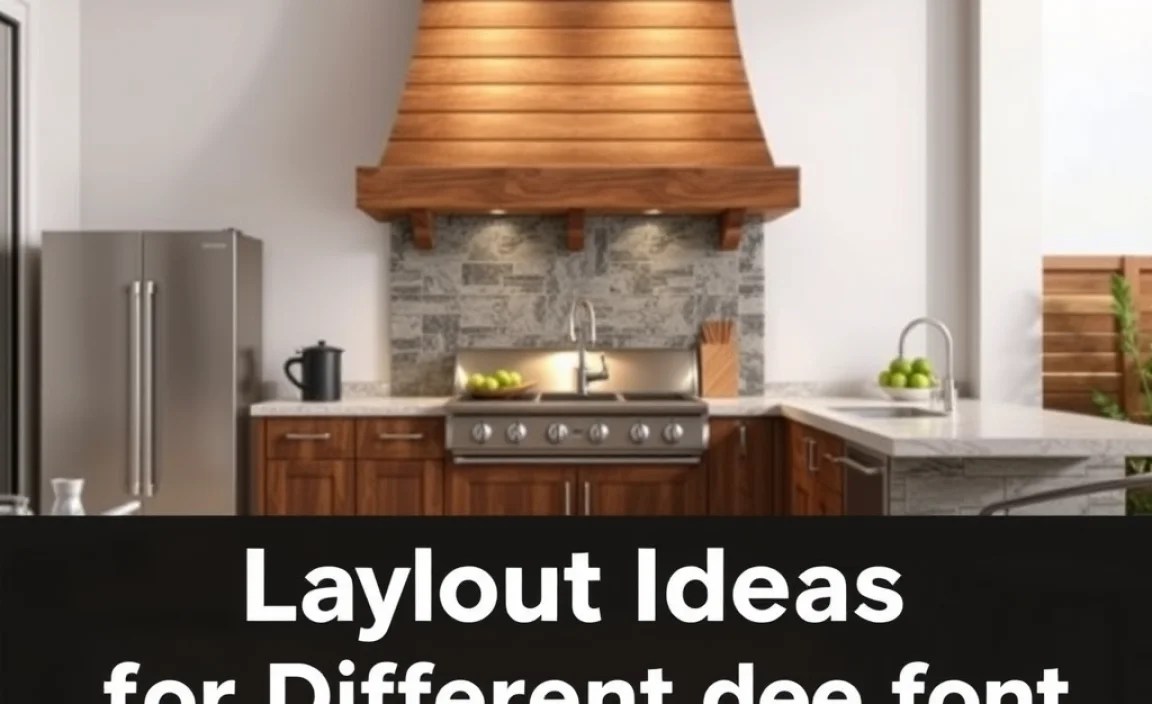
Layout ideas for different yard sizes are important. Not everyone has a large yard. Some people have small patios or balconies. You can still have an outdoor kitchen even if you have limited space. For small spaces, think about a simple setup. A small grill and a counter can fit in a small area. Use vertical space to your advantage. Add shelves to store your grilling tools. For larger yards, you have more options. You can create a full outdoor kitchen with a grill, refrigerator, sink, and storage. Think about creating different zones. Have a cooking zone, a dining zone, and a seating zone. This will help you organize your space. Consider the flow of your outdoor kitchen. You want to be able to move around easily. Don’t put the grill too far from the dining area. This will make it easier to serve food. No matter what size yard you have, you can create a functional and beautiful outdoor kitchen.
- Small yards: Focus on a simple grill and counter.
- Vertical space: Use shelves for storage.
- Large yards: Create different zones for cooking and dining.
- Consider flow: Keep the grill close to the dining area.
- Plan for traffic: Ensure easy movement throughout the space.
Think about the shape of your yard. If you have a long, narrow yard, a linear layout might work well. This means placing all your appliances along one wall. If you have a square yard, an L-shaped layout might be better. This creates a defined cooking area. Also, think about the view from your outdoor kitchen. You want to be able to enjoy the view while you cook. Place your outdoor kitchen in a spot that offers a good view. This will make cooking outside more enjoyable. Don’t forget about privacy. If you have neighbors close by, you might want to add a screen or fence. This will give you more privacy. With careful planning, you can create an outdoor kitchen that fits your yard and your lifestyle.
Fun Fact or Stat: Well-designed layouts can increase the efficiency of your outdoor kitchen by 30%, making cooking easier and more enjoyable!
Small Space Outdoor Kitchen Ideas
What are some good small space outdoor kitchen ideas? If you have a small patio or balcony, you can still have an outdoor kitchen. Focus on the essentials. A small grill and a counter are all you need. Choose a grill that is compact and easy to move. A portable grill is a good option. Use a small table as a counter. You can also use a cart with wheels. This allows you to move the counter around. Think about vertical storage. Add shelves to store your grilling tools. You can also use hooks to hang your tools. Keep things simple and organized. A small space outdoor kitchen can be just as fun as a large one.
L-Shaped Layouts for Medium-Sized Yards
Why are L-shaped layouts great for medium-sized yards? An L-shaped layout creates a defined cooking area. It also provides plenty of counter space. Place the grill on one side of the L. Place the sink and counter on the other side. This creates a good flow for cooking. You can also add a bar area to the L-shaped layout. This provides a place for people to sit and chat while you cook. An L-shaped layout is a great way to maximize space in a medium-sized yard. It makes your outdoor kitchen more functional and enjoyable.
Creating Zones in Large Outdoor Kitchens
How do you create zones in large outdoor kitchens? If you have a large yard, you can create different zones for cooking, dining, and seating. The cooking zone should include the grill, sink, and counter. Place these appliances close together. This makes it easy to cook and prep food. The dining zone should include a table and chairs. Place this area close to the cooking zone. This makes it easy to serve food. The seating zone should include comfortable chairs and a sofa. This is a place for people to relax and chat. Separate the zones with plants or screens. This helps define each area. Creating zones makes your outdoor kitchen more organized and functional.
Building Codes and Permits for Outdoor Kitchens
Understanding building codes and permits for outdoor kitchens is very important. Before you start building, check with your local government. They can tell you what permits you need. Building codes vary from place to place. Some codes require you to have a certain amount of space around your grill. Other codes regulate the type of materials you can use. You might need a permit for plumbing or electrical work. It is better to get the permits before you start building. This can save you time and money in the long run. If you don’t get the permits, you might have to tear down your outdoor kitchen. Make sure you follow all the building codes. This will ensure that your outdoor kitchen is safe and legal.
- Check local codes: Before starting any construction.
- Required permits: For plumbing and electrical work.
- Safety regulations: Spacing around the grill.
- Material restrictions: Some areas have material limitations.
- Avoid fines: By following codes and getting permits.
If you are not sure about the building codes, hire a professional. A contractor can help you navigate the permitting process. They can also make sure that your outdoor kitchen meets all the codes. This can give you peace of mind. Building an outdoor kitchen can be a fun project. But it is important to do it right. Following the building codes and getting the permits will help you avoid problems. It will also ensure that your outdoor kitchen is safe and enjoyable for years to come. So, take the time to research the building codes and get the permits before you start. This will make the process smoother and less stressful.
Fun Fact or Stat: Failing to obtain the necessary permits can result in fines and delays, potentially adding up to 20% to your project’s overall cost!
Why Permits Are Necessary
Why are permits necessary for building an outdoor kitchen? Permits ensure that your outdoor kitchen is safe. They also ensure that it meets local building codes. Building codes protect people from hazards. They regulate things like electrical wiring and gas lines. Permits also help prevent property damage. If you build without a permit, you might have to tear down your outdoor kitchen. This can be very expensive. Getting a permit is a way to protect yourself and your property. It also ensures that your outdoor kitchen is built correctly. Permits are a necessary part of building an outdoor kitchen.
Common Code Requirements to Watch Out For
What are some common code requirements to watch out for when building an outdoor kitchen? One common requirement is the distance between the grill and flammable materials. You need to keep the grill a safe distance from your house, fence, and trees. Another common requirement is the type of materials you can use. Some building codes restrict the use of wood near the grill. You might need to use fire-resistant materials instead. Electrical and plumbing work also have specific requirements. You need to use licensed professionals for these tasks. Make sure you research the local building codes before you start building. This will help you avoid problems later.
Navigating the Permitting Process
How do you navigate the permitting process for your outdoor kitchen? Start by contacting your local building department. They can tell you what permits you need. They can also give you information about the building codes. Fill out the permit applications carefully. Provide all the information that is required. You might need to submit drawings of your outdoor kitchen. Be prepared to pay a fee for the permits. Once you submit the applications, the building department will review them. They might ask you to make changes to your plans. Be patient and work with the building department. Once your plans are approved, you can start building. The permitting process can be time-consuming. But it is important to do it right.
Materials to Withstand the Elements
Choosing the right materials to withstand the elements is crucial for your outdoor kitchen. Outdoor kitchens are exposed to sun, rain, and wind. You need materials that can handle these conditions. Stainless steel is a great choice for appliances. It is resistant to rust and corrosion. Concrete is a good choice for countertops. It is durable and can withstand high temperatures. Stone is another good option for countertops. It is also very durable. Wood can be used for cabinets and framing. But it needs to be treated to protect it from the weather. Choose materials that are designed for outdoor use. This will help your outdoor kitchen last for many years.
| Material | Pros | Cons | Best Use |
|---|---|---|---|
| Stainless Steel | Rust-resistant, durable, easy to clean | Can be expensive, reflects heat | Appliances, countertops |
| Concrete | Durable, customizable, heat-resistant | Can crack, requires sealing | Countertops, flooring |
| Stone | Durable, natural look, heat-resistant | Can be expensive, heavy | Countertops, walls |
| Treated Wood | Affordable, natural look, easy to work with | Requires maintenance, prone to rot | Cabinets, framing |
| Brick | Durable, classic look, heat-resistant | Can be expensive, requires mortar | Walls, flooring |
- Stainless steel: For appliances, resists rust.
- Concrete: For countertops, durable and heat-resistant.
- Stone: For countertops, natural and long-lasting.
- Treated wood: For cabinets, needs protection.
- Consider climate: Choose materials suited for your weather.
Think about the climate in your area. If you live in a hot, sunny area, choose materials that won’t fade or crack. If you live in a rainy area, choose materials that are water-resistant. Also, think about the style of your outdoor kitchen. Choose materials that match the style of your space. This will help create a cohesive look. Don’t forget about maintenance. Some materials require more maintenance than others. Choose materials that you are willing to take care of. With the right materials, your outdoor kitchen will be beautiful and functional for years to come.
Fun Fact or Stat: Using weather-resistant materials can extend the lifespan of your outdoor kitchen by up to 50%, saving you money in the long run!
Selecting Weather-Resistant Countertops
How do you select weather-resistant countertops for your outdoor kitchen? Look for materials that are durable and non-porous. Granite and concrete are good choices. They are both resistant to stains and scratches. They are also easy to clean. Stainless steel is another option. It is heat-resistant and easy to sanitize. Avoid using materials that are porous, such as wood or tile. These materials can absorb water and crack in cold weather. Choose a countertop material that can withstand the elements. This will help your outdoor kitchen look great for years to come.
Durable Cabinet and Framing Materials
What are some durable cabinet and framing materials for an outdoor kitchen? Stainless steel is a great choice for cabinets. It is rust-resistant and easy to clean. Treated wood is another option. But it needs to be sealed to protect it from the weather. Composite materials are also a good choice. They are made from recycled plastic and wood fibers. They are resistant to water and insects. Avoid using untreated wood. It will rot and decay in the outdoor environment. Choose materials that are designed for outdoor use. This will ensure that your cabinets and framing last for many years.
Protecting Your Investment from the Elements
How can you protect your outdoor kitchen investment from the elements? Start by choosing the right materials. Use weather-resistant materials for your countertops, cabinets, and appliances. Seal your wood surfaces to protect them from water damage. Cover your outdoor kitchen when it is not in use. This will protect it from the sun, rain, and snow. Clean your outdoor kitchen regularly. This will prevent dirt and grime from building up. Inspect your outdoor kitchen for damage. Repair any damage promptly. By taking these steps, you can protect your outdoor kitchen investment and keep it looking great for years to come.
Summary
Planning an outdoor kitchen involves many steps. Understanding the right dimensions for outdoor kitchen is very important. Consider the size of your yard and the appliances you want. Counter height and depth should be comfortable. Choose materials that can withstand the weather. Remember to check building codes and get permits. A well-planned layout makes cooking outside fun. Good planning ensures your outdoor kitchen meets your needs. Measure your space carefully before you start. This helps you avoid problems later. With careful planning, you can create a beautiful and functional outdoor kitchen.
Conclusion
Creating an outdoor kitchen is a great way to enjoy cooking outside. Planning the right dimensions for outdoor kitchen is key. It makes your space useful and fun. Think about the space you have. Think about the appliances you want. Consider counter height and depth. Choose materials that can handle the weather. With careful planning, your outdoor kitchen will be a great place to cook and entertain.
Frequently Asked Questions
Question No 1: How much space do I really need for an outdoor kitchen?
Answer: The space you need depends on what you want in your outdoor kitchen. A small grill and counter might need only 100 square feet. A full kitchen with appliances could need 300 square feet or more. Don’t forget to factor in space for walkways and seating. Measure your yard carefully to see what fits best. Consider future expansion when deciding on the size. This ensures your outdoor kitchen meets your needs now and later.
Question No 2: What are the standard dimensions for outdoor kitchen counters?
Answer: Standard counter height is about 36 inches. This works well for most people. You can adjust it to fit your height. Counter depth should be 24 to 30 inches. This gives you enough space to work and place items. Choose a height and depth that are comfortable for you. Consider the type of work you will be doing on the counter. Deeper counters are better for chopping and prepping food.
Question No 3: Do I need a permit to build an outdoor kitchen?
Answer: Yes, in most cases you will need a permit. Building codes vary, so check with your local government. Permits ensure your outdoor kitchen is safe and meets regulations. You might need permits for plumbing or electrical work. It’s better to get permits before you start building. This avoids fines and ensures your kitchen is legal. Failing to get the right permits can lead to costly delays.
Question No 4: What materials are best for outdoor use?
Answer: Choose materials that can withstand the elements. Stainless steel is great for appliances. Concrete and stone are good for countertops. Treated wood can be used for cabinets. Make sure to seal wood surfaces to protect them from water. Consider the climate in your area when choosing materials. This will help your outdoor kitchen last longer. Durable materials save you money in the long run.
Question No 5: How do I plan for walkways and seating in my outdoor kitchen?
Answer: Walkways are important for safety. Allow at least three to four feet for walkways. This lets people move around easily. Seating depends on how many people you want to accommodate. A small table for four needs about 100 square feet. Place seating close to the kitchen for easy serving. Comfortable seating makes your outdoor kitchen a great place to relax. Consider adding a bar area with stools for extra seating.
Question No 6: What size grill should I get for my outdoor kitchen?
Answer: The right grill size depends on how many people you cook for. A grill that is 30 to 40 inches wide is good for a family of four. If you often have parties, get a larger grill. A grill that is 50 to 60 inches wide is better for large groups. Also, think about the types of food you like to cook. Larger cuts of meat need a bigger grill. Ensure the dimensions for outdoor kitchen allows for grill placement.
