Have you ever tasted a cherry straight from the tree? It’s sweet and juicy. Did you know you can grow cherry trees in a greenhouse? It might sound tricky. But it can be a fun and rewarding project. Imagine having fresh cherries even when it’s cold outside.
Why would you want to grow cherry trees in a greenhouse? Greenhouses protect trees from bad weather. They also help you control the temperature. This means you can grow cherries almost any time of year. Let’s learn how!
Key Takeaways
- Growing cherry trees in a greenhouse lets you enjoy fresh cherries year-round.
- Choose the right cherry variety and pot size for successful greenhouse growing.
- Proper temperature, light, and watering are key for healthy cherry trees.
- Pollinate your cherry blossoms by hand to ensure a good fruit harvest.
- Prune your cherry trees regularly to encourage growth and fruit production.

Why Grow Cherry Trees in a Greenhouse?
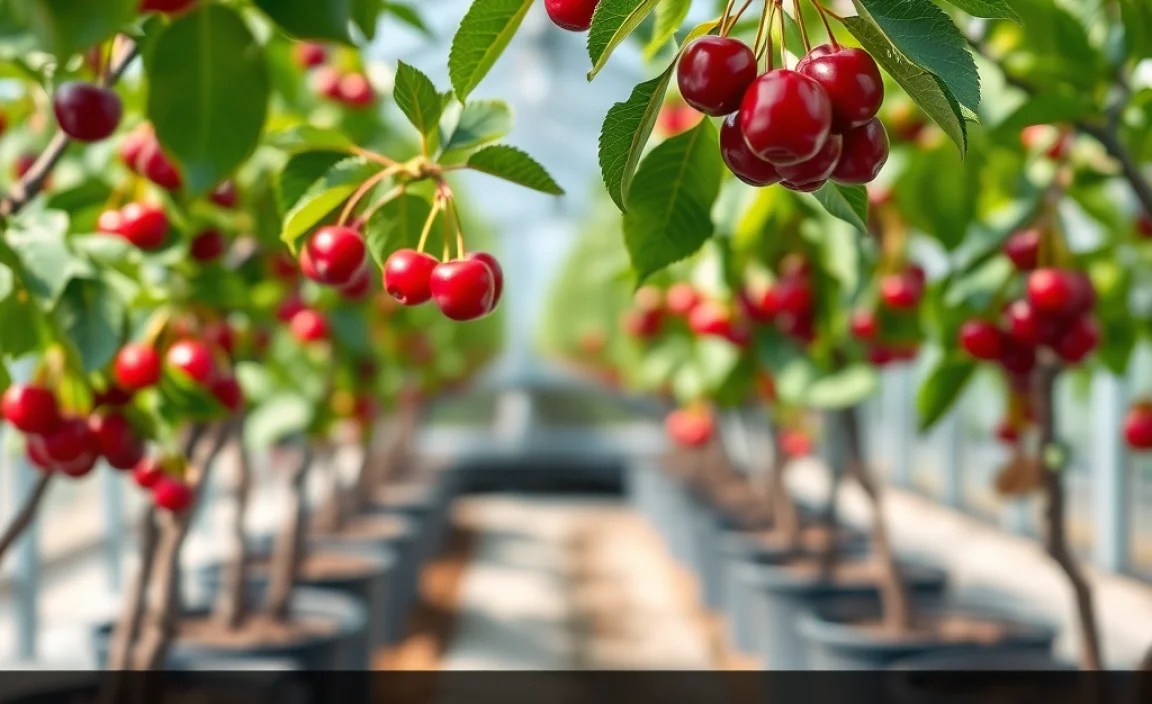
Have you ever wished you could eat fresh cherries all year? Growing cherry trees in a greenhouse makes this possible. A greenhouse gives you control over the environment. You can manage the temperature, humidity, and light. This protects your cherry trees from frost, strong winds, and pests. Greenhouses also extend the growing season. This means you can harvest cherries earlier and later in the year. Imagine picking ripe, juicy cherries in the middle of winter. Growing cherry trees in a greenhouse can turn this dream into reality. Plus, you can use organic methods. This ensures your cherries are healthy and delicious. It’s a rewarding way to enjoy fresh fruit from your own backyard, or rather, your own greenhouse.
- Greenhouses protect trees from bad weather.
- You can control the temperature and humidity.
- Greenhouses extend the growing season.
- You can harvest cherries year-round.
- Organic methods ensure healthy fruit.
Growing cherry trees in a greenhouse offers many benefits. You get to enjoy fresh cherries whenever you want. You also protect your trees from harsh weather and pests. It’s a fun and educational project for the whole family. Imagine teaching your kids about plant care and watching the trees grow together. Growing cherry trees in a greenhouse is a great way to connect with nature. It also provides you with delicious, homegrown fruit. You’ll be amazed at how easy and rewarding it can be. With a little care and attention, you’ll be enjoying fresh cherries in no time. You can even experiment with different varieties to find your favorites. The possibilities are endless when you grow cherry trees in a greenhouse.
Choosing the Right Cherry Variety
Not all cherry trees are the same. Some grow tall and wide. Others stay small and compact. When growing cherry trees in a greenhouse, you need to choose the right variety. Look for dwarf or semi-dwarf trees. These varieties are smaller and better suited for growing in pots. Popular choices include ‘Stella’, ‘Lapins’, and ‘Compact Stella’. These trees are self-pollinating. This means they don’t need another tree to produce fruit. Make sure to check the tree’s mature size. You want to ensure it will fit comfortably in your greenhouse. Also, consider the climate in your area. Some cherry trees need a certain number of chill hours. Chill hours are the number of hours below a certain temperature (usually 45°F) needed for the tree to produce fruit. Choose a variety that matches your local climate for the best results.
Selecting the Right Pot Size
The pot size is very important for growing cherry trees in a greenhouse. If the pot is too small, the tree will become root-bound. This means the roots will run out of space to grow. The tree won’t be able to get enough water and nutrients. If the pot is too big, the soil will stay wet for too long. This can lead to root rot. A good rule of thumb is to start with a pot that is at least 15-20 gallons in size. As the tree grows, you may need to repot it into a larger container. Make sure the pot has drainage holes. This allows excess water to escape. Use a well-draining potting mix. This will help prevent root rot. Choosing the right pot size is key to healthy growth. You can ensure your cherry tree thrives in its greenhouse environment.
Understanding Chill Hours
Do you know what chill hours are? Chill hours are the number of hours a tree needs below a certain temperature. This helps the tree produce fruit. Most cherry trees need a certain number of chill hours. This is usually between 300 and 900 hours. When growing cherry trees in a greenhouse, you might need to provide artificial chilling. This means exposing the tree to cold temperatures for a certain period. You can do this by placing the tree in a cool room or garage. Make sure the temperature stays between 35°F and 45°F. Monitor the temperature carefully. Keep track of the number of chill hours. Providing the right amount of chilling is essential for fruit production. Without enough chill hours, the tree may not produce any cherries.
Fun Fact or Stat: The ‘Stella’ cherry tree is one of the most popular self-pollinating varieties for greenhouse growing. It produces sweet, dark red cherries and is known for its reliable fruit production.

How to Plant Cherry Trees in a Greenhouse
Planting your cherry tree correctly is crucial. It sets the stage for healthy growth. When growing cherry trees in a greenhouse, start with a high-quality potting mix. This should be a blend of peat moss, perlite, and vermiculite. These ingredients provide good drainage and aeration. Choose a pot that is at least 15-20 gallons in size. Make sure it has drainage holes. Gently remove the cherry tree from its nursery container. Loosen any circling roots. Place the tree in the center of the pot. Fill the pot with potting mix. Leave about an inch of space between the soil surface and the rim of the pot. Water the tree thoroughly. Add more potting mix if the soil settles. Place the pot in a sunny location in your greenhouse. Ensure the tree receives at least six hours of sunlight per day. Planting your cherry tree correctly will give it the best start. You can enjoy years of delicious cherries.
- Use a high-quality potting mix.
- Choose a pot with drainage holes.
- Loosen any circling roots.
- Water the tree thoroughly after planting.
- Place the pot in a sunny location.
Planting cherry trees in a greenhouse requires careful attention to detail. The right potting mix ensures proper drainage and aeration. This prevents root rot. Choosing the correct pot size allows the tree’s roots to grow freely. This is very important for overall health. When you grow cherry trees in a greenhouse, you are creating a controlled environment. This helps you to optimize growing conditions. Regular watering, proper fertilization, and adequate sunlight are all essential. By following these steps, you can successfully plant your cherry tree. You’ll be well on your way to enjoying a bountiful harvest. Remember to monitor your tree closely. Look for any signs of pests or diseases. Address any issues promptly to keep your tree healthy and productive.
Preparing the Potting Mix
What’s the secret to happy cherry trees? It starts with the soil. When growing cherry trees in a greenhouse, you need a special potting mix. This is not the same as garden soil. Garden soil can be too heavy and dense. It doesn’t drain well. A good potting mix should be light and airy. It should also retain moisture without becoming waterlogged. A common mix includes peat moss, perlite, and vermiculite. Peat moss helps retain moisture. Perlite improves drainage. Vermiculite helps with aeration. You can also add some compost. Compost provides nutrients for the tree. Mix these ingredients together thoroughly. Make sure there are no large clumps. A well-prepared potting mix is the foundation. You’ll have healthy and thriving cherry trees in your greenhouse.
Handling the Root Ball
Imagine you’re a doctor. You need to be gentle when handling the roots. When growing cherry trees in a greenhouse, the root ball is very important. The root ball is the mass of roots and soil. This comes with the tree when you buy it. Before planting, gently remove the tree from its container. Inspect the roots. If you see any roots circling around the root ball, loosen them. You can gently tease them apart with your fingers. This encourages the roots to grow outwards. It will help the tree establish itself in its new pot. Be careful not to damage the roots. They are delicate. Handling the root ball with care ensures a healthy start. Your cherry tree will grow strong in its greenhouse environment.
First Watering
Water is life for your cherry tree. But how much is enough? When growing cherry trees in a greenhouse, the first watering is crucial. After planting, water the tree thoroughly. Water until you see water draining out of the bottom of the pot. This ensures the entire root ball is moist. Avoid overwatering. Soggy soil can lead to root rot. Check the soil moisture regularly. Stick your finger into the soil. If the top inch feels dry, it’s time to water again. During the growing season, you may need to water more frequently. Especially during hot weather. Proper watering is essential for healthy growth. Your cherry tree will thrive in its greenhouse home.
Fun Fact or Stat: A well-draining potting mix prevents root rot. Root rot is one of the most common problems when growing cherry trees in containers.
Maintaining the Right Temperature for Cherry Trees
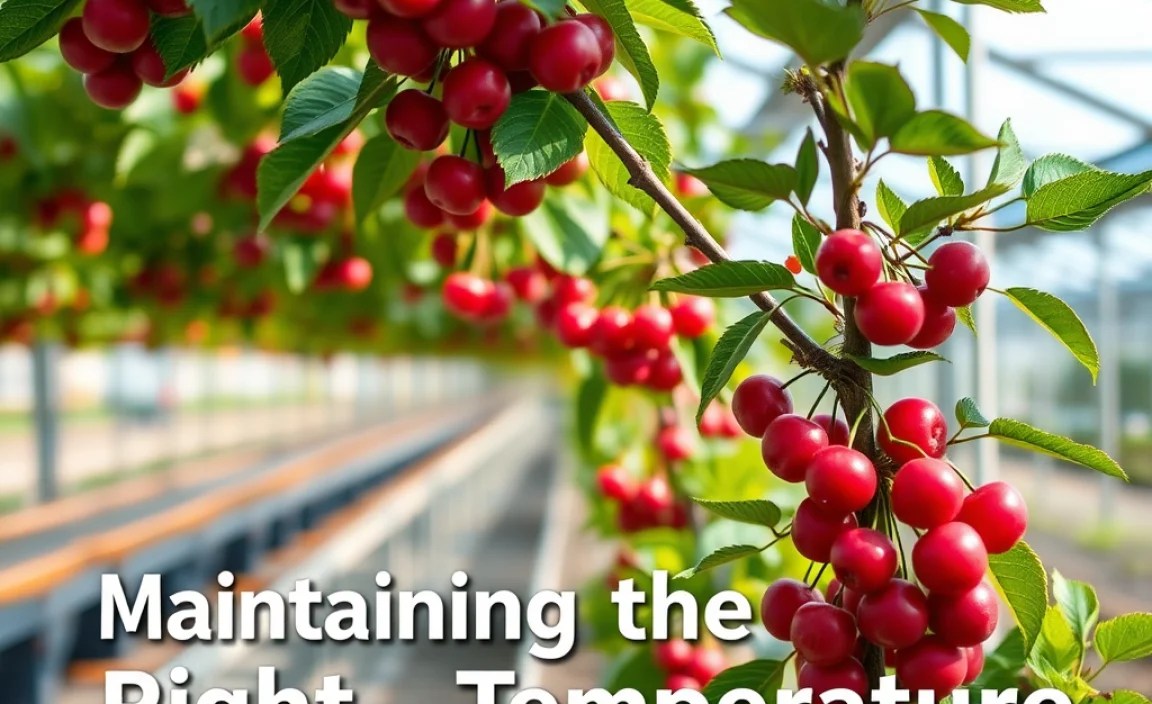
Cherry trees need the right temperature to thrive. When growing cherry trees in a greenhouse, controlling the temperature is very important. During the day, aim for temperatures between 65°F and 75°F. At night, the temperature should be between 55°F and 65°F. Use a thermometer to monitor the temperature in your greenhouse. If it gets too hot, open the vents or use a fan to circulate air. If it gets too cold, use a heater to warm the greenhouse. Avoid sudden temperature changes. These can stress the tree. Consistent temperatures will promote healthy growth. They’ll also encourage fruit production. Maintaining the right temperature is key. Your cherry trees will flourish in their greenhouse environment. You’ll be rewarded with a bountiful harvest of delicious cherries.
- Maintain daytime temperatures between 65°F and 75°F.
- Keep nighttime temperatures between 55°F and 65°F.
- Use a thermometer to monitor the temperature.
- Ventilate the greenhouse to prevent overheating.
- Use a heater to prevent freezing.
Maintaining the right temperature is essential when you grow cherry trees in a greenhouse. Cherry trees are sensitive to extreme temperatures. Too much heat can cause the blossoms to drop. Too much cold can damage the tree. A greenhouse provides a controlled environment. This allows you to regulate the temperature. You can use fans to circulate air. This helps to distribute heat evenly. Heaters can provide warmth during cold nights. Proper ventilation prevents the greenhouse from overheating. By monitoring and adjusting the temperature, you can create the ideal growing conditions. Your cherry trees will thrive. You can enjoy a plentiful harvest of sweet, juicy cherries. Remember to check the temperature regularly. Adjust as needed to keep your trees happy and healthy.
Heating the Greenhouse
Winter is coming. But your cherries can still thrive. When growing cherry trees in a greenhouse, heating is important in winter. Cherry trees can be damaged by freezing temperatures. A greenhouse heater can help maintain a consistent temperature. There are many types of greenhouse heaters. Electric heaters are easy to use. But they can be expensive to operate. Gas heaters are more efficient. But they require proper ventilation. Choose a heater that is appropriate for the size of your greenhouse. Place the heater in a safe location. Make sure it is away from flammable materials. Monitor the temperature regularly. Adjust the heater as needed. Heating your greenhouse will protect your cherry trees from the cold. You can enjoy fresh cherries even in the winter.
Cooling the Greenhouse
Summer can be just as challenging. Sometimes it gets too hot, even in the greenhouse. When growing cherry trees in a greenhouse, cooling is important in summer. Cherry trees can be stressed by high temperatures. Too much heat can damage the blossoms. It can also affect fruit production. There are several ways to cool a greenhouse. Ventilation is the simplest method. Open the vents to allow air to circulate. Shade cloth can block out some of the sun’s rays. Evaporative coolers can lower the temperature by evaporating water. Choose a cooling method that is appropriate for your climate. Monitor the temperature regularly. Adjust as needed. Cooling your greenhouse will protect your cherry trees from the heat. You can ensure a bountiful harvest.
Temperature Monitoring
Imagine you’re a weather forecaster for your cherry trees. When growing cherry trees in a greenhouse, monitoring the temperature is very important. You need to know what the temperature is at all times. This helps you make adjustments as needed. Use a thermometer to monitor the temperature. Place the thermometer in a central location in the greenhouse. Check the temperature regularly. Especially in the morning and evening. Keep a record of the temperature. This will help you identify trends. You can also use a digital thermometer. Some digital thermometers can send alerts to your phone. This way, you’ll know if the temperature is too high or too low. Monitoring the temperature is essential. You’ll be able to keep your cherry trees healthy and happy.
Fun Fact or Stat: Cherry trees can tolerate temperatures as low as 20°F for short periods. But prolonged exposure to freezing temperatures can damage the tree.

Providing Adequate Light for Greenhouse Cherries
Light is food for plants. Just like we need food, cherry trees need light to grow. When growing cherry trees in a greenhouse, ensuring adequate light is very important. Cherry trees need at least six hours of direct sunlight per day. If your greenhouse doesn’t get enough sunlight, you may need to use grow lights. Grow lights provide artificial light that mimics sunlight. There are many types of grow lights available. LED grow lights are energy-efficient. They also produce very little heat. Fluorescent grow lights are another option. But they are not as energy-efficient as LED lights. Place the grow lights above the cherry trees. Adjust the height of the lights as the trees grow. Adequate light is essential for photosynthesis. This is the process by which plants convert light into energy. Your cherry trees will need plenty of light. They can grow strong and produce delicious cherries.
- Cherry trees need at least six hours of direct sunlight per day.
- Use grow lights if your greenhouse doesn’t get enough sunlight.
- LED grow lights are energy-efficient.
- Place the grow lights above the cherry trees.
- Adjust the height of the lights as the trees grow.
Providing adequate light is very important. When you grow cherry trees in a greenhouse, remember that light drives photosynthesis. This process allows the tree to create its own food. Without enough light, the tree will not be able to grow properly. It may not produce any fruit. A greenhouse provides a controlled environment. This allows you to supplement natural light with artificial light. You can use grow lights to extend the day length. This can be especially helpful during the winter months. Proper lighting will ensure your cherry trees have the energy they need. They can grow healthy and produce a bountiful harvest. Monitor the light levels in your greenhouse. Adjust as needed to keep your trees happy and productive.
Natural Sunlight
The sun is a powerful source of energy. When growing cherry trees in a greenhouse, natural sunlight is the best option. Cherry trees thrive in direct sunlight. Aim for at least six hours of sunlight per day. Position your greenhouse in a location that receives plenty of sunlight. Avoid placing it in the shade of trees or buildings. If your greenhouse is covered with glass or plastic, clean it regularly. This will allow more sunlight to reach the trees. During the winter months, the sun’s rays are weaker. You may need to supplement with grow lights. But whenever possible, rely on natural sunlight. It is the most efficient and beneficial source of light. Your cherry trees will thank you for it.
Using Grow Lights
Sometimes the sun needs a little help. When growing cherry trees in a greenhouse, grow lights can be very useful. Especially during the winter months. Grow lights provide artificial light. This mimics the sun’s rays. There are many types of grow lights available. LED grow lights are a popular choice. They are energy-efficient and long-lasting. Fluorescent grow lights are another option. But they are not as efficient as LED lights. Choose a grow light that is appropriate for the size of your greenhouse. Place the grow light above the cherry trees. Adjust the height as the trees grow. Use a timer to control the grow lights. Aim for 12-16 hours of light per day. Grow lights can help your cherry trees thrive. Even when natural sunlight is limited.
Light Duration
How long should the lights be on? When growing cherry trees in a greenhouse, light duration is an important factor. Cherry trees need a certain number of hours of light per day. This varies depending on the season. During the growing season, aim for 12-16 hours of light per day. During the winter months, you can reduce the light duration to 8-10 hours per day. Use a timer to control the lights. This will ensure the trees get the right amount of light. Consistent light duration is important for healthy growth. It also affects fruit production. Monitor your trees closely. Adjust the light duration as needed. Your cherry trees will thrive with the right amount of light.
Fun Fact or Stat: LED grow lights use up to 75% less energy than traditional incandescent lights. This makes them a great choice for greenhouse growing.
Watering and Fertilizing Cherry Trees in Greenhouses
Water and nutrients are like food and drink for your cherry trees. When growing cherry trees in a greenhouse, proper watering and fertilizing are very important. Water the trees regularly. Check the soil moisture before watering. If the top inch of soil is dry, it’s time to water. Water deeply. Make sure the water reaches the roots. Avoid overwatering. Soggy soil can lead to root rot. Fertilize the trees regularly. Use a balanced fertilizer. A 10-10-10 fertilizer is a good choice. Follow the instructions on the fertilizer label. Fertilize during the growing season. Avoid fertilizing during the winter months. Proper watering and fertilizing will keep your cherry trees healthy. They will also produce a bountiful harvest.
- Water the trees regularly, checking soil moisture first.
- Water deeply, ensuring water reaches the roots.
- Avoid overwatering to prevent root rot.
- Use a balanced fertilizer during the growing season.
- Follow fertilizer label instructions carefully.
Watering and fertilizing are essential tasks. When you grow cherry trees in a greenhouse, these practices directly impact tree health and fruit production. Overwatering can lead to root rot. This is a common problem in greenhouse environments. Underwatering can stress the tree. This can reduce fruit yield. Proper fertilization provides the nutrients the tree needs. It supports healthy growth and fruit development. A greenhouse environment allows you to control these factors. You can optimize conditions for your cherry trees. This will lead to a successful harvest. Monitor your trees regularly. Adjust your watering and fertilizing practices as needed. This will ensure your trees thrive.
Watering Frequency
How often should you water? When growing cherry trees in a greenhouse, watering frequency depends on several factors. These include the size of the pot, the type of soil, and the weather. In general, you should water the trees when the top inch of soil is dry. This may be every few days or every week. Check the soil moisture regularly. Use your finger to feel the soil. If it feels dry, it’s time to water. If it feels moist, wait a day or two. During hot weather, you may need to water more frequently. During cooler weather, you may need to water less frequently. Adjust your watering frequency as needed. Your cherry trees will thank you.
Choosing the Right Fertilizer
Fertilizer is food for your cherry trees. When growing cherry trees in a greenhouse, choosing the right fertilizer is very important. Cherry trees need a balanced fertilizer. This means it contains equal amounts of nitrogen, phosphorus, and potassium. A 10-10-10 fertilizer is a good choice. You can also use a fertilizer specifically formulated for fruit trees. Follow the instructions on the fertilizer label. Avoid using too much fertilizer. This can damage the trees. Organic fertilizers are a good option. They release nutrients slowly. This prevents over-fertilization. Choose a fertilizer that is right for your cherry trees. They will grow strong and produce delicious cherries.
Recognizing Signs of Overwatering or Underwatering
Your cherry trees will tell you if they’re not happy. When growing cherry trees in a greenhouse, it’s important to recognize the signs of overwatering or underwatering. Overwatering can cause the leaves to turn yellow and droop. The soil will be soggy. The roots may rot. Underwatering can cause the leaves to turn brown and crispy. The soil will be dry. The tree may wilt. If you notice any of these signs, adjust your watering practices. Allow the soil to dry out before watering again. Water more frequently if the soil is too dry. Monitor your trees closely. They will tell you what they need.
Fun Fact or Stat: Cherry trees are heavy feeders. They need regular fertilization to produce a good crop of fruit.
Pollinating Cherry Trees in a Greenhouse
Cherry trees need help to make cherries. When growing cherry trees in a greenhouse, pollination is very important. Pollination is the process by which pollen is transferred from the male part of the flower to the female part. This allows the flower to produce fruit. In nature, bees and other insects do this job. But in a greenhouse, you may need to hand-pollinate the trees. Use a small paintbrush to gently transfer pollen from one flower to another. Do this on a dry, sunny day. The pollen will be more likely to stick. You can also use a small fan to circulate air. This will help to distribute the pollen. Pollination is essential for fruit production. Your cherry trees will need your help. You’ll be rewarded with a bountiful harvest.
- Pollination is essential for fruit production.
- Hand-pollinate the trees using a small paintbrush.
- Do this on a dry, sunny day.
- Use a small fan to circulate air.
- Pollinate all the blossoms for best results.
Pollination is a key step when you grow cherry trees in a greenhouse. Without proper pollination, your trees will produce few or no cherries. Hand-pollination is a simple process. It can greatly increase your fruit yield. By using a small paintbrush, you can transfer pollen from flower to flower. This mimics the work of bees and other pollinators. A greenhouse environment often lacks natural pollinators. So, hand-pollination is essential. It ensures that your cherry trees are properly fertilized. This leads to a successful harvest. Take your time. Be gentle. Pollinate all the blossoms on the tree. This will maximize your chances of a bountiful crop.
Hand-Pollination Techniques
Bees are busy. But you can be a bee for your cherry trees. When growing cherry trees in a greenhouse, hand-pollination is a simple technique. Use a small, soft paintbrush. Gently brush the pollen from the stamen (the male part of the flower). Transfer the pollen to the pistil (the female part of the flower). Do this for all the blossoms on the tree. You can also use a cotton swab. Or a small feather. Be gentle. Avoid damaging the delicate flowers. Hand-pollination is a rewarding process. You’ll be helping your cherry trees produce delicious fruit.
When to Pollinate
Timing is everything. When growing cherry trees in a greenhouse, knowing when to pollinate is important. Pollinate the trees when the blossoms are fully open. This is usually in the spring. The best time to pollinate is on a dry, sunny day. The pollen will be more likely to stick. Avoid pollinating on a rainy day. The pollen will be washed away. Check the blossoms regularly. Pollinate them as soon as they open. The sooner you pollinate, the better. Your cherry trees will thank you for your prompt attention.
Recognizing Successful Pollination
How do you know if it worked? When growing cherry trees in a greenhouse, recognizing successful pollination is important. After pollination, the base of the flower will begin to swell. This indicates that the fruit is developing. The petals will start to fall off. This is a normal part of the process. If the flower does not swell, it may not have been pollinated. Try pollinating it again. Monitor the trees closely. You’ll soon be able to tell which flowers have been successfully pollinated. You’ll be one step closer to enjoying fresh cherries.
| Factor | Importance | Description |
|---|---|---|
| Variety Selection | High | Choose dwarf or self-pollinating varieties. |
| Temperature | High | Maintain 65-75°F during the day, 55-65°F at night. |
| Pollination | Medium | Hand-pollinate if natural pollinators are absent. |
| Watering | High | Water when the top inch of soil is dry. |
| Fertilizing | Medium | Use a balanced fertilizer during the growing season. |
Fun Fact or Stat: Some cherry varieties are self-pollinating. But even these varieties can benefit from hand-pollination. This can increase fruit yield.
Pruning Cherry Trees Grown in Greenhouses
Pruning is like giving your cherry tree a haircut. When growing cherry trees in a greenhouse, pruning is very important. Pruning helps to shape the tree. It also removes dead or diseased branches. This allows more sunlight to reach the center of the tree. Pruning also encourages fruit production. The best time to prune cherry trees is in late winter or early spring. Before the new growth begins. Use sharp, clean pruning shears. Make cuts at a 45-degree angle. Remove any branches that are crossing or rubbing against each other. Also, remove any suckers that are growing from the base of the tree. Pruning will keep your cherry trees healthy. They will also produce more fruit.
- Pruning helps to shape the tree.
- It removes dead or diseased branches.
- Pruning allows more sunlight to reach the center of the tree.
- The best time to prune is in late winter or early spring.
- Use sharp, clean pruning shears.
Pruning is an essential practice. When you grow cherry trees in a greenhouse, it helps to maintain the tree’s shape and health. It also promotes fruit production. By removing dead or diseased wood, you prevent the spread of disease. You also encourage new growth. Pruning allows more sunlight to reach the inner branches. This improves fruit quality. A greenhouse environment allows you to control the pruning schedule. You can prune the trees at the optimal time. This maximizes their potential. Regular pruning will keep your cherry trees healthy and productive. You’ll enjoy a bountiful harvest of delicious cherries.
Why Prune?
Imagine you’re a sculptor shaping a masterpiece. When growing cherry trees in a greenhouse, pruning is essential for several reasons. It helps to maintain the tree’s shape and size. This is important in a greenhouse environment. Pruning also removes dead or diseased branches. This prevents the spread of disease. It also allows more sunlight to reach the center of the tree. This improves fruit production. Pruning encourages new growth. This leads to a healthier, more productive tree. Pruning is a vital part of cherry tree care.
When to Prune
Timing is key. When growing cherry trees in a greenhouse, knowing when to prune is very important. The best time to prune cherry trees is in late winter or early spring. Before the new growth begins. This allows the tree to heal quickly. Avoid pruning in the fall. This can make the tree more susceptible to winter damage. Prune on a dry day. This will help to prevent the spread of disease. Pruning at the right time will keep your cherry trees healthy.
Pruning Techniques
How do you prune like a pro? When growing cherry trees in a greenhouse, mastering pruning techniques is important. Use sharp, clean pruning shears. Make cuts at a 45-degree angle. This will help the tree to heal quickly. Remove any branches that are crossing or rubbing against each other. Also, remove any suckers that are growing from the base of the tree. Thin out the canopy. This will allow more sunlight to reach the center of the tree. Prune regularly. This will keep your cherry trees healthy and productive.
Fun Fact or Stat: Pruning can increase fruit yield by up to 50%. This makes it a very important part of cherry tree care.
Summary
Growing cherry trees in a greenhouse can be a rewarding experience. You can enjoy fresh cherries year-round. Choosing the right cherry variety is the first step. Dwarf or semi-dwarf trees are best for greenhouses. Proper planting is also important. Use a well-draining potting mix. Ensure the pot has drainage holes. Maintaining the right temperature is crucial. Aim for 65-75°F during the day and 55-65°F at night. Adequate light is also essential. Provide at least six hours of sunlight per day. Watering and fertilizing are important. Water regularly. Use a balanced fertilizer. Pollination is key for fruit production. You may need to hand-pollinate the trees. Pruning helps to shape the tree and improve fruit production. Follow these tips. You will have a successful cherry harvest.
Conclusion
Growing cherry trees in a greenhouse allows you to enjoy fresh, homegrown cherries regardless of the season. With careful planning and attention to detail, you can create the ideal environment for your trees to thrive. Remember to select the right variety, maintain proper temperature and light levels, and provide adequate water and nutrients. Hand-pollination and regular pruning are also essential for fruit production. By following these guidelines, you can successfully grow cherry trees in a greenhouse and enjoy a bountiful harvest of delicious cherries.
Frequently Asked Questions
Question No 1: What are the best cherry tree varieties for growing in a greenhouse?
Answer: The best cherry tree varieties for growing in a greenhouse are dwarf or semi-dwarf types. These varieties are smaller and better suited for container growing. Popular choices include ‘Stella’, ‘Lapins’, and ‘Compact Stella’. These varieties are self-pollinating. This means they don’t need another tree to produce fruit. Choose a variety that is known for its disease resistance. This will help prevent problems in the greenhouse environment. Consider the tree’s mature size. You want to ensure it will fit comfortably in your greenhouse. ‘Stella’ and ‘Compact Stella’ are excellent choices. They are known for their reliable fruit production and compact size.
Question No 2: How do I control pests and diseases in my greenhouse cherry trees?
Answer: Controlling pests and diseases is crucial for healthy cherry trees. When growing cherry trees in a greenhouse, start by inspecting your trees regularly. Look for any signs of pests or diseases. Common pests include aphids, spider mites, and scale. Common diseases include powdery mildew and root rot. If you find any pests, you can use insecticidal soap or neem oil. These are natural and effective treatments. For diseases, ensure good air circulation. This will help prevent fungal problems. Avoid overwatering. This can lead to root rot. Remove any infected leaves or branches. Dispose of them properly. Maintaining a clean greenhouse environment is also important.
Question No 3: How often should I water my cherry trees in a greenhouse?
Answer: Watering frequency depends on several factors. These include the size of the pot, the type of soil, and the weather. In general, you should water your cherry trees when the top inch of soil is dry. Check the soil moisture regularly. Stick your finger into the soil. If it feels dry, it’s time to water. Water deeply. Make sure the water reaches the roots. Avoid overwatering. Soggy soil can lead to root rot. During hot weather, you may need to water more frequently. During cooler weather, you may need to water less frequently. Adjust your watering frequency as needed. You’ll find that growing cherry trees in a greenhouse means you must be watchful.
Question No 4: What kind of fertilizer should I use for my greenhouse cherry trees?
Answer: Cherry trees need a balanced fertilizer. This means it contains equal amounts of nitrogen, phosphorus, and potassium. A 10-10-10 fertilizer is a good choice. You can also use a fertilizer specifically formulated for fruit trees. Follow the instructions on the fertilizer label. Avoid using too much fertilizer. This can damage the trees. Organic fertilizers are a good option. They release nutrients slowly. This prevents over-fertilization. Fertilize during the growing season. Avoid fertilizing during the winter months. Proper fertilization is essential for healthy growth and fruit production. If you grow cherry trees in a greenhouse, fertilizing is key!
Question No 5: How do I provide chill hours for my cherry trees in a greenhouse?
Answer: Cherry trees need a certain number of chill hours to produce fruit. Chill hours are the number of hours below a certain temperature. This is usually 45°F. When growing cherry trees in a greenhouse, you may need to provide artificial chilling. You can do this by placing the tree in a cool room or garage. Make sure the temperature stays between 35°F and 45°F. Monitor the temperature carefully. Keep track of the number of chill hours. The specific amount of chill hours will depend on the variety. Without enough chill hours, the tree may not produce any cherries. Research your specific variety to know how much chilling is needed.
Question No 6: How long does it take for a cherry tree to produce fruit in a greenhouse?
Answer: The time it takes for a cherry tree to produce fruit depends on several factors. These include the variety of the tree, its age, and the growing conditions
