Do you like eggplants? These purple veggies are fun to grow. You can even grow eggplants containers. It is easier than you think. Let’s learn how!
Growing eggplants in pots is a cool project. Kids can help. You can watch them grow bigger each day. Soon, you will have your own eggplants.
Have you ever seen an eggplant flower? They are so pretty. The flowers turn into the eggplants. It is like magic. You can have this magic at your home. Grow eggplants containers on your porch.
Key Takeaways
- Growing eggplants containers lets you enjoy fresh veggies even with limited space.
- Choose large containers for your eggplants to allow their roots to spread.
- Eggplants need lots of sun, so place your containers in a sunny spot.
- Water your eggplants regularly, keeping the soil moist but not soggy.
- Fertilize your eggplant plants to help them grow big and strong.

Choosing the Right Containers to Grow Eggplants
To grow eggplants containers, picking the right container is key. The container should be big. Eggplants need space for their roots. A good size is about 5 gallons. Bigger is even better. Make sure the container has holes at the bottom. These holes let extra water drain out. If the water stays, the roots can rot. You can use plastic or clay pots. Dark-colored pots can get very hot in the sun. This can hurt the roots. Light-colored pots are better. They keep the roots cooler. You can also wrap dark pots with light-colored material. This will help keep them cool. Remember, happy roots mean happy eggplants. Give your eggplants the best start with a good container.
- Pick a container that is at least 5 gallons big.
- Make sure the container has drainage holes.
- Use light-colored pots to keep roots cool.
- You can use plastic or clay pots.
- Bigger containers are better for root growth.
Think of your container as your eggplant’s home. You want it to be comfy. Just like you need space to grow, so do eggplants. A big container lets the roots spread out. They can get all the food and water they need. If the container is too small, the eggplant will not grow well. It might not even make any eggplants. So, take your time to pick the right pot. Your eggplants will thank you! They will give you lots of yummy veggies.
What Size Container Do Eggplants Need?
How big should your container be? Imagine you are planting a small tree. You would not put it in a tiny pot, right? Eggplants are the same. They need room to grow. A good size for an eggplant container is at least 5 gallons. That is like a big bucket of water. Some people even use 10-gallon containers. This gives the roots lots of space. If you want to grow more than one eggplant in a container, you will need an even bigger pot. Make sure each plant has enough space to spread out. If they are too close together, they will fight for food and water.
What Material is Best for Eggplant Containers?
What should your container be made of? You have a few choices. Plastic pots are light and cheap. Clay pots look nice and let the soil breathe. But they can be heavy. You can also use fabric pots. These are good for drainage. Each type has its own good and bad things. Plastic pots hold water well. This means you might not need to water as often. Clay pots let water out faster. This can stop the roots from rotting. Fabric pots let air get to the roots. This helps them grow strong. Think about what is most important to you. Then pick the right material.
How Important is Drainage for Eggplant Containers?
Why is drainage so important? Imagine wearing wet socks all day. Your feet would feel yucky, right? Eggplant roots feel the same way if they sit in water. They can rot and die. That is why drainage holes are so important. They let extra water out of the pot. This keeps the roots healthy and happy. When you pick a container, check for drainage holes. If it does not have any, you can make some. Just be careful not to crack the pot. You can also put rocks at the bottom of the container. This helps the water drain better. Good drainage is a must for growing eggplants containers.
Fun Fact or Stat: Did you know that eggplants are actually fruits, not vegetables? They belong to the same family as tomatoes and peppers!

The Best Soil for Growing Eggplants in Containers
The soil you use is super important to grow eggplants containers. Eggplants need soil that drains well. This means the water flows through it easily. You do not want the roots to sit in soggy soil. Soggy soil can cause root rot. Root rot can kill your eggplant. Use a potting mix made for containers. Do not use garden soil. Garden soil is too heavy. It does not drain well in containers. You can also add things to the potting mix to help it drain better. Perlite and vermiculite are good choices. These help keep the soil loose and airy. This lets the roots breathe. Good soil is like a good meal for your eggplant. It gives it the food it needs to grow big and strong.
- Use a potting mix made for containers.
- Do not use garden soil in containers.
- Add perlite or vermiculite to improve drainage.
- Good drainage prevents root rot.
- Healthy soil helps eggplants grow strong.
Think of the soil as the eggplant’s dinner plate. You want to give it a healthy meal. The right soil has all the nutrients the eggplant needs. These nutrients help it grow tall and produce lots of eggplants. If the soil is not good, the eggplant will not grow well. It might get sick or not produce any fruit. So, take the time to pick the right soil. Mix it well and make sure it is loose and airy. Your eggplants will thank you with lots of yummy veggies.
What is the Ideal Soil pH for Eggplants?
Do you know what pH is? It is a way to measure how acidic or alkaline something is. Eggplants like soil that is slightly acidic. The best pH for eggplants is between 6.0 and 6.8. You can buy a soil pH tester at a garden store. This will tell you the pH of your soil. If the soil is too acidic, you can add lime. Lime will make the soil less acidic. If the soil is not acidic enough, you can add sulfur. Sulfur will make the soil more acidic. Keeping the right pH helps the eggplant take up nutrients from the soil.
How Can I Improve Soil Drainage for Eggplants?
What if your soil does not drain well? Do not worry, you can fix it. Add perlite or vermiculite to the soil. These are small, white rocks that help water drain. They also help keep the soil loose and airy. You can also add compost to the soil. Compost is made from old leaves and food scraps. It helps the soil hold water and nutrients. Mix everything together well before you plant your eggplant. You can also put a layer of gravel at the bottom of the container. This will help the water drain away from the roots.
What Nutrients Do Eggplants Need from the Soil?
What kind of food do eggplants need? They need lots of nutrients. The most important ones are nitrogen, phosphorus, and potassium. Nitrogen helps the leaves grow. Phosphorus helps the roots grow. Potassium helps the fruit grow. You can buy fertilizer that has all these nutrients. Look for a fertilizer that is made for vegetables. Follow the instructions on the package. Do not use too much fertilizer. Too much fertilizer can burn the roots. You can also add compost to the soil. Compost has lots of nutrients that eggplants love.
Fun Fact or Stat: Eggplants are native to India and have been cultivated for thousands of years!

Sunlight and Watering for Eggplants in Containers
Sunlight and water are super important to grow eggplants containers. Eggplants love the sun. They need at least 6-8 hours of sunlight each day. Put your containers in a sunny spot. If you do not have a sunny spot, you can use a grow light. Water your eggplants regularly. The soil should be moist, but not soggy. Water deeply when the top inch of soil feels dry. Do not water the leaves. This can cause diseases. Water at the base of the plant. Early morning is the best time to water. This gives the leaves time to dry before night.
- Eggplants need 6-8 hours of sunlight daily.
- Water deeply when the top inch of soil is dry.
- Water at the base of the plant to avoid diseases.
- Early morning is the best time to water.
- Use a grow light if you do not have enough sun.
Think of sunlight as the eggplant’s energy source. It uses sunlight to make food. Without enough sunlight, the eggplant will not grow well. It might not even make any fruit. Water is just as important. It helps the eggplant take up nutrients from the soil. Without enough water, the eggplant will wilt and die. So, make sure your eggplants get plenty of sun and water. They will reward you with lots of yummy eggplants.
How Can I Tell If My Eggplant Needs Water?
How do you know when to water your eggplant? The easiest way is to stick your finger in the soil. If the top inch of soil feels dry, it is time to water. You can also look at the leaves. If the leaves are drooping, the eggplant needs water. But do not wait until the leaves droop. It is better to water before they get that dry. Overwatering can also be bad. If the soil is always wet, the roots can rot. So, check the soil often and water when needed.
What Time of Day is Best to Water Eggplants?
When should you water your eggplants? Early morning is the best time. This gives the leaves time to dry before night. If the leaves stay wet all night, they can get diseases. You can also water in the late afternoon. But make sure the leaves have time to dry before dark. Avoid watering in the middle of the day. The sun can burn the leaves if they are wet. So, plan your watering for the morning or late afternoon.
How Much Sunlight Do Eggplants Need Each Day?
How much sun do eggplants need? They need at least 6-8 hours of sunlight each day. The more sun, the better. If you live in a hot climate, you might need to give them some shade in the afternoon. Too much sun can burn the leaves. But in general, eggplants love the sun. Put your containers in the sunniest spot you can find. If you do not have enough sun, you can use a grow light. A grow light can give your eggplants the light they need to grow strong.
Fun Fact or Stat: Some eggplant varieties can grow to be over a foot long!
Fertilizing Your Container Eggplants
Fertilizing helps grow eggplants containers. Eggplants are like hungry babies. They need food to grow big and strong. Fertilizer gives them the food they need. Use a fertilizer that is made for vegetables. Look for one that has nitrogen, phosphorus, and potassium. Follow the instructions on the package. Do not use too much fertilizer. Too much fertilizer can burn the roots. You can also use compost tea. Compost tea is made by soaking compost in water. It is a natural way to fertilize your eggplants. Fertilize your eggplants every two weeks. This will keep them happy and healthy.
- Use a fertilizer made for vegetables.
- Fertilize every two weeks.
- Do not use too much fertilizer.
- Compost tea is a natural fertilizer.
- Fertilizing helps eggplants grow strong.
Think of fertilizer as vitamins for your eggplants. Just like you need vitamins to stay healthy, so do eggplants. Fertilizer gives them the nutrients they need to grow big and produce lots of fruit. If you do not fertilize your eggplants, they might not grow well. They might get sick or not produce any eggplants. So, make sure to feed your eggplants regularly. They will thank you with lots of yummy veggies.
What Type of Fertilizer is Best for Eggplants?
What kind of fertilizer should you use? Look for a fertilizer that is made for vegetables. These fertilizers have the right balance of nutrients for eggplants. You can use a liquid fertilizer or a granular fertilizer. Liquid fertilizers are easy to use. You just mix them with water and pour them on the soil. Granular fertilizers are slow-release. This means they release nutrients slowly over time. Choose the type that is easiest for you to use. Just make sure it is made for vegetables.
How Often Should I Fertilize My Eggplants?
How often should you feed your eggplants? Fertilize them every two weeks. This will give them a steady supply of nutrients. Do not fertilize them too often. Too much fertilizer can burn the roots. It is better to fertilize a little bit often than a lot all at once. You can also add compost to the soil. Compost is a natural fertilizer. It will slowly release nutrients into the soil. This will help your eggplants grow strong and healthy.
Can I Use Homemade Fertilizer for Eggplants?
Can you make your own fertilizer? Yes, you can! Compost tea is a great homemade fertilizer. To make compost tea, soak compost in water for a few days. Then, strain the water and use it to water your eggplants. You can also use fish emulsion. Fish emulsion is made from fish scraps. It is a good source of nitrogen. Just be careful, it can smell a little fishy! Homemade fertilizers are a great way to feed your eggplants naturally.
Fun Fact or Stat: Eggplants come in many colors, including white, green, and even striped varieties!
Dealing with Pests and Diseases in Eggplant Containers
Pests and diseases can be a problem when you grow eggplants containers. But do not worry, you can deal with them. Check your plants regularly for pests. Look for bugs on the leaves and stems. Aphids, flea beetles, and spider mites are common pests. You can spray them off with water. You can also use insecticidal soap. This is a safe way to kill pests. Diseases can also affect eggplants. Look for spots on the leaves or stems. Remove any diseased leaves. Make sure your plants have good air circulation. This will help prevent diseases.
- Check plants regularly for pests.
- Spray pests off with water or insecticidal soap.
- Remove any diseased leaves.
- Ensure good air circulation around plants.
- Early detection is key to controlling problems.
Think of pests and diseases as bullies trying to bother your eggplants. You need to protect your plants from these bullies. Keep an eye on your eggplants and act quickly if you see any problems. The sooner you catch a problem, the easier it will be to fix. With a little care, you can keep your eggplants healthy and happy.
What are Common Pests That Attack Eggplants?
What kind of bugs like to eat eggplants? Aphids are small, green bugs that suck the sap from leaves. Flea beetles are tiny, jumping bugs that make holes in the leaves. Spider mites are tiny, spider-like bugs that spin webs on the leaves. These pests can weaken your eggplants. They can also spread diseases. So, it is important to get rid of them quickly. You can use insecticidal soap or neem oil to kill these pests.
How Can I Prevent Diseases in My Eggplant Plants?
How can you keep your eggplants from getting sick? Good air circulation is important. Make sure your plants are not too close together. This will let air flow around them. Water at the base of the plant. This will keep the leaves dry. Wet leaves are more likely to get diseases. Remove any diseased leaves right away. This will stop the disease from spreading. You can also use a fungicide to protect your plants.
What Should I Do If My Eggplant Plant Has a Disease?
What if your eggplant gets sick? First, identify the disease. Look for spots on the leaves or stems. You can find pictures of common eggplant diseases online. Once you know what the disease is, you can treat it. Remove any diseased leaves. Spray the plant with a fungicide. Make sure to follow the instructions on the fungicide label. Keep an eye on the plant. If the disease gets worse, you might need to remove the entire plant.
Fun Fact or Stat: Companion planting with marigolds can help deter pests from your eggplant plants!
Harvesting Your Container-Grown Eggplants
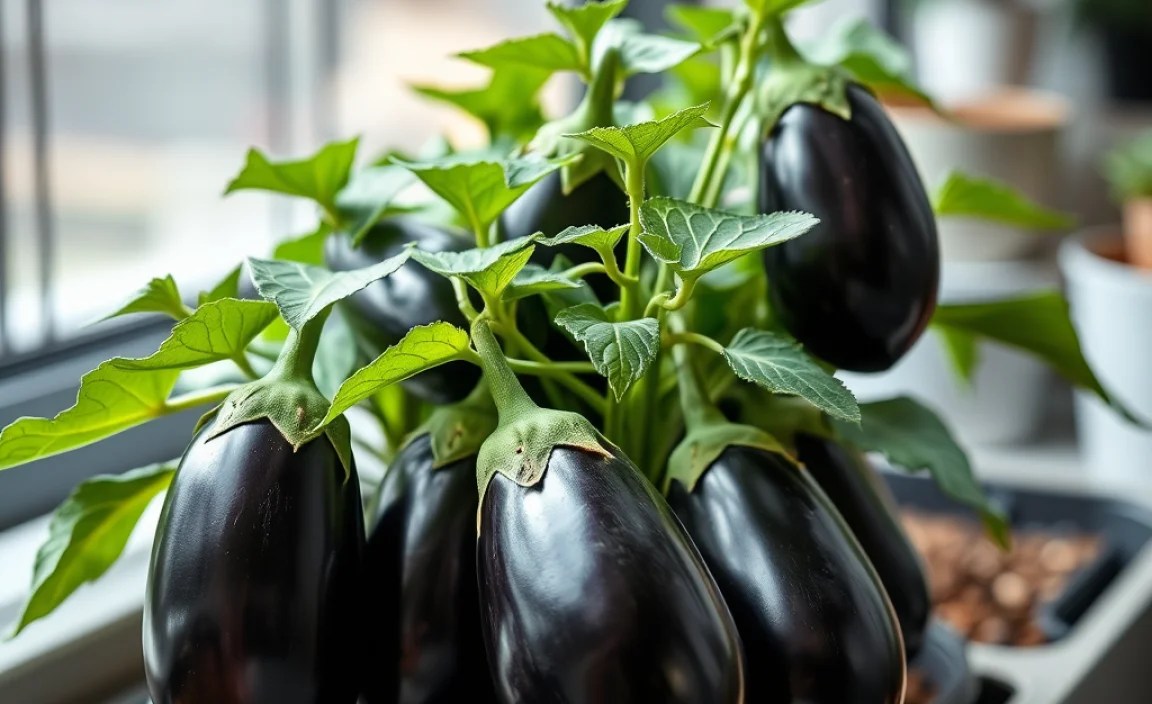
Harvesting is the best part of grow eggplants containers. You get to enjoy the fruits of your labor! Eggplants are ready to harvest when they are shiny and firm. The skin should be smooth and even in color. Gently squeeze the eggplant. If it feels soft, it is overripe. Use a knife or scissors to cut the eggplant from the plant. Leave about an inch of stem attached. Harvest your eggplants regularly. This will encourage the plant to produce more fruit.
| Sign | Description |
|---|---|
| Shiny Skin | The eggplant’s skin should have a glossy appearance. |
| Firmness | The eggplant should feel firm when gently squeezed. |
| Smooth Color | The color should be even and consistent across the eggplant. |
| Size | Harvest when they reach the right size for the variety. |
- Harvest when eggplants are shiny and firm.
- Cut the eggplant from the plant with a knife.
- Leave an inch of stem attached.
- Harvest regularly to encourage more fruit.
- Do not let eggplants get too soft.
Think of harvesting as a reward for all your hard work. You have taken care of your eggplants. Now, you get to enjoy them. Pick them when they are ripe and ready to eat. Use them in your favorite recipes. Share them with your friends and family. Growing eggplants containers is a fun and rewarding experience.
How Do I Know When My Eggplant is Ripe?
How can you tell when an eggplant is ready to pick? Look at the skin. It should be shiny and smooth. Gently squeeze the eggplant. It should feel firm. If it feels soft, it is overripe. The color should be even. If it is turning brown, it is too old. Check the size. Eggplants come in different sizes. Harvest them when they reach the right size for their variety.
What is the Best Way to Harvest Eggplants?
What is the best way to pick an eggplant? Use a sharp knife or scissors. Cut the stem about an inch above the fruit. Do not pull the eggplant off the plant. This can damage the plant. Handle the eggplant gently. They bruise easily. Put them in a basket or bag. Take them inside and enjoy them.
How Often Should I Harvest My Eggplants?
How often should you pick your eggplants? Harvest them regularly. This will encourage the plant to produce more fruit. Check your plants every few days. Pick any eggplants that are ripe. If you leave them on the plant too long, they will get tough and bitter. So, keep an eye on your plants and pick them when they are ready.
Fun Fact or Stat: Eggplants are used in many different cuisines around the world, from Italian to Indian!
Summary
Growing eggplants containers is a fun and easy way to have fresh veggies. You need a big container with good drainage. Use a potting mix made for containers. Give your eggplants lots of sun and water. Fertilize them every two weeks. Watch out for pests and diseases. Harvest your eggplants when they are shiny and firm. Then, enjoy your delicious homegrown eggplants.
Remember, growing eggplants containers is a rewarding experience. You can watch your plants grow from tiny seedlings to big, healthy plants. You can enjoy the fresh taste of homegrown eggplants. So, get started today and grow your own eggplants in containers!
Conclusion
Growing eggplants containers is a simple way to enjoy fresh vegetables. You can grow them on your porch or balcony. Eggplants need sun, water, and good soil. They also need fertilizer. Watch out for pests and diseases. Harvest your eggplants when they are ripe. Then, enjoy your delicious homegrown treat. It is fun for the whole family!
Frequently Asked Questions
Question No 1: Can I really grow eggplants containers?
Answer: Yes, you absolutely can! Growing eggplants in containers is a great way to enjoy fresh eggplants even if you don’t have a large garden. All you need is a big enough container, good soil, plenty of sunlight, and regular watering and fertilizing. It’s a fun and rewarding project that anyone can do. You will have a great time growing your own food. The eggplants will taste so good!
Question No 2: How big should the container be for growing an eggplant?
Answer: Eggplants need a good amount of space for their roots to grow. A container that is at least 5 gallons in size is a good starting point. However, bigger is often better! If you have the space, a 10-gallon container will give your eggplant even more room to spread out and thrive. Make sure the container has drainage holes at the bottom to prevent the roots from getting waterlogged. This will help it grow big and strong!
Question No 3: How much sunlight do eggplants need?
Answer: Eggplants are sun-loving plants, so they need plenty of sunlight to grow well. Aim for at least 6-8 hours of direct sunlight each day. If you don’t have a spot that gets that much sun, you can use a grow light to supplement. Make sure the light is close enough to the plant to provide adequate light. Sunlight helps the plant make food and grow big and strong.
Question No 4: What kind of soil should I use for my container eggplants?
Answer: The best soil for growing eggplants containers is a well-draining potting mix. Do not use garden soil in containers. It is too heavy and does not drain well. You can also add perlite or vermiculite to the potting mix to improve drainage. Good drainage is essential for preventing root rot. This keeps your plant happy and healthy. The right soil will help your eggplant grow.
Question No 5: How often should I water my eggplants in containers?
Answer: You should water your eggplants regularly, keeping the soil moist but not soggy. Water deeply when the top inch of soil feels dry. Avoid overwatering, as this can lead to root rot. The best time to water is in the morning. This gives the leaves time to dry before night. Check the soil moisture regularly and adjust your watering schedule as needed. It is better to underwater than overwater.
Question No 6: Do I need to fertilize my container eggplants?
Answer: Yes, fertilizing is important for growing healthy eggplants containers. Eggplants are heavy feeders and need regular fertilization to grow well and produce lots of fruit. Use a fertilizer that is made for vegetables and follow the instructions on the package. Fertilize every two weeks during the growing season. You can also use compost tea as a natural fertilizer. Fertilizer gives your plants the nutrients they need.
