Do you love fresh green onions? Did you know you can grow green onions in containers? It is easier than you think! You do not need a big garden. A small pot on your porch will work. Fresh green onions can be yours all year long.
Imagine snipping fresh onions for your soup. Think about adding them to your tacos. You can even put them on your salad. Growing them yourself is fun and rewarding. Let’s learn how to do it!
Key Takeaways
- Growing green onions in containers is a simple and fun gardening project for kids.
- Choose a container that is at least six inches deep with good drainage.
- Use nutrient-rich potting mix and water the plants regularly to keep soil moist.
- Place the container in a sunny spot where it gets at least six hours of sunlight.
- Harvest the green onions by snipping the green stalks as needed for cooking.

Best Containers to Grow Green Onions
Choosing the right container is key to success. You need to pick a pot that fits your needs. The size of the container matters. So does the material it is made from. Good drainage is also very important. This helps your green onions grow green onions in containers well. Let’s look at some top container choices. We will discuss what makes them good for growing green onions. You want to pick a container that will help your plants thrive. A happy plant means yummy green onions for you. You can use plastic pots. Clay pots are another option. You might even recycle old buckets. Whatever you choose, make sure it drains well. Your green onions will thank you for it.
- Plastic pots are lightweight and affordable.
- Clay pots look nice but can dry out quickly.
- Recycled buckets can work if you drill drainage holes.
- Choose a pot at least six inches deep.
- Make sure the container has good drainage holes.
- Dark-colored pots can get very hot in the sun.
Think about where you will put your container. If it is on a sunny balcony, a light-colored pot might be best. This will keep the soil from getting too hot. If you live in a cooler area, a dark pot might help warm the soil. Check the drainage often. You can add small stones or pebbles to the bottom of the pot. This helps water drain even better. Remember, healthy roots mean healthy green onions. Taking the time to pick the right container is a big step. It helps you grow green onions in containers with ease. Happy gardening!
What Size Container is Best?
Have you ever wondered what size container is best? It really does make a difference. A container that is too small will limit root growth. This can stunt your plant’s growth. A container that is too big can hold too much water. This can lead to root rot. So, what is the sweet spot? For green onions, a container that is at least six inches deep works well. The width should be about six inches too. This gives the onions enough room to spread out. If you plan to grow many onions, get a bigger pot. A pot that is 12 inches wide and deep is a good choice. Remember, happy roots mean happy plants!
Should I Use Plastic or Clay Pots?
Plastic pots are lightweight and hold moisture well. They are also less expensive. Clay pots are heavier and look nicer. They also allow the soil to breathe. This can prevent root rot. So, which one should you choose? It depends on your needs. If you live in a hot, dry area, plastic pots might be better. They will keep the soil from drying out too quickly. If you tend to overwater, clay pots might be a better choice. They will help the soil dry out faster. Ultimately, the best pot is the one that works best for you. Both can grow green onions in containers.
How Important Is Drainage?
Drainage is super important for healthy plants. Roots need air to breathe. If the soil is always wet, the roots will rot. This can kill your plants. Make sure your container has drainage holes. If it does not, you can drill some. Add a layer of gravel or pebbles to the bottom of the pot. This will help the water drain. Do not let the pot sit in a saucer full of water. Empty the saucer after watering. Good drainage is key to success. It helps you grow green onions in containers successfully. It also prevents many common plant problems.
Fun Fact or Stat: Green onions are one of the easiest vegetables to regrow from scraps. You can plant the white root end in water or soil and it will start growing new green shoots!

Best Soil for Container Green Onions
The right soil is crucial for healthy green onions. Soil gives plants the nutrients they need. It also supports the roots. Not all soil is the same. Garden soil can be too heavy for containers. It can compact and prevent drainage. Potting mix is a better choice. It is lighter and drains well. Look for a potting mix that is rich in nutrients. You can also add compost or other organic matter. This will help your green onions grow green onions in containers. Remember, healthy soil means healthy plants. Your green onions will thank you for the extra care. Picking the right soil sets you up for success. It helps you grow tasty green onions right at home.
- Use potting mix, not garden soil.
- Choose a mix that drains well.
- Add compost for extra nutrients.
- Avoid mixes with too much clay.
- Look for a mix with a slightly acidic pH.
- Consider adding perlite for better drainage.
Think about what your green onions need. They need soil that is loose and airy. This allows the roots to grow easily. They also need nutrients. These feed the plant and help it grow strong. Compost is a great source of nutrients. It also helps the soil retain moisture. Perlite helps with drainage. It keeps the soil from getting too compacted. You can mix your own potting mix. Use equal parts potting soil, compost, and perlite. This will give your green onions everything they need. It will also help you grow green onions in containers. You will get the best results with healthy soil.
What Nutrients Do Green Onions Need?
Green onions need several key nutrients. Nitrogen helps them grow tall and green. Phosphorus supports root development. Potassium helps with overall plant health. You can provide these nutrients with a balanced fertilizer. Look for a fertilizer that is specifically designed for vegetables. Follow the instructions on the package. Be careful not to over-fertilize. Too much fertilizer can burn the roots. Compost is also a great source of nutrients. It releases nutrients slowly over time. This is gentler on the plants.
Can I Use Soil From My Garden?
Using soil from your garden might seem like a good idea. However, it is often not the best choice for containers. Garden soil can be heavy and compacted. It may also contain pests or diseases. Potting mix is a better option. It is designed specifically for containers. It is light, airy, and sterile. This helps prevent problems. If you do want to use garden soil, mix it with potting mix and compost. This will improve its drainage and nutrient content. Remember, healthy soil is key to success. You can grow green onions in containers with the right soil.
How Often Should I Add Fertilizer?
How often you need to add fertilizer depends on a few things. It depends on the type of fertilizer you use. It also depends on the potting mix. Some potting mixes already contain fertilizer. These mixes are called “slow-release” fertilizers. They release nutrients gradually over time. If you are using a potting mix that does not contain fertilizer, you will need to add it more often. A general rule is to fertilize every two to four weeks. Use a liquid fertilizer diluted to half strength. This will prevent burning the roots. Always follow the instructions on the fertilizer package.
Fun Fact or Stat: Adding coffee grounds to your soil can provide extra nitrogen, which green onions love! Just make sure to use them sparingly.

Watering Green Onions in Containers
Watering is very important when you grow green onions in containers. Green onions need consistent moisture. But they do not like to sit in soggy soil. Overwatering can lead to root rot. Underwatering can cause the plants to wilt. So, how do you find the right balance? Check the soil regularly. Stick your finger about an inch into the soil. If it feels dry, it is time to water. Water deeply until you see water draining from the bottom of the pot. Avoid getting the leaves wet. This can encourage fungal diseases. Water early in the morning. This gives the leaves time to dry before nightfall. With a little practice, you will get the hang of it.
- Water when the top inch of soil is dry.
- Water deeply until water drains out.
- Avoid getting the leaves wet.
- Water early in the morning.
- Check the soil moisture regularly.
- Use a watering can or hose with a gentle spray.
Think about the weather. Hot, sunny days will dry out the soil faster. You may need to water more often during these times. Rainy days mean you can skip watering. Also, consider the type of container you are using. Clay pots dry out faster than plastic pots. Adjust your watering schedule accordingly. If you are unsure, it is better to underwater than to overwater. You can always add more water later. Overwatering is harder to fix. Remember, happy plants need just the right amount of water. Getting the watering right is a big part of growing healthy green onions.
How Often Should I Water?
How often you should water depends on several factors. These include the weather, the type of container, and the potting mix. A good rule of thumb is to water every two to three days. However, this can vary. Check the soil moisture regularly. If the top inch of soil is dry, it is time to water. If the soil is still moist, wait another day. During hot, dry weather, you may need to water daily. During cool, rainy weather, you may only need to water once a week. Adjust your watering schedule as needed.
What Happens If I Overwater?
Overwatering can be a serious problem for green onions. When the soil is constantly wet, the roots cannot get enough oxygen. This can lead to root rot. Root rot is a fungal disease that causes the roots to decay. Symptoms of overwatering include yellowing leaves, wilting, and stunted growth. If you suspect overwatering, stop watering immediately. Allow the soil to dry out completely. You may also need to repot the plant in fresh, dry potting mix. Prevent overwatering by using well-draining soil and a container with drainage holes.
Can I Use Tap Water?
Tap water is generally safe to use for watering green onions. However, some tap water contains chlorine or other chemicals. These chemicals can harm plants. If you are concerned about the quality of your tap water, you can let it sit out for 24 hours. This will allow the chlorine to evaporate. You can also use filtered water or rainwater. Rainwater is especially beneficial for plants. It is naturally soft and free of chemicals. Collect rainwater in a clean container and use it to water your green onions.
Fun Fact or Stat: Green onions are mostly water! They are about 90% water, so keeping them hydrated is key to their growth.
Sunlight Needs for Container Green Onions
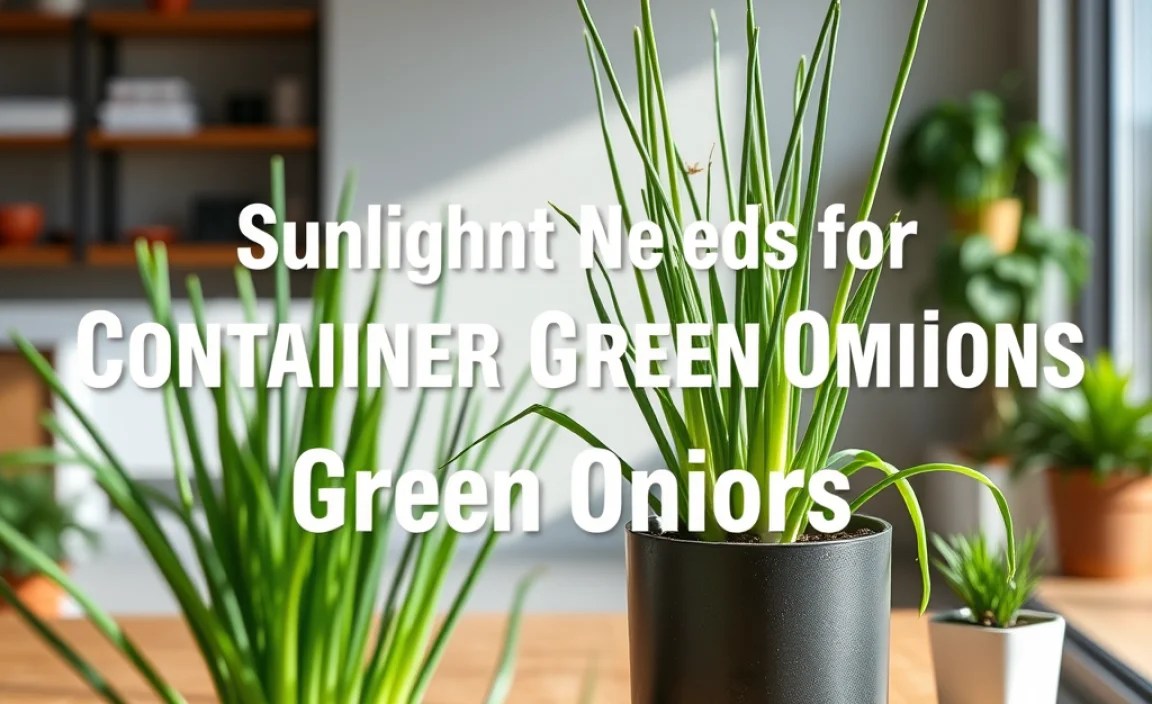
Sunlight is very important. Plants use sunlight to make food. This process is called photosynthesis. Green onions need at least six hours of sunlight each day. Place your container in a sunny spot. A south-facing window is often a good choice. If you do not have enough sunlight, you can use a grow light. Grow lights provide artificial light. They help plants grow indoors. Rotate the container regularly. This ensures that all sides of the plant get sunlight. This helps them grow green onions in containers evenly. Healthy sunlight leads to healthy, tasty green onions.
- Green onions need at least six hours of sunlight.
- Place the container in a sunny spot.
- Use a grow light if needed.
- Rotate the container regularly.
- Avoid placing the container in full shade.
- Too much direct sun can burn the leaves.
Watch your plants closely. If the leaves start to turn yellow, they may not be getting enough sunlight. If the leaves look burned, they may be getting too much direct sunlight. Adjust the location of the container as needed. You can also use shade cloth to protect the plants from intense sunlight. Remember, sunlight is essential for plant growth. Giving your green onions the right amount of sunlight will help them thrive. This is especially important when you grow green onions in containers.
What Happens If They Don’t Get Enough Sun?
If green onions do not get enough sun, they will become leggy. Leggy means they will grow tall and thin. The leaves will be pale and weak. They may also not produce as many green onions. To fix this, move the container to a sunnier location. If you cannot move the container, use a grow light. Provide at least six hours of artificial light each day. Cut back any leggy growth. This will encourage the plant to produce new, healthy growth. Remember, sunlight is essential for healthy green onions.
Can They Get Too Much Sun?
Yes, green onions can get too much sun. Too much direct sunlight can burn the leaves. This is especially true in hot climates. The leaves may turn brown or yellow. They may also become dry and brittle. To protect your plants from too much sun, move the container to a partially shaded location. You can also use shade cloth to filter the sunlight. Water the plants regularly to keep them hydrated. Remember, balance is key. Green onions need sunlight, but they also need protection from extreme heat.
How Do I Use a Grow Light?
Using a grow light is a great way to supplement natural sunlight. Place the grow light about 6-12 inches above the plants. Use a timer to control the amount of light. Green onions need about 12-16 hours of light per day. Choose a grow light that emits a broad spectrum of light. This will provide the plants with all the colors of light they need. Monitor the plants closely. If the leaves start to turn brown, the light may be too close. Adjust the height of the light as needed. Remember, grow lights can be a valuable tool for growing healthy green onions indoors.
Fun Fact or Stat: Plants use blue and red light the most for photosynthesis. Grow lights often have a mix of these colors to help plants thrive!
Harvesting Green Onions From Containers
Harvesting is the best part! You get to enjoy the fruits (or vegetables) of your labor. When you grow green onions in containers, you can harvest them as needed. Start harvesting when the green stalks are about six inches tall. Use scissors or a sharp knife to cut the stalks. Cut them about an inch above the soil. This allows the plant to regrow. You can harvest the green stalks multiple times. The plant will continue to produce new growth. Wash the green onions thoroughly before using them. Enjoy your fresh, homegrown green onions!
| Harvesting Stage | Plant Height | Harvesting Method | Regrowth |
|---|---|---|---|
| Early Stage | 6 inches | Cut stalks 1 inch above soil | Quick |
| Mid Stage | 8 inches | Cut stalks 2 inches above soil | Moderate |
| Late Stage | 10 inches + | Cut stalks 3 inches above soil | Slower |
| Continuous Harvest | Varies | Harvest outer stalks first | Ongoing |
- Harvest when the stalks are six inches tall.
- Cut the stalks an inch above the soil.
- Harvest as needed.
- Wash the green onions before using.
- Harvest the outer stalks first.
- Avoid harvesting all the stalks at once.
Think about how you will use your green onions. If you need a lot of green onions for a recipe, harvest several stalks at once. If you only need a few, harvest just what you need. Harvesting regularly encourages the plant to produce new growth. It also prevents the stalks from becoming too tough. Remember, fresh green onions taste best. Harvesting them from your own container is a rewarding experience. Enjoy the delicious flavor of your homegrown green onions. You can grow green onions in containers and have them ready for any meal.
How Do I Cut the Stalks?
Cutting the stalks correctly is important for regrowth. Use sharp scissors or a knife. Make a clean cut about one inch above the soil. Avoid pulling the stalks. This can damage the roots. Cutting above the soil allows the plant to regrow. The plant will send up new shoots from the base. You can harvest these new shoots in a few weeks. Cutting the stalks properly ensures a continuous harvest.
Can I Harvest the Whole Plant?
Yes, you can harvest the whole plant. However, this will prevent it from regrowing. If you want a continuous harvest, it is better to cut the stalks. If you need the entire plant for a recipe, you can harvest it. Simply pull the plant out of the soil. Wash the roots and stalks thoroughly. Use the entire plant in your recipe. Keep in mind that you will need to start a new plant to continue harvesting.
How Long Will the Plant Keep Producing?
With proper care, a green onion plant can keep producing for several months. The key is to harvest regularly and provide adequate sunlight, water, and nutrients. As the plant ages, it may start to produce fewer green onions. At this point, you can start a new plant. You can also divide the existing plant. To divide the plant, gently separate the clumps of green onions. Plant each clump in its own container. This will give you multiple new plants. Dividing the plant can rejuvenate it and extend its lifespan.
Fun Fact or Stat: Green onions are often called scallions. They are harvested before the bulb fully develops, giving them a milder flavor!
Common Problems When Growing Green Onions
Even when you do everything right, problems can still happen. Pests and diseases can affect your green onions. It is important to know how to identify and treat these problems. Common pests include aphids and thrips. These tiny insects can suck the sap from the leaves. This can weaken the plant. Diseases include fungal infections like rust and mildew. These can cause spots on the leaves. Prevention is key. Keep your plants healthy by providing adequate sunlight, water, and nutrients. Inspect your plants regularly for signs of pests or diseases. This helps you grow green onions in containers with fewer issues. Early detection and treatment can save your plants.
- Aphids can suck sap from the leaves.
- Thrips can cause silvery streaks on the leaves.
- Fungal diseases can cause spots on the leaves.
- Overwatering can lead to root rot.
- Lack of sunlight can cause leggy growth.
- Poor drainage can cause yellowing leaves.
If you find pests, you can try washing them off with water. You can also use insecticidal soap. For fungal diseases, remove the affected leaves. Improve air circulation around the plants. You can also use a fungicide. Always follow the instructions on the product label. Remember, healthy plants are less susceptible to pests and diseases. Providing the right growing conditions will help your green onions thrive. You can grow green onions in containers with ease if you watch for problems and address them quickly.
How Do I Get Rid of Aphids?
Aphids are small, soft-bodied insects that can infest green onions. They suck sap from the leaves. This can cause the leaves to curl and yellow. To get rid of aphids, start by washing them off with a strong stream of water. You can also use insecticidal soap. This is a safe and effective way to control aphids. Apply the soap to all parts of the plant, including the undersides of the leaves. Repeat the treatment every few days until the aphids are gone. You can also introduce beneficial insects. Ladybugs and lacewings eat aphids.
What Causes Yellow Leaves?
Yellow leaves can be a sign of several problems. Overwatering is a common cause. When the soil is constantly wet, the roots cannot get enough oxygen. This can lead to root rot. Nutrient deficiencies can also cause yellow leaves. Green onions need nitrogen, phosphorus, and potassium. Lack of sunlight can also cause yellowing. If the plant is not getting enough light, the leaves will turn pale and yellow. Check the growing conditions and adjust as needed. Make sure the plant is getting enough water, nutrients, and sunlight.
How Can I Prevent Fungal Diseases?
Preventing fungal diseases is key to keeping your green onions healthy. Provide good air circulation around the plants. Avoid overcrowding the plants. Water the plants at the base, avoiding getting the leaves wet. Remove any dead or dying leaves. These can harbor fungal spores. Use a fungicide preventatively. Apply the fungicide every few weeks. Choose a fungicide that is specifically designed for vegetables. Follow the instructions on the product label. Healthy plants are less susceptible to fungal diseases.
Fun Fact or Stat: Companion planting can help prevent pests! Planting carrots near green onions can deter onion flies.
Summary
Growing green onions in containers is a fun and easy project. It is great for kids and adults. You can have fresh green onions all year long. Choose the right container and soil. Make sure your plants get enough sunlight and water. Harvest them regularly to encourage new growth. Watch out for pests and diseases. With a little care, you can enjoy homegrown green onions in your meals. You can grow green onions in containers anywhere. It is a simple way to add fresh flavor to your cooking.
Conclusion
You now know how to grow green onions in containers. It is a simple and rewarding gardening project. You can enjoy fresh, flavorful green onions right from your home. Just remember to choose the right container, soil, and location. Water regularly and watch for pests. With a little effort, you will have a bountiful harvest. Enjoy your homegrown green onions in your favorite dishes.
Frequently Asked Questions
Question No 1: How long does it take to grow green onions in containers?
Answer: It typically takes about 30 to 60 days to grow green onions in containers from seeds. If you start with transplants, you can harvest them much sooner, usually within a few weeks. The exact time depends on factors like sunlight, water, and temperature. Make sure to provide optimal conditions for faster growth. You can also regrow green onions from scraps in water first, then transplant them to soil for a quicker harvest. Be patient and watch your green onions grow!
Question No 2: Can I grow green onions indoors all year round?
Answer: Yes, you can absolutely grow green onions indoors all year round! Green onions are well-suited for indoor growing because they do not require a lot of space. Make sure to place your container in a sunny spot, such as a windowsill, or use a grow light. Water them regularly and provide occasional fertilizer. You can grow green onions in containers inside, even during the winter months. This ensures you have a constant supply of fresh green onions for your cooking needs.
Question No 3: What are the best varieties of green onions to grow in containers?
Answer: There are several excellent varieties of green onions that thrive in containers. Some popular choices include ‘White Lisbon’, ‘Evergreen Hardy White’, and ‘Tokyo Long White’. These varieties are known for their ease of growth and delicious flavor. They are also well-suited for container gardening. ‘Red Beard’ is another option if you want a colorful addition. Choose a variety that suits your taste. You can grow green onions in containers successfully with these varieties.
Question No 4: How do I prevent my green onions from bolting?
Answer: Bolting refers to when a plant prematurely flowers and goes to seed. To prevent green onions from bolting, ensure they have consistent watering and adequate sunlight. Avoid exposing them to extreme temperatures. Hot weather can trigger bolting. Harvest the green onions regularly. This encourages continued vegetative growth. If you see flower stalks forming, remove them promptly to redirect the plant’s energy. This helps you grow green onions in containers without bolting issues.
Question No 5: Can I regrow green onions from kitchen scraps?
Answer: Yes, you can easily regrow green onions from kitchen scraps! After using the green parts of the onion, save the white bulb end with the roots attached. Place the bulb end in a glass of water. Make sure the roots are submerged. Place the glass in a sunny spot. Change the water every few days. New green shoots will start to grow within a week. Once the roots are well-developed, you can transplant the regrown green onion into a container with soil. This is a simple way to grow green onions in containers and reduce waste.
Question No 6: What should I do if my green onions are attracting pests?
Answer: If your green onions are attracting pests, take action to protect your plants. Inspect your green onions regularly for signs of pests like aphids or thrips. Wash off the pests with a strong stream of water. You can also use insecticidal soap or neem oil. Ensure that your container has good air circulation. This helps prevent pest infestations. Consider companion planting with herbs like basil or mint. These can repel pests. Addressing pest problems early will help you grow green onions in containers successfully.
