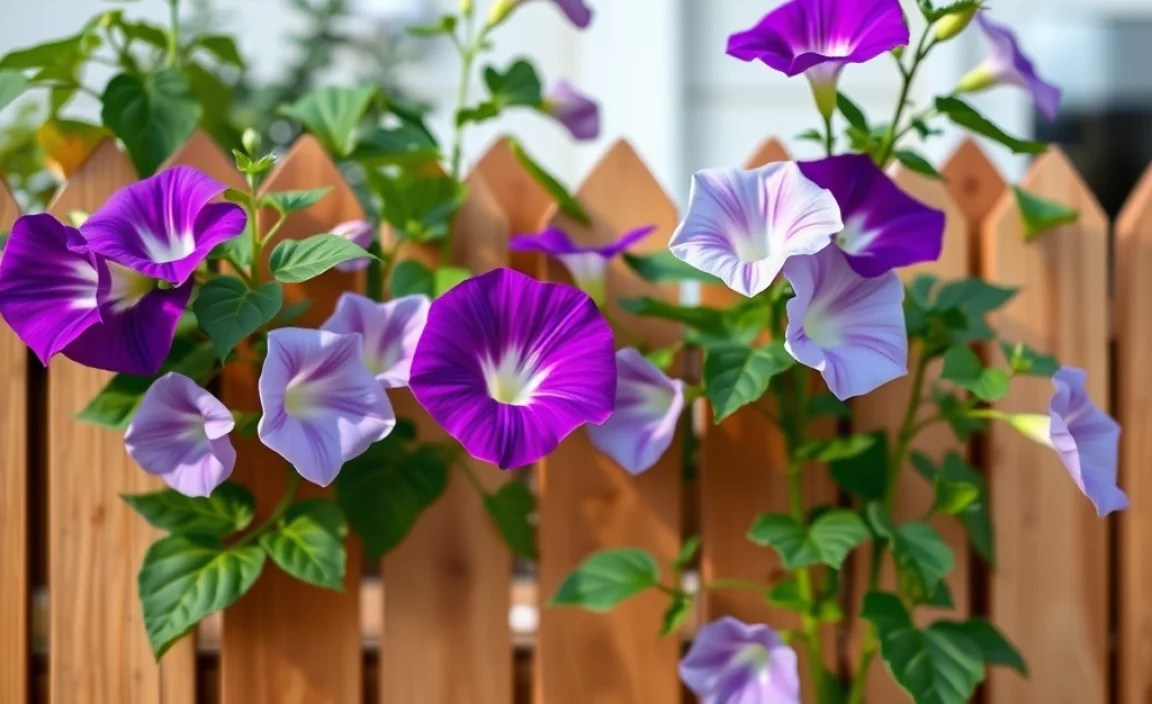
Have you ever seen a fence covered in pretty flowers? They climb and twirl. These flowers can make any fence look amazing. You can grow morning glories fence and have a beautiful garden. It is fun and easy to do.
Imagine waking up to colorful blooms. These flowers open in the morning sun. They close in the afternoon. Growing them on a fence is a great idea. You get privacy and beauty all in one. Let’s learn how to do it!
Morning glories are special plants. They love to climb. They need something to hold onto. A fence is perfect for them. You can choose different colors. Some are blue, pink, or purple. Growing morning glories is a rewarding hobby.
Key Takeaways
- Growing morning glories on a fence adds natural beauty and privacy to your yard.
- Water your morning glories regularly, especially during hot and dry weather.
- Choose a sunny spot with well-drained soil for the best growth of your plants.
- Provide a strong support structure like a trellis or netting for climbing.
- Start seeds indoors or directly sow them outdoors after the last frost.

How to Grow Morning Glories on a Fence
Do you want to grow morning glories fence in your backyard? It’s easier than you think! First, you need to pick the right spot. Morning glories love sunshine. Make sure your fence gets at least six hours of sun each day. Next, check the soil. Morning glories like soil that drains well. If your soil is heavy clay, add some compost. Compost helps the soil drain better. It also gives the plants nutrients. You can buy seeds at a garden store. You can also start them indoors. Start them about six weeks before the last frost. Plant them in small pots. Keep the soil moist. Once the weather warms up, you can plant them outside. Make sure to give them something to climb on. The fence will work great. Watch them grow and enjoy their beautiful blooms! Remember to water them regularly, especially when it is hot. A little care goes a long way.
- Choose a sunny spot.
- Make sure the soil drains well.
- Add compost to the soil.
- Start seeds indoors or outdoors.
- Water them regularly.
- Provide a fence for climbing.
Now that you know the basics, let’s talk about support. Morning glories need something to climb. A fence is a great option. But you can also use a trellis or netting. Attach the support to the fence. This gives the plants extra help. As the morning glories grow, gently guide them. Wrap their tendrils around the fence. This encourages them to climb. Keep an eye out for pests. Aphids and spider mites can sometimes be a problem. You can spray them off with water. You can also use insecticidal soap. With a little attention, your morning glories will thrive. They will create a beautiful display on your fence. You will have a colorful and inviting garden. Enjoy the process and the beauty it brings!
Choosing the Right Fence
What kind of fence works best for morning glories? Well, almost any fence will do! But some fences are better than others. A chain-link fence is excellent. The plants can easily grab onto the links. A wooden fence also works well. You can add small nails or hooks. This gives the plants extra support. A wire fence is another good choice. Just make sure the wires are strong enough. Avoid fences that are too smooth. Morning glories need something to grip. If the fence is too slick, they will have trouble climbing. Consider the height of the fence too. Morning glories can grow quite tall. Choose a fence that is at least six feet high. This gives them plenty of room to climb. Remember to check your local regulations. Some areas have rules about fence heights. Pick a fence that you like and that works for your yard. Your morning glories will thank you!
Preparing the Soil
Why is soil preparation so important? Good soil means healthy plants. Morning glories need well-drained soil. This means the water doesn’t sit on top. It soaks in quickly. If your soil is heavy clay, it can be hard. Add compost to improve drainage. Compost is like food for plants. It also helps the soil stay loose. You can buy compost at a garden store. Or you can make your own! Add leaves, grass clippings, and kitchen scraps to a compost bin. Turn it regularly. After a few months, you will have rich compost. Mix the compost into your soil before planting. This will give your morning glories a great start. You can also add some fertilizer. Choose a fertilizer that is high in phosphorus. This helps the plants produce lots of flowers. Remember to follow the instructions on the fertilizer package. With good soil preparation, your morning glories will thrive.
Planting the Seeds
When should you plant your morning glory seeds? It depends on where you live. In warmer climates, you can plant them directly in the ground. Wait until after the last frost. In colder climates, start them indoors. Start them about six weeks before the last frost. Soak the seeds in water for 24 hours before planting. This helps them germinate faster. Plant the seeds about half an inch deep. Keep the soil moist. Place the pots in a warm, sunny spot. Once the seedlings are a few inches tall, you can transplant them outside. Choose a cloudy day for transplanting. This helps the plants adjust to their new environment. Space the plants about six inches apart. Water them well after planting. With a little patience, you will have beautiful morning glories in no time!
Fun Fact or Stat: Morning glories can grow up to 10 feet in a single season!

Best Types of Morning Glories for Fences
Not all morning glories are the same. Some are better suited for fences than others. The ‘Heavenly Blue’ morning glory is a popular choice. It has beautiful sky-blue flowers. It climbs quickly and easily. The ‘Grandpa Ott’s’ morning glory is another good option. It has deep purple flowers. It is also very vigorous. The ‘Scarlett O’Hara’ morning glory has bright red flowers. It adds a splash of color to any fence. The ‘Moonflower’ is a unique type of morning glory. It has large, white flowers that open at night. It is perfect for a moon garden. Consider the color and size of the flowers. Choose varieties that you like and that will complement your fence. You can even mix different colors and varieties. This creates a stunning display. No matter which type you choose, growing morning glories fence will add beauty to your yard.
- ‘Heavenly Blue’ has sky-blue flowers.
- ‘Grandpa Ott’s’ has deep purple flowers.
- ‘Scarlett O’Hara’ has bright red flowers.
- ‘Moonflower’ opens at night.
- Consider color and size.
- Mix different varieties.
Morning glories are known for their vibrant colors and heart-shaped leaves. They are relatively easy to grow. They make them a favorite among gardeners. When selecting morning glories for your fence, think about the overall look you want to achieve. Do you prefer a uniform color scheme? Or a mix of different hues? Also, consider the size of your fence. Some morning glory varieties can grow quite tall. Make sure your fence can support their growth. Another factor to consider is the bloom time. Some varieties bloom earlier in the season. Others bloom later. Choose varieties that will provide a long-lasting display of flowers. With careful planning, you can create a stunning morning glory fence that will be the envy of your neighbors. Remember to provide adequate support and water. Your morning glories will thrive and reward you with their beauty.
‘Heavenly Blue’ Morning Glories
Have you ever seen a ‘Heavenly Blue’ morning glory? Its flowers are truly stunning. They are a beautiful shade of sky blue. This variety is very popular among gardeners. It is easy to grow and climbs quickly. The ‘Heavenly Blue’ morning glory is perfect for fences. It can quickly cover a fence with its lush foliage and vibrant blooms. These plants are also known for their strong climbing ability. They can easily reach the top of a fence. The flowers attract butterflies and hummingbirds. This adds even more beauty to your garden. If you want to grow morning glories fence, the ‘Heavenly Blue’ is a great choice.
‘Grandpa Ott’s’ Morning Glories
Do you want a unique and beautiful morning glory? Consider ‘Grandpa Ott’s’. This variety has deep purple flowers. The flowers are a rich, velvety color. They are truly eye-catching. ‘Grandpa Ott’s’ morning glory is an heirloom variety. This means it has been passed down through generations. It is known for its strong growth and disease resistance. These plants are also very easy to grow. They are a great choice for beginner gardeners. ‘Grandpa Ott’s’ morning glory can quickly cover a fence with its beautiful foliage and flowers. It adds a touch of elegance to any garden. If you want to add a touch of purple to your fence, ‘Grandpa Ott’s’ is a perfect choice.
‘Moonflower’ Morning Glories
Imagine flowers that bloom at night! The ‘Moonflower’ morning glory is just that. It has large, white flowers that open in the evening. The flowers are fragrant and attract moths. This variety is perfect for a moon garden. It adds a touch of magic to your yard. ‘Moonflower’ morning glory is also a vigorous climber. It can quickly cover a fence with its lush foliage. The flowers are truly stunning. They glow in the moonlight. If you want to create a magical and enchanting garden, the ‘Moonflower’ is a perfect choice. It’s a great way to grow morning glories fence with a twist!
Fun Fact or Stat: The ‘Moonflower’ morning glory’s blooms can be up to 6 inches in diameter!

How to Train Morning Glories on a Fence
Training morning glories to climb a fence is easy. Start by planting the seeds near the base of the fence. Once the seedlings emerge, gently guide them towards the fence. Use soft twine or plant ties to attach the vines to the fence. As the plants grow, continue to guide them. Wrap the vines around the fence. Encourage them to climb in the direction you want. Be patient and gentle. Morning glories are relatively easy to train. But they need some guidance. If you want to grow morning glories fence, training them is key. With a little effort, you can create a beautiful and thriving display.
- Plant seeds near the fence.
- Guide seedlings towards the fence.
- Use twine or plant ties.
- Wrap vines around the fence.
- Encourage growth in the right direction.
- Be patient and gentle.
One common mistake is letting the morning glories grow wild. If you don’t train them, they can become tangled and messy. They may also start to climb on other plants. Regular training helps to keep them in check. It also ensures that they climb the fence properly. Another tip is to prune the plants regularly. This encourages them to branch out. It also promotes more flower production. Use sharp scissors or pruning shears to remove any dead or damaged vines. You can also trim the tips of the vines to encourage bushier growth. Remember to water and fertilize the plants regularly. This will keep them healthy and strong. With proper training and care, your morning glories will thrive on your fence. They will provide a stunning display of color and beauty.
Using Twine or Plant Ties
Why use twine or plant ties? These tools help you guide the morning glories. They attach the vines to the fence securely. Choose soft materials that won’t damage the plants. Twine is a natural and biodegradable option. Plant ties are reusable and come in different colors. Wrap the twine or plant ties loosely around the vines. Avoid tying them too tightly. This can restrict growth. As the plants grow, adjust the ties as needed. You can also use small clips or hooks to attach the vines to the fence. These are easy to use and can be moved around as needed. Remember to check the ties regularly. Make sure they are still secure and not too tight. With the help of twine or plant ties, you can easily train your morning glories to climb your fence.
Pruning and Maintenance
How do you keep your morning glories looking their best? Pruning and maintenance are key. Pruning helps to keep the plants healthy and encourages more blooms. Remove any dead or damaged vines regularly. You can also trim the tips of the vines to encourage bushier growth. Use sharp scissors or pruning shears for clean cuts. Maintenance also includes watering and fertilizing. Water the plants regularly, especially during hot and dry weather. Fertilize them every few weeks with a balanced fertilizer. This provides them with the nutrients they need to thrive. Check the plants regularly for pests and diseases. Treat any problems promptly. With proper pruning and maintenance, your morning glories will stay healthy and beautiful all season long. This will make growing morning glories fence a breeze.
Dealing with Common Problems
What if your morning glories aren’t thriving? There are a few common problems to watch out for. Aphids and spider mites can sometimes infest the plants. These pests suck the sap from the leaves. This causes them to turn yellow and wilt. You can spray them off with water. You can also use insecticidal soap. Another problem is powdery mildew. This is a fungal disease that causes a white powder to appear on the leaves. You can treat it with a fungicide. Overwatering can also be a problem. Morning glories prefer well-drained soil. Avoid watering them too often. With a little attention, you can overcome these common problems. Your morning glories will be healthy and happy.
Fun Fact or Stat: Regular pruning can increase the number of flowers on your morning glory plant by up to 50%!

Providing the Right Support for Morning Glories
Morning glories need strong support to climb. A fence is a great option. But you can also use other structures. Trellises, arbors, and netting are all good choices. The support should be sturdy enough to hold the weight of the plants. It should also be tall enough to accommodate their growth. Morning glories can grow up to 10 feet tall. Choose a support that is at least six feet high. Attach the support securely to the ground or fence. This prevents it from tipping over. As the plants grow, guide them towards the support. Wrap their tendrils around it. With the right support, your morning glories will thrive and create a beautiful display. Properly supporting plants will help you grow morning glories fence with ease.
- Use sturdy structures.
- Choose trellises, arbors, or netting.
- Ensure the support is tall enough.
- Attach the support securely.
- Guide plants towards the support.
- Wrap tendrils around it.
When choosing a support, consider the style of your garden. A rustic wooden trellis can add charm to a cottage garden. A sleek metal arbor can complement a modern design. Netting is a simple and inexpensive option. It is easy to install and can be attached to a fence or wall. You can also create your own support structure. Use bamboo poles, branches, or even old ladders. Be creative and have fun! No matter which type of support you choose, make sure it is strong enough to handle the weight of the plants. Morning glories can become quite heavy when they are fully grown. Also, consider the location of the support. Place it in a sunny spot where the plants will receive plenty of sunlight. With the right support and location, your morning glories will thrive and create a stunning focal point in your garden.
Choosing a Trellis
What makes a good trellis for morning glories? A good trellis is strong, sturdy, and tall enough to support the plants. It should also have a surface that the plants can easily grip. Wooden trellises are a popular choice. They are durable and can be painted or stained to match your garden décor. Metal trellises are another good option. They are long-lasting and can withstand harsh weather conditions. Choose a trellis that is at least six feet tall. This gives the morning glories plenty of room to climb. Make sure the trellis is securely attached to the ground or fence. This prevents it from tipping over. With the right trellis, your morning glories will thrive and create a beautiful vertical display.
Using Netting
Why use netting for morning glories? Netting is a simple and inexpensive way to provide support. It is easy to install and can be attached to a fence or wall. Choose a netting that is strong and durable. It should be able to withstand the weight of the plants. You can use plastic netting or natural fiber netting. Attach the netting securely to the fence or wall. Make sure it is taut and doesn’t sag. As the plants grow, guide their tendrils through the netting. This helps them to climb and spread out. Netting is a great option for gardeners who want a quick and easy support solution.
Creating a DIY Support
Want to get creative? Try making your own support for morning glories! You can use bamboo poles, branches, or even old ladders. Tie the materials together with twine or wire. Create a structure that is sturdy and tall enough to support the plants. Be creative and have fun! You can paint or decorate the support to match your garden décor. A DIY support adds a personal touch to your garden. It is also a great way to recycle materials. Just make sure the support is strong enough to handle the weight of the plants. With a little imagination, you can create a unique and beautiful support for your morning glories.
Fun Fact or Stat: Morning glories use tendrils that twist and turn to latch onto supports, growing several inches each day!
Watering and Fertilizing Morning Glories on a Fence
Watering and fertilizing are essential for healthy morning glories. Water the plants regularly, especially during hot and dry weather. Morning glories need plenty of water to thrive. Water deeply, soaking the soil around the base of the plants. Avoid watering the leaves, as this can promote fungal diseases. Fertilize the plants every few weeks with a balanced fertilizer. Choose a fertilizer that is high in phosphorus. This promotes flower production. Follow the instructions on the fertilizer package. Over-fertilizing can damage the plants. With proper watering and fertilizing, your morning glories will be healthy, strong, and full of blooms. Remember that growing morning glories fence depends on proper care.
- Water regularly.
- Water deeply.
- Avoid watering the leaves.
- Fertilize every few weeks.
- Use a balanced fertilizer.
- Follow instructions carefully.
One common mistake is overwatering. Morning glories prefer well-drained soil. If the soil is constantly wet, the roots can rot. This can kill the plants. Check the soil before watering. If it is dry to the touch, it’s time to water. Another tip is to water in the morning. This gives the plants time to dry out before nightfall. This helps to prevent fungal diseases. When fertilizing, be careful not to get fertilizer on the leaves. This can burn them. Water the plants after fertilizing. This helps to distribute the fertilizer evenly. With proper watering and fertilizing techniques, you can ensure that your morning glories thrive and produce a stunning display of flowers. Your garden will be beautiful!
Best Watering Practices
How should you water your morning glories? Water deeply and less often. This encourages the roots to grow deeper. Deeper roots make the plants more drought-tolerant. Use a watering can or a hose with a gentle spray nozzle. Avoid using a strong stream of water. This can damage the plants. Water at the base of the plants, avoiding the leaves. Water in the morning, so the plants have time to dry before nightfall. Check the soil regularly to determine when to water. If the soil is dry to the touch, it’s time to water. With proper watering practices, your morning glories will be healthy and thrive.
Choosing the Right Fertilizer
What kind of fertilizer is best for morning glories? Choose a balanced fertilizer with a high phosphorus content. Phosphorus promotes flower production. Look for a fertilizer with an N-P-K ratio of 10-20-10. N stands for nitrogen, P for phosphorus, and K for potassium. Follow the instructions on the fertilizer package. Apply the fertilizer every few weeks during the growing season. Avoid over-fertilizing, as this can damage the plants. You can also use organic fertilizers, such as compost or manure. These are gentle and provide slow-release nutrients. With the right fertilizer, your morning glories will be full of blooms.
Recognizing Signs of Overwatering or Underwatering
How can you tell if you are overwatering or underwatering your morning glories? Signs of overwatering include yellowing leaves, wilting, and root rot. The soil may also be soggy and smell bad. Signs of underwatering include wilting leaves, dry soil, and stunted growth. The leaves may also turn brown and crispy. Check the soil regularly to determine if it is too wet or too dry. Adjust your watering schedule accordingly. With a little practice, you will be able to tell when your morning glories need water. This will help them to thrive and produce beautiful flowers.
Fun Fact or Stat: Morning glories are more drought-tolerant than many other flowering vines, but they still need regular watering for optimal growth!
Dealing With Pests and Diseases on Morning Glories
Pests and diseases can sometimes affect morning glories. Aphids, spider mites, and whiteflies are common pests. These pests suck the sap from the leaves, causing them to turn yellow and wilt. You can spray them off with water. You can also use insecticidal soap or neem oil. Powdery mildew and fungal leaf spots are common diseases. These diseases cause white powder or spots to appear on the leaves. You can treat them with a fungicide. Prevention is key. Keep the plants healthy and strong. Provide them with plenty of sunlight, water, and fertilizer. Remove any dead or damaged leaves promptly. With proper care, you can minimize the risk of pests and diseases. Your morning glories will be healthy and beautiful. You can easily grow morning glories fence if you watch for problems.
- Watch for aphids, spider mites, and whiteflies.
- Spray pests with water.
- Use insecticidal soap or neem oil.
- Treat diseases with a fungicide.
- Keep plants healthy and strong.
- Remove dead or damaged leaves.
One of the best ways to prevent pests and diseases is to choose disease-resistant varieties of morning glories. Some varieties are more resistant to powdery mildew and other common diseases. Another tip is to space the plants properly. This allows for good air circulation. Good air circulation helps to prevent fungal diseases. Also, avoid overwatering. Overwatering can create a moist environment that is favorable to pests and diseases. Regularly inspect the plants for any signs of problems. Treat any problems promptly. With a little vigilance, you can keep your morning glories healthy and pest-free. They will thrive and produce a stunning display of flowers.
Identifying Common Pests
How do you know if your morning glories have pests? Look for signs of damage. Aphids are small, soft-bodied insects that cluster on the leaves and stems. They suck the sap from the plants. Spider mites are tiny, spider-like creatures that create webs on the leaves. Whiteflies are small, white insects that fly around the plants when disturbed. Check the undersides of the leaves for these pests. If you see any signs of infestation, take action promptly to control the pests. The sooner you act, the easier it will be to get rid of them. Keeping your plants healthy will help them to resist pests.
Treating Common Diseases
What should you do if your morning glories get a disease? First, identify the disease. Powdery mildew causes a white powder to appear on the leaves. Fungal leaf spots cause brown or black spots to appear on the leaves. Remove any infected leaves promptly. This helps to prevent the disease from spreading. Treat the plants with a fungicide. Follow the instructions on the fungicide package. Make sure to choose a fungicide that is specifically designed to treat the disease. Also, improve air circulation around the plants. This helps to prevent fungal diseases. With proper treatment, you can save your morning glories from disease.
Preventative Measures
How can you prevent pests and diseases from affecting your morning glories? Choose disease-resistant varieties. Space the plants properly to allow for good air circulation. Avoid overwatering. Keep the plants healthy and strong. Remove any dead or damaged leaves promptly. Regularly inspect the plants for any signs of problems. Take action promptly if you see any signs of pests or diseases. By taking these preventative measures, you can minimize the risk of pests and diseases. Your morning glories will be healthy and beautiful all season long. You will successfully grow morning glories fence without the headache of pests and diseases.
| Pest/Disease | Symptoms | Treatment | Prevention |
|---|---|---|---|
| Aphids | Small insects, sticky residue | Insecticidal soap, water spray | Keep plants healthy |
| Spider Mites | Webs, yellowing leaves | Neem oil, water spray | Increase humidity |
| Powdery Mildew | White powder on leaves | Fungicide, improve air flow | Avoid overwatering |
| Fungal Leaf Spots | Brown/black spots | Fungicide, remove infected leaves | Proper spacing |
Fun Fact or Stat: Companion planting with herbs like marigolds can help deter pests from your morning glories!
Summary
Growing morning glories on a fence is a great way to add beauty and privacy to your yard. Choose a sunny spot with well-drained soil. Select the right type of morning glory for your fence. ‘Heavenly Blue’ and ‘Grandpa Ott’s’ are popular choices. Train the plants to climb the fence. Use twine or plant ties to guide them. Water and fertilize the plants regularly. Protect them from pests and diseases. With a little care, your morning glories will thrive. They will create a stunning display of color and beauty. You can grow morning glories fence easily, creating a beautiful green space.
Conclusion
Morning glories are beautiful and easy to grow. They can transform a plain fence into a vibrant garden. Just remember to provide the right support. Water and fertilize them regularly. Watch out for pests and diseases. With a little effort, you can enjoy the beauty of morning glories all summer long. You can grow morning glories fence and enjoy the view.
Frequently Asked Questions
Question No 1: How long does it take for morning glories to grow on a fence?
Answer: Morning glories are fast growers. You can expect to see them start climbing within a few weeks of planting. They will quickly cover a fence with their lush foliage and flowers. The exact time will depend on the variety of morning glory. It also depends on the growing conditions. With proper care, you can have a fully covered fence in just a few months. Remember to provide the plants with plenty of sunlight, water, and fertilizer. This helps them to grow quickly and vigorously. It’s amazing how fast you can grow morning glories fence and enjoy the results.
Question No 2: Are morning glories invasive?
Answer: Morning glories can be aggressive growers. They can spread quickly if not properly managed. They can self-seed readily. This means they can pop up in unwanted areas of your garden. To prevent them from becoming invasive, prune them regularly. Remove any seed pods before they mature. You can also plant them in containers. This helps to contain their growth. Be mindful of where you plant them. Avoid planting them near native plants. Morning glories can outcompete native plants. With proper management, you can enjoy the beauty of morning glories. You can successfully grow morning glories fence without them taking over your garden.
Question No 3: Can I grow morning glories in a pot?
Answer: Yes, you can absolutely grow morning glories in a pot! Choose a large pot with good drainage. Fill it with well-draining potting mix. Provide a trellis or other support for the plants to climb. Water the plants regularly, especially during hot weather. Fertilize them every few weeks with a balanced fertilizer. Place the pot in a sunny location. Morning glories need at least six hours of sunlight per day. Growing them in pots is a great way to control their spread. It also allows you to move them around your garden. You can still grow morning glories fence by placing the pot near the fence.
Question No 4: Do morning glories come back every year?
Answer: Morning glories are generally grown as annuals. This means they complete their life cycle in one year. They will bloom, produce seeds, and then die. However, in warmer climates, some varieties may come back from the roots. They can also self-seed and produce new plants the following year. If you want to ensure that you have morning glories every year, collect the seeds in the fall. Store them in a cool, dry place. Plant them again in the spring. Even though they are not always perennials, you can still enjoy them year after year. With a little planning, you can grow morning glories fence every summer.
Question No 5: What are some good companion plants for morning glories?
Answer: Companion planting is a great way to improve the health and growth of your plants. Some good companion plants for morning glories include marigolds, nasturtiums, and zinnias. These plants attract beneficial insects. These insects help to control pests. They also add color and beauty to your garden. Other good companion plants include herbs like basil and rosemary. These herbs repel pests. They also add fragrance to your garden. Avoid planting morning glories near plants that are susceptible to the same pests and diseases. Choose companion plants that will benefit your morning glories. This will help you grow morning glories fence with success.
Question No 6: Can morning glories be harmful to pets?
Answer: Yes, morning glories can be toxic to pets. The seeds are the most toxic part of the plant. They contain compounds that can cause vomiting, diarrhea, and abdominal pain. If you have pets, it is important to keep them away from morning glories. You can fence off the area where the plants are growing. You can also choose a different type of climbing vine. If you suspect that your pet has ingested morning glory seeds, contact your veterinarian immediately. While beautiful, it’s important to be aware of the risks. This ensures you can safely grow morning glories fence in a pet-friendly environment.
