Have you ever tripped on outdoor steps? It can be scary! A good handrail can help. It makes steps safer for everyone. Especially for kids and older people. But how to build a wooden handrail for outdoor steps? It might seem hard. But with some help, you can do it! Let’s learn how to make your steps safer and look great.
A wooden handrail adds charm. It also adds safety to your home. Follow this guide to learn all about it. We will make it easy and fun. Get ready to build!
Key Takeaways
- Building a wooden handrail enhances the safety of your outdoor steps.
- Proper planning and measurements are key for a successful handrail.
- Choose weather-resistant wood to ensure your handrail lasts a long time.
- Regular maintenance will keep your wooden handrail looking its best.
- Knowing how to build a wooden handrail for outdoor steps saves you money.
Planning How to Build Your Handrail

Before you start, good planning is important. Think about the steps. How many are there? How long is each one? Accurate measurements are super important. You don’t want your handrail to be wobbly. Check your local building codes. Some places have rules about handrail height. They also have rules about how far apart the posts should be. Ignoring these rules can cause problems later. Make a sketch of your plan. Note all the measurements. This will be your guide as you build. A good plan makes the job easier and safer. It also helps you avoid mistakes.
- Measure the total length of the steps.
- Check local building codes for handrail height.
- Sketch your plan with all measurements.
- Decide on the style of your handrail.
- Choose the type of wood you want to use.
- Plan for post spacing and placement.
Think about the style you want. Do you want a simple, straight rail? Or something fancier with curves? The style affects how you measure and cut the wood. Consider the slope of the steps. The handrail needs to follow the slope smoothly. Use a level to check the angle. Proper planning saves time and money. It also ensures a safe and beautiful handrail. Don’t rush this step. Take your time and plan carefully. This will make the whole project go much smoother. It’s like having a treasure map before you start digging. It guides you to success!
What Tools Do You Need?
Imagine trying to build a sandcastle without a bucket or shovel. Building a handrail is similar. You need the right tools! A saw is important for cutting wood. A drill helps you make holes for screws. A level makes sure everything is straight. A measuring tape helps you get accurate lengths. Safety glasses protect your eyes from sawdust. Gloves protect your hands. A pencil marks where you need to cut. A square helps you make right angles. Having the right tools makes the job easier and safer. It also makes it more fun. Without the right tools, the job can be frustrating. So, gather your tools before you start. It’s like preparing your ingredients before you start cooking. Everything is ready when you need it.
How to Choose the Right Wood
Choosing the right wood is like picking the right flavor of ice cream. Some woods are better for outdoor use. They can handle rain and sun. Cedar and redwood are good choices. They are naturally resistant to rot. Pressure-treated wood is also a good option. It is treated to resist insects and decay. Avoid using soft woods like pine. They can rot quickly. Consider the look of the wood too. Do you want a smooth finish? Or a more rustic look? The type of wood affects the final look of the handrail. Think about the cost of the wood. Some woods are more expensive than others. Choose a wood that fits your budget and needs. It’s like choosing the right clothes for the weather. Pick something that will last and look good.
Why Are Building Codes Important?
Have you ever built a tower of blocks too tall? It falls over! Building codes are like rules for building safely. They make sure your handrail is strong and safe. Building codes tell you how high the handrail should be. They also tell you how far apart the posts should be. They make sure the handrail can support weight. Following building codes protects you and others. It also prevents problems later. If you don’t follow the codes, you might have to rebuild the handrail. This can cost time and money. Check your local building codes before you start. It’s like reading the instructions before you build a model. It helps you do it right the first time.
Fun Fact or Stat: Did you know that handrails can reduce falls by up to 50%?
Cutting the Wood for Your Handrail

Now it’s time to cut the wood. But wait! Cutting wood is like doing a puzzle. You need to cut the right pieces to fit. Use your measurements from the planning stage. Mark the wood clearly before you cut. Use a saw to cut along the lines. A miter saw can make accurate angles. Be careful when using power tools. Wear safety glasses and gloves. Cut slowly and steadily. Don’t rush. If you make a mistake, don’t worry. You can always cut another piece. Accuracy is key. The better the cuts, the better the handrail will look. Double-check your measurements before each cut. It’s like measuring ingredients before you bake. It makes sure everything turns out right.
- Mark all cuts clearly with a pencil.
- Use a saw to cut along the lines.
- Double-check measurements before cutting.
- Wear safety glasses and gloves.
- Cut slowly and steadily for accuracy.
- Use a miter saw for accurate angles.
Think about the angles you need to cut. If your steps are sloped, you need to cut the posts at an angle. This will make the handrail follow the slope. Use a protractor to measure the angle. Set the miter saw to the correct angle. Cut carefully. Test the fit of the pieces. Make sure they line up correctly. If not, adjust the angle and cut again. Cutting the wood is a key step. It determines the look and strength of the handrail. Take your time and do it right. It’s like building with LEGOs. The better the pieces fit, the stronger the structure.
How to Use a Miter Saw
A miter saw is like a super-powered knife for wood. It cuts wood at precise angles. This is important for making a good handrail. First, clamp the wood securely. Set the angle on the saw. Make sure the blade is sharp. Turn on the saw and let it reach full speed. Then, slowly lower the blade to cut the wood. Keep your hands away from the blade. Follow the safety instructions carefully. A miter saw can be dangerous if used improperly. Practice on scrap wood first. This will help you get comfortable with the saw. It’s like learning to ride a bike. Start slow and practice until you feel confident.
Tips for Accurate Cuts
Accurate cuts are like perfect puzzle pieces. They fit together seamlessly. Use a sharp saw blade. A dull blade can cause splintering. Mark your cuts clearly with a sharp pencil. Use a square to make sure your lines are straight. Cut slightly outside the line. Then, sand the wood down to the line. This ensures a perfect fit. Double-check your measurements. Measure twice, cut once. This is a saying that builders use. It means it’s better to be careful than to make mistakes. It’s like checking your homework before you turn it in. It helps you catch mistakes.
What to Do If You Make a Mistake
Everyone makes mistakes! It’s okay if you cut a piece of wood wrong. Don’t panic. Take a deep breath. See if you can use the piece for something else. Maybe you can cut it down to a smaller size. If not, you can always buy another piece of wood. It’s important to learn from your mistakes. Think about what you did wrong. How can you avoid making the same mistake again? Mistakes are a part of learning. They help you become a better builder. It’s like learning to play a video game. You might lose at first, but you get better with practice.
Fun Fact or Stat: A sharp saw blade can improve cutting accuracy by 25%.
Assembling the Handrail Posts
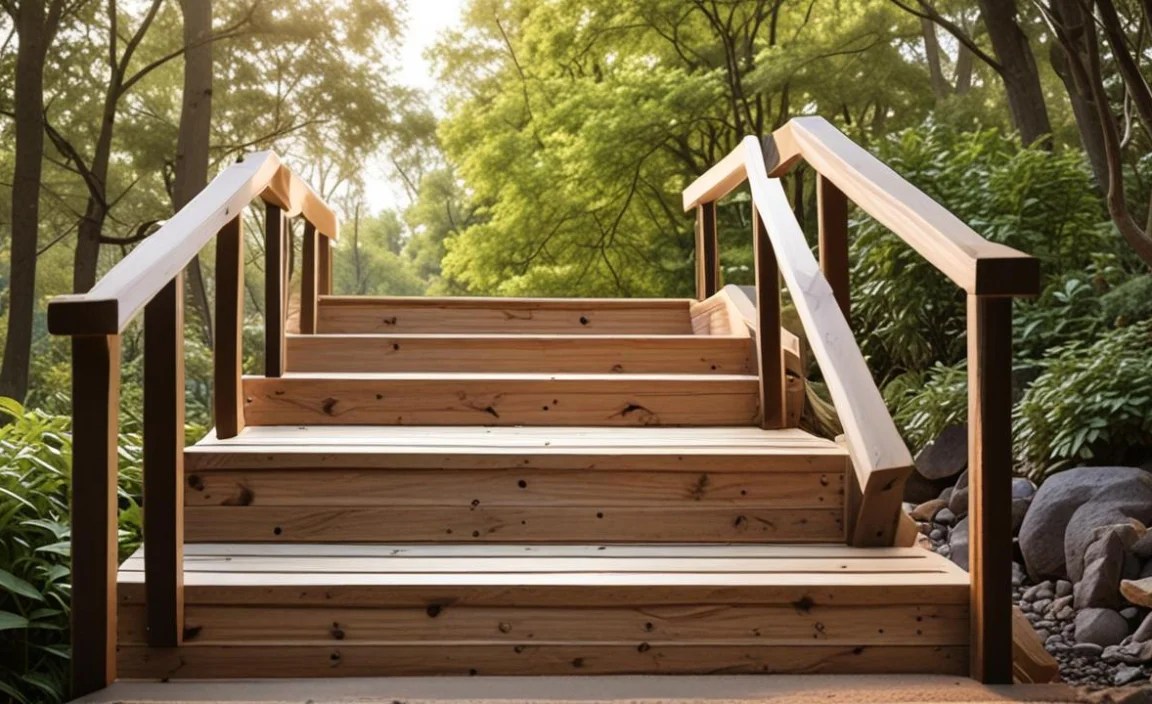
Now, let’s put the posts together. Posts are like the legs of a table. They hold up the handrail. Dig holes for the posts. Make sure the holes are deep enough. The posts should be below the frost line. This prevents them from shifting in the winter. Pour concrete into the holes. This will hold the posts in place. Make sure the posts are straight. Use a level to check. Let the concrete dry completely before you continue. This can take a few days. Once the concrete is dry, the posts will be strong and stable. They will be ready to support the handrail. Assembling the posts is like building a strong foundation for a house. It needs to be solid and secure.
- Dig holes for the posts below the frost line.
- Pour concrete into the holes to secure the posts.
- Use a level to ensure the posts are straight.
- Let the concrete dry completely before continuing.
- Check post spacing according to your plan.
Think about the spacing of the posts. They should be evenly spaced along the steps. This will make the handrail look balanced. Use your measurements from the planning stage. Mark where each post should go. Make sure the posts are the same height. This will make the handrail level. Use a string line to check the height. Tie the string to the top of one post. Stretch it to the next post. Adjust the height of the posts until the string is level. Assembling the posts is a key step. It determines the stability and look of the handrail. Take your time and do it right. It’s like setting up bowling pins. They need to be in the right position for a good game.
How Deep Should the Post Holes Be?
The depth of the post holes is like the roots of a tree. The deeper the roots, the stronger the tree. The deeper the post holes, the stronger the handrail. The holes should be below the frost line. The frost line is the depth to which the ground freezes in winter. Check with your local building department to find out the frost line in your area. In general, the holes should be at least 24 inches deep. In colder climates, they might need to be deeper. Use a post hole digger to dig the holes. This tool makes it easier to dig deep, narrow holes. It’s like using a special tool to build a sandcastle. It makes the job easier and faster.
What Kind of Concrete Should I Use?
Concrete is like glue for your posts. It holds them in place. You can use pre-mixed concrete. This is easy to use. Just add water. Follow the instructions on the bag. You can also mix your own concrete. This requires more work. But it can be cheaper. Use a mixture of cement, sand, and gravel. Follow a recipe to get the right consistency. Make sure the concrete is not too wet or too dry. It should be like thick oatmeal. Pour the concrete into the holes around the posts. Use a shovel to pack it down. This will remove air pockets. It’s like making a cake. You need the right ingredients and the right recipe to get a good result.
How to Make Sure the Posts Are Straight
Straight posts are like straight soldiers. They stand up tall and strong. Use a level to check the posts. Place the level against the side of the post. Adjust the post until the bubble is in the middle of the level. You can use shims to adjust the post. Shims are small pieces of wood. They can be used to fill gaps. Check the posts from different angles. Make sure they are straight in all directions. You can also use a plumb bob. A plumb bob is a weight on a string. It hangs straight down. Use it to check if the post is vertical. It’s like using a compass to find your way. It helps you stay on the right path.
Fun Fact or Stat: Concrete takes about 28 days to fully cure and reach its maximum strength.
Attaching the Handrail to the Posts

Time to attach the handrail! This is where it really starts to look like a handrail. The handrail sits on top of the posts. It needs to be securely attached. Use screws or bolts to attach the handrail to the posts. Screws are easier to use. But bolts are stronger. Drill pilot holes before you insert the screws or bolts. This prevents the wood from splitting. Make sure the handrail is level. Use a level to check. If it’s not level, adjust the posts or the handrail. A level handrail is safer and looks better. Attaching the handrail is like putting the roof on a house. It protects everything underneath.
- Drill pilot holes before inserting screws.
- Use screws or bolts to attach the handrail.
- Ensure the handrail is level using a level.
- Check the handrail’s stability after attaching it.
- Use proper spacing between screws or bolts.
- Countersink screws for a smooth finish.
Think about the spacing of the screws or bolts. They should be evenly spaced along the handrail. This will distribute the weight evenly. Use enough screws or bolts to make the handrail strong. Don’t use too few. The handrail needs to be able to support weight. Test the handrail after you attach it. Push down on it. See if it feels sturdy. If it’s wobbly, add more screws or bolts. Attaching the handrail is a key step. It determines the safety and usability of the handrail. Take your time and do it right. It’s like putting the icing on a cake. It makes it look beautiful and taste delicious.
What Size Screws or Bolts Should I Use?
The size of the screws or bolts is like the size of your shoes. They need to fit properly. Use screws or bolts that are long enough to go through the handrail and into the post. But not so long that they stick out the other side. In general, 3-inch screws or bolts are a good choice. Use galvanized screws or bolts. Galvanized means they are coated to prevent rust. This is important for outdoor projects. Choose screws or bolts with a large head. This will provide more holding power. It’s like choosing the right size tires for your car. They need to be strong enough to support the weight.
How to Prevent the Wood from Splitting
Splitting wood is like cracking an eggshell. You want to avoid it. Drill pilot holes before you insert the screws or bolts. The pilot holes should be slightly smaller than the screws or bolts. This will prevent the wood from splitting. Use a countersink bit to create a recess for the screw head. This will allow the screw head to sit flush with the surface of the wood. Don’t over-tighten the screws or bolts. This can also cause the wood to split. It’s like hammering a nail. If you hit it too hard, you can bend it.
How to Make the Handrail Look Smooth
A smooth handrail is like a smooth slide. It’s more fun to use. Sand the handrail after you attach it. Use sandpaper to smooth out any rough edges. Start with coarse sandpaper. Then, use finer sandpaper. This will create a smooth finish. Fill any holes or cracks with wood filler. Let the wood filler dry completely. Then, sand it smooth. Apply a finish to the handrail. This will protect the wood from the weather. It will also make it look more beautiful. It’s like polishing your shoes. It makes them look shiny and new.
Fun Fact or Stat: Using pilot holes can reduce wood splitting by up to 70%.
Finishing and Protecting Your Handrail

Finishing your handrail protects it. It also makes it look great! Staining or painting the wood is important. This protects it from sun and rain. Choose a stain or paint that is designed for outdoor use. Apply several coats. This gives better protection. Let each coat dry before applying the next. Sand the wood lightly between coats. This creates a smooth finish. A well-finished handrail will last longer. It will also look beautiful for years to come. Finishing the handrail is like putting a raincoat on. It keeps it safe from the elements.
- Choose a stain or paint designed for outdoor use.
- Apply several coats for better protection.
- Sand the wood lightly between coats.
- Let each coat dry completely before applying the next.
- Consider adding a sealant for extra protection.
Think about the color you want. Do you want a natural wood look? Or a painted finish? The color affects the overall look of the handrail. Choose a color that complements your house. Consider adding a sealant. A sealant provides extra protection from the weather. It helps prevent the wood from cracking or warping. Apply the sealant after the stain or paint has dried. Finishing and protecting the handrail is a key step. It ensures that your handrail will last for years to come. Take your time and do it right. It’s like wrapping a gift. It makes it look special and protects what’s inside.
Why Is Outdoor Finish Important?
Outdoor finish is like sunscreen for your wood. It protects it from harmful UV rays. It also protects it from rain, snow, and ice. Without a finish, the wood can rot and decay. It can also crack and warp. An outdoor finish helps the wood last longer. It also keeps it looking beautiful. Choose a finish that is specifically designed for outdoor use. These finishes contain ingredients that protect the wood from the elements. It’s like wearing a hat in the sun. It protects your skin from damage.
How to Choose the Right Stain or Paint
Choosing the right stain or paint is like choosing the right colors for a painting. Consider the look you want. Do you want a natural wood look? Choose a stain. Do you want a painted finish? Choose a paint. Think about the color of your house. Choose a stain or paint that complements the house. Read the labels carefully. Make sure the stain or paint is designed for outdoor use. Choose a stain or paint that is easy to apply. It’s like choosing the right tools for a job. You want something that is easy to use and gets the job done right.
Tips for Applying Finish Evenly
Applying finish evenly is like spreading butter on toast. You want to cover the whole surface. Use a good quality brush or roller. Apply the finish in thin, even coats. Don’t apply too much at once. This can cause drips and runs. Work in a well-ventilated area. Wear gloves and a mask. This will protect you from the fumes. Let each coat dry completely before applying the next. Sand the wood lightly between coats. This will create a smooth finish. It’s like frosting a cake. You want to make it look perfect.
Fun Fact or Stat: A good outdoor finish can extend the life of your wooden handrail by 5-10 years.
Maintaining Your Wooden Handrail
Taking care of your handrail is important. It keeps it safe and looking nice. Check the handrail regularly. Look for loose screws or cracks. Tighten any loose screws. Repair any cracks with wood filler. Clean the handrail with soap and water. This removes dirt and grime. Reapply the finish every few years. This protects the wood from the weather. Regular maintenance will keep your handrail in good condition. It will also prevent problems from developing. Maintaining your handrail is like taking care of a pet. It needs regular attention to stay healthy.
- Check for loose screws or cracks regularly.
- Clean the handrail with soap and water.
- Reapply the finish every few years.
- Trim any nearby plants that touch the handrail.
- Inspect the posts for rot or damage.
- Remove snow and ice in the winter.
Think about the weather in your area. If you live in a snowy area, remove snow and ice from the handrail. This prevents it from becoming slippery. If you live in a sunny area, reapply the finish more often. This protects the wood from the sun. Trim any plants that are growing near the handrail. This prevents them from damaging the wood. Maintaining your handrail is a key step. It ensures that your handrail will last for many years to come. Take your time and do it right. It’s like brushing your teeth. It keeps them healthy and strong.
How Often Should I Inspect My Handrail?
Inspecting your handrail is like checking your tires on your bike. You want to make sure they are in good condition. Inspect your handrail at least twice a year. Once in the spring and once in the fall. Look for loose screws, cracks, and rot. Pay special attention to the posts. These are the most likely to rot. Check the handrail after a storm. High winds and heavy rain can damage the handrail. Regular inspections will help you catch problems early. This can prevent them from becoming worse. It’s like visiting the doctor for a checkup. It helps you stay healthy.
What’s the Best Way to Clean My Handrail?
Cleaning your handrail is like washing your hands. It removes dirt and germs. Use soap and water to clean your handrail. Use a mild soap. Don’t use harsh chemicals. These can damage the wood. Use a soft brush or cloth. Scrub the handrail gently. Rinse the handrail with clean water. Let it dry completely before applying any finish. You can also use a pressure washer. But be careful. Don’t use too much pressure. This can damage the wood. It’s like washing your car. You want to remove the dirt without scratching the paint.
How to Repair Cracks and Rot
Repairing cracks and rot is like patching a hole in your pants. It fixes the damage and makes it good as new. Use wood filler to repair cracks. Clean out the crack. Apply the wood filler. Let it dry completely. Sand it smooth. Use a wood hardener to treat rot. This will stop the rot from spreading. Remove the rotted wood. Apply the wood hardener. Let it dry completely. Fill the hole with wood filler. Sand it smooth. It’s like fixing a broken toy. You want to make it work again.
Fun Fact or Stat: Regular maintenance can extend the life of your wooden handrail by 10-15 years.
Handrail Height and Slope Regulations
Handrail height and slope are important for safety. They make the handrail easy to use. Most building codes require the handrail to be between 34 and 38 inches high. Measure from the top of the step to the top of the handrail. The slope of the handrail should match the slope of the steps. This makes it easy to grip. Check your local building codes for specific requirements. Following these regulations ensures safety. It also prevents problems with inspections. Handrail height and slope are like the height of a chair. It needs to be comfortable for everyone to use.
- Handrail height should be between 34 and 38 inches.
- The slope should match the slope of the steps.
- Check local building codes for specific requirements.
- Ensure the handrail is easy to grip.
- Consider the needs of children and older adults.
Think about the needs of children and older adults. They may need a lower handrail. Or a handrail that is easier to grip. Consider adding a second handrail at a lower height. This can make the steps safer for everyone. Following these regulations shows that you care. You care about the safety of your family and friends. Handrail height and slope are a key part of building a safe handrail. Take your time and do it right. It’s like setting the table. You want to make sure everyone has what they need.
Why Is Handrail Height Important?
Handrail height is like the height of a doorknob. It needs to be easy to reach. If the handrail is too high, it will be difficult to grip. If it is too low, it will be uncomfortable to use. Most people can comfortably grip a handrail that is between 34 and 38 inches high. This height allows them to maintain their balance. It also provides support when climbing or descending the steps. It’s like adjusting the seat in your car. You want it to be comfortable and safe.
What Is the Correct Handrail Slope?
The correct handrail slope is like the slope of a slide. It needs to be smooth and gradual. The handrail should follow the slope of the steps. This makes it easy to grip. A steep slope can be difficult to manage. A shallow slope can be uncomfortable. The ideal slope is one that feels natural and easy to use. It’s like walking on a flat surface. You don’t want to have to work too hard.
How to Measure Handrail Height and Slope
Measuring handrail height and slope is like measuring the height of a tree. You need to use the right tools. Use a measuring tape to measure the height of the handrail. Measure from the top of the step to the top of the handrail. Use a level to check the slope of the handrail. Place the level on top of the handrail. Adjust the handrail until the bubble is in the middle of the level. You can also use a protractor to measure the angle of the slope. It’s like using a ruler to draw a straight line. It helps you get accurate results.
| Regulation | Requirement | Reason |
|---|---|---|
| Handrail Height | 34-38 inches | Provides comfortable grip for most adults. |
| Handrail Slope | Matches stair slope | Ensures easy and natural grip while walking. |
| Grip Size | 1.25-2 inches diameter | Allows for secure and comfortable grasp. |
| Clearance | 1.5 inches from wall | Prevents hand from scraping against the wall. |
Fun Fact or Stat: Handrails that meet height and slope regulations can reduce falls by up to 40%.
Choosing the Right Style for Your Railing
The style of your railing is like the style of your clothes. It shows off your personality. There are many different styles to choose from. Simple and modern styles are easy to build. Ornate and traditional styles are more complex. Consider the style of your house. Choose a railing style that complements your house. Think about your budget. Some styles are more expensive than others. The right style makes your house look great. It also adds value to your home. Choosing the right style is like picking the right decorations for a party. It sets the mood.
- Consider the style of your house.
- Think about your budget.
- Choose a style that is easy to build.
- Look at pictures for inspiration.
- Consider adding decorative elements.
Look at pictures of different railing styles. This can give you ideas. Consider adding decorative elements. These can add personality to your railing. You can add spindles, caps, or carvings. Choose elements that match your style. The right style can make your handrail a focal point. It can also make your steps safer. Choosing the right style is a key part of building a handrail. Take your time and do it right. It’s like decorating your room. You want it to reflect your style.
What Are Some Popular Railing Styles?
Popular railing styles are like popular songs. They are liked by many people. Some popular styles include: Simple and modern, Traditional, Victorian, Craftsman, Rustic, and Coastal. Each style has its own unique look. Simple and modern styles are clean and minimalist. Traditional styles are elegant and ornate. Victorian styles are elaborate and detailed. Craftsman styles are simple and sturdy. Rustic styles are natural and rugged. Coastal styles are light and airy. It’s like choosing a favorite type of music. You want something that you enjoy listening to.
How to Match Your Railing to Your House
Matching your railing to your house is like matching your shoes to your outfit. You want them to complement each other. Consider the architectural style of your house. Choose a railing style that matches the style of your house. Consider the color of your house. Choose a railing color that complements the color of your house. Consider the landscaping around your house. Choose a railing style that fits with the landscaping. It’s like decorating your house for the holidays. You want everything to look festive and coordinated.
How to Add Decorative Elements
Adding decorative elements is like adding sprinkles to a cupcake. It makes it look more special. Consider adding spindles to your railing. Spindles are vertical posts that support the handrail. Consider adding caps to the posts. Caps are decorative pieces that sit on top of the posts. Consider adding carvings to the handrail. Carvings can add a unique touch to your railing. Consider adding lighting to your railing. Lighting can make your steps safer at night. It’s like adding jewelry to your outfit. It adds sparkle and personality.
Fun Fact or Stat: Railing style can increase a home’s curb appeal by up to 15%.
Summary
Building a wooden handrail for outdoor steps involves several important steps. First, you must plan carefully and take accurate measurements. Then, you need to cut the wood to the correct sizes and angles. Assembling the posts and attaching the handrail securely are also important. Finishing and protecting the wood ensures that it will last for years. Finally, maintaining the handrail will keep it safe and looking its best. Knowing how to build a wooden handrail for outdoor steps can increase your home’s value. It can also improve safety.
Remember to check local building codes. This will ensure that your handrail meets all safety requirements. Choose high-quality materials and tools. Take your time and do the job right. With some planning and effort, you can build a beautiful and functional handrail. This will enhance the look and safety of your home. It’s a project that you can be proud of for years to come.
Conclusion
Building a wooden handrail for outdoor steps is a rewarding project. You can enhance your home’s safety and appearance. It requires careful planning, accurate measurements, and attention to detail. Choose the right materials, follow local building codes, and take your time. With these tips, you can create a handrail that will last for years. You can also be proud of your accomplishment. You will also know that you have made your home safer for yourself and others. Enjoy the process of learning how to build a wooden handrail for outdoor steps!
Frequently Asked Questions
Question No 1: What tools do I need to build a wooden handrail for outdoor steps?
Answer: You will need several tools. These include a measuring tape, saw (circular or miter), drill, level, safety glasses, and gloves. You will also need a pencil for marking. A square is useful for making right angles. A post hole digger helps with setting posts. Having the right tools makes the job easier and safer. It also ensures accurate cuts and secure assembly. Make sure all your tools are in good working condition before you start. If you plan to learn how to build a wooden handrail for outdoor steps, good tools are a must.
Question No 2: What type of wood should I use for an outdoor handrail?
Answer: Choose wood that is naturally resistant to rot and insects. Cedar, redwood, and pressure-treated wood are good choices. These woods can withstand outdoor conditions. Avoid using soft woods like pine. They can rot quickly. Consider the look of the wood as well. Choose a wood that complements your house. Pressure-treated wood is a common choice for its durability. Cedar is a great choice if you want natural beauty. Selecting the right wood is crucial. It ensures that your handrail lasts for many years. If you are learning how to build a wooden handrail for outdoor steps, wood selection is vital.
Question No 3: How high should my handrail be?
Answer: Most building codes require handrails to be between 34 and 38 inches high. Measure from the top of the step to the top of the handrail. Check your local building codes for specific requirements. The height should be comfortable for most adults to grip. This height provides support and balance. It also helps prevent falls. Consider the needs of children and older adults. You may need to adjust the height accordingly. Always prioritize safety when building your handrail. It’s important to understand how to build a wooden handrail for outdoor steps properly.
Question No 4: How do I attach the handrail to the posts?
Answer: You can use screws or bolts to attach the handrail to the posts. Drill pilot holes before inserting the screws or bolts. This prevents the wood from splitting. Use galvanized screws or bolts for outdoor use. These are rust-resistant. Make sure the handrail is level before attaching it. Use a level to check. The spacing of screws or bolts should be even. This distributes the weight evenly. Test the handrail after attaching it. It should be sturdy and secure. Securing the handrail properly is essential. It’s a key part of how to build a wooden handrail for outdoor steps.
Question No 5: How do I protect my wooden handrail from the weather?
Answer: Apply a stain or paint designed for outdoor use. This protects the wood from sun and rain. Apply several coats for better protection. Let each coat dry before applying the next. Sand the wood lightly between coats. This creates a smooth finish. Consider adding a sealant for extra protection. Reapply the finish every few years. This maintains the protection. Regular maintenance keeps your handrail in good condition. It also prolongs its life. Weather protection is crucial for outdoor handrails. Think about how to build a wooden handrail for outdoor steps that lasts.
Question No 6: What should I do if my handrail becomes loose or damaged?
