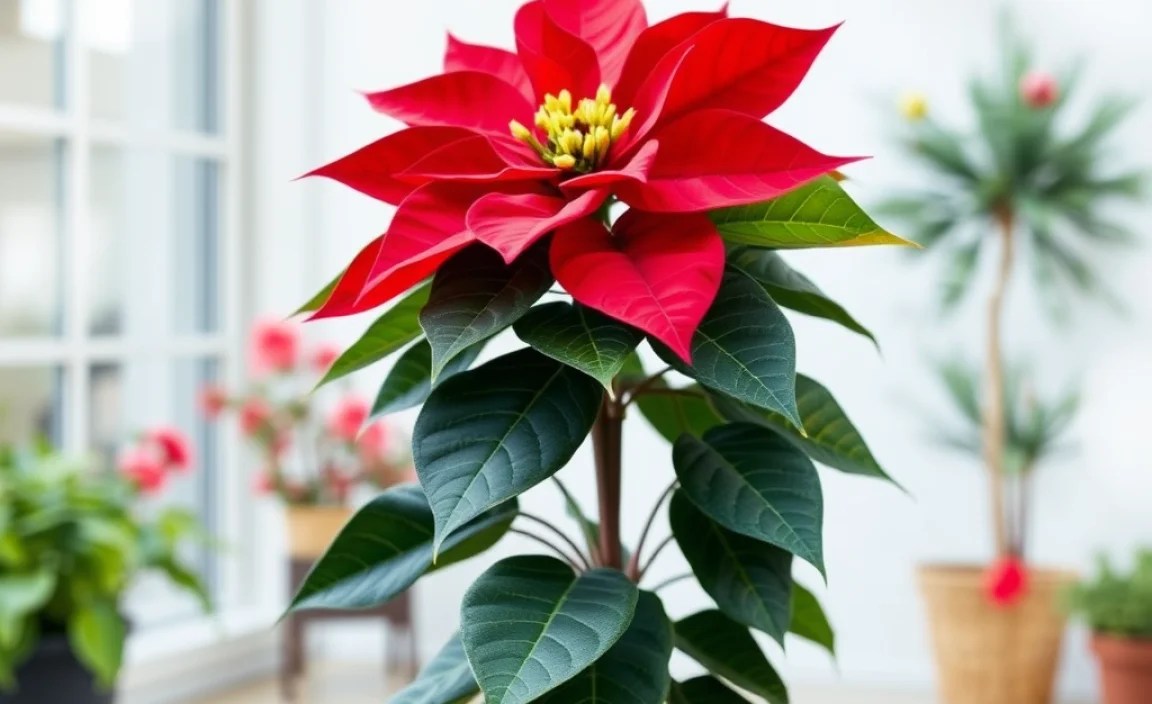
Did you ever get a plant as a gift? Maybe it was a pretty poinsettia. These plants are popular during the holidays. Their bright red leaves make them look festive. But what happens after the holidays? Can you keep your poinsettia alive? Can you even plant it outside? Let’s learn how to care for a poinsettia outdoors!
Key Takeaways
- Poinsettias need well-draining soil and indirect sunlight to thrive outside.
- Water your poinsettia when the soil feels dry to the touch. Do not overwater.
- Protect your poinsettia from frost. Bring it indoors if it gets too cold.
- Pruning helps poinsettias grow bushier. Do it in the spring.
- Knowing how to care for a poinsettia outdoors helps it rebloom next winter.

Understanding Poinsettia Needs Outdoors
Poinsettias are not very hard to care for. But they need some special attention. They love sunlight, but not too much. Think of a forest. The sun shines through the trees. This is the kind of light a poinsettia likes. Soil is also important. It needs to drain well. This means the water should not sit in the pot. Good drainage keeps the roots healthy. Temperature matters too. Poinsettias like warm weather. But they don’t like frost. Frost can kill them. So, if it gets cold, bring your plant inside. These are the basics of how to care for a poinsettia outdoors. If you give them what they need, they will grow happy and healthy. Remember sunlight, soil, and temperature. These are the keys to success. With a little care, your poinsettia can thrive!
- Provide bright, indirect sunlight.
- Use well-draining potting mix.
- Water when the top inch of soil is dry.
- Protect from temperatures below 50°F.
- Fertilize during the growing season.
- Prune in late spring to encourage branching.
Imagine you are a poinsettia. You want just the right amount of sunlight. Not too much, not too little. You want your feet (roots) to be cozy in the soil. You don’t want them sitting in water. And you definitely don’t want to be cold! If you think about what the plant needs, it becomes easier to care for it. Poinsettias are like us. They need the right environment to be happy. So, pay attention to their needs. Give them the right sunlight, soil, and temperature. If you do, your poinsettia will reward you with beautiful, bright colors. How to care for a poinsettia outdoors is really about understanding what makes it happy and healthy. Take good care and enjoy.
What Type of Sunlight Do They Need?
Do you know that poinsettias like bright light? But they don’t like direct sun. Direct sun can burn their leaves. It’s like when you stay in the sun too long. You get a sunburn! Poinsettias need light that is filtered. This means the light passes through something first. A tree or a curtain can filter light. This makes the light softer. So, if you put your poinsettia outside, find a spot with shade. A place where the sun doesn’t shine all day. This will help your plant stay healthy. Remember, bright, indirect light is best. This is a key part of how to care for a poinsettia outdoors. This type of light helps them grow strong and healthy. So, find the right spot, and your poinsettia will thank you.
What Kind of Soil is Best?
Have you ever played with mud? Mud is fun, but plants don’t like it. Mud holds too much water. This can make the plant’s roots rot. Poinsettias need soil that drains well. This means the water flows through it easily. You can buy special potting mix for plants. This mix has things like perlite. Perlite helps the soil drain better. It also helps air get to the roots. This is important for healthy growth. So, when you plant your poinsettia, use good potting mix. Make sure it drains well. This is a big part of how to care for a poinsettia outdoors. Good soil is like a good home for your plant’s roots.
How Warm Should it Be?
Imagine you are going to the beach. You want it to be warm, right? Poinsettias feel the same way. They like warm temperatures. They don’t like it when it’s too cold. If it gets too cold, they can get sick. They can even die. So, you need to protect them from the cold. If the temperature drops below 50°F (10°C), bring them inside. This will keep them safe. Poinsettias do best when it’s between 65°F and 75°F (18°C and 24°C). This is like a warm, sunny day. So, watch the weather. If it’s going to be cold, bring your plant inside. This is an important part of how to care for a poinsettia outdoors. Keep them warm, and they will be happy!
Fun Fact or Stat: Did you know that the colored parts of a poinsettia are not flowers? They are actually special leaves called bracts!

Watering Your Poinsettia Correctly
Water is super important for plants. But too much water can be bad. It can drown the roots. Think of it like this: you need water to live. But if you swim underwater for too long, you can’t breathe. Poinsettias are the same way. You should only water them when the soil is dry. Stick your finger in the soil. If it feels dry, it’s time to water. When you water, make sure the water drains out the bottom. Don’t let the plant sit in water. This is a recipe for root rot! How to care for a poinsettia outdoors includes giving the right amount of water. Not too much, not too little. Just enough to keep it happy and healthy. Always check the soil before watering.
- Check the soil moisture before watering.
- Water thoroughly until water drains out.
- Allow the soil to dry slightly between waterings.
- Avoid letting the plant sit in standing water.
- Reduce watering in the fall and winter.
Imagine you are giving your poinsettia a drink. You don’t want to pour the whole glass of water on it at once. You want to give it small sips. This is how you should water your plant. Slowly and carefully. Make sure the water soaks into the soil. But don’t overdo it. Let the soil dry out a little before watering again. This helps the roots stay healthy. Overwatering is a common mistake. Many people think more water is better. But it’s not! So, remember to check the soil first. If it’s dry, give it a drink. If it’s wet, wait a little longer. Mastering how to care for a poinsettia outdoors involves understanding its water needs. Getting the watering right is key to success.
How Often Should You Water?
There’s no perfect schedule for watering. It depends on the weather. It also depends on the soil. Hot weather means the soil dries out faster. So, you might need to water more often. Cool weather means the soil stays wet longer. So, you can water less often. The best way to know is to check the soil. Stick your finger in the soil. If the top inch is dry, it’s time to water. If it’s still wet, wait a day or two. This is the best way to decide. Don’t just water on a schedule. Pay attention to what the plant needs. This is a big part of how to care for a poinsettia outdoors. Adapt to the conditions and your plant will thrive.
What Happens if You Overwater It?
Overwatering is like giving your plant too much love. But too much love can hurt! When you overwater a poinsettia, the roots can’t breathe. They start to rot. This is bad news for the plant. The leaves might turn yellow or brown. The plant might start to droop. These are signs of overwatering. If you see these signs, stop watering. Let the soil dry out completely. You might even need to repot the plant. Use fresh, dry soil. This will give the roots a chance to recover. Preventing overwatering is part of how to care for a poinsettia outdoors. Watch for the signs and adjust your watering habits.
What Happens if You Under-Water It?
Under-watering is like forgetting to give your plant a drink. Just like overwatering, under-watering can be harmful. When a poinsettia doesn’t get enough water, it starts to dry out. The leaves might wilt. They might turn brown and crispy. The soil will feel very dry. If you see these signs, give your plant some water right away. Water it thoroughly until the water drains out the bottom. The plant should start to recover within a few hours. Under-watering is easy to fix if you catch it early. So, check the soil regularly. Don’t let it get too dry. Knowing how to care for a poinsettia outdoors means paying attention to the signs of thirst.
Fun Fact or Stat: A poinsettia can go dormant, which means it rests and doesn’t grow much. This usually happens in the winter.

Fertilizing Poinsettias for Best Growth
Poinsettias need food to grow. This food is called fertilizer. Fertilizer helps them grow strong and healthy. It also helps them produce those bright red leaves. You should only fertilize during the growing season. This is usually in the spring and summer. Don’t fertilize in the fall or winter. The plant is resting then. Use a balanced fertilizer. This means it has equal parts of nitrogen, phosphorus, and potassium. Follow the instructions on the fertilizer label. Don’t use too much fertilizer. This can burn the roots. How to care for a poinsettia outdoors involves feeding it the right amount of fertilizer at the right time. This will help it thrive.
- Fertilize during the growing season (spring and summer).
- Use a balanced fertilizer (e.g., 20-20-20).
- Follow the instructions on the fertilizer label.
- Avoid fertilizing in the fall and winter.
- Water the plant before fertilizing to prevent root burn.
Imagine you are making a sandwich for your poinsettia. You wouldn’t just pile on all the ingredients at once. You would add them in the right amounts. Fertilizer is like that. You need to give the plant the right amount of nutrients. Too much can be harmful. Too little might not be enough. A balanced fertilizer is like a well-made sandwich. It has all the right ingredients in the right proportions. This helps the plant grow strong and healthy. Remember to only fertilize during the growing season. This is when the plant needs the extra food. In the fall and winter, it’s resting. It doesn’t need as much. Understanding how to care for a poinsettia outdoors means knowing when and how to fertilize. This will help your plant reach its full potential.
What Kind of Fertilizer Should You Use?
Choosing the right fertilizer can feel tricky. But it doesn’t have to be! Look for a fertilizer labeled “balanced.” This means it has equal parts of nitrogen (N), phosphorus (P), and potassium (K). A 20-20-20 fertilizer is a good choice. These numbers tell you how much of each nutrient is in the fertilizer. Nitrogen helps with leaf growth. Phosphorus helps with root growth. Potassium helps with overall health. You can find balanced fertilizers at most garden stores. Just follow the instructions on the label. Don’t overdo it! Using the right fertilizer is a key part of how to care for a poinsettia outdoors. It gives your plant the nutrients it needs to grow strong.
When Should You Fertilize?
Think of fertilizer as a boost for your plant. You only need to give it a boost when it’s actively growing. This is usually in the spring and summer. During the fall and winter, the plant is resting. It doesn’t need as much food. So, you should stop fertilizing in the fall. Start again in the spring when you see new growth. Fertilizing at the right time is important. It helps the plant use the nutrients effectively. Don’t fertilize a dormant plant. It won’t be able to use the fertilizer. It might even harm the plant. Knowing when to fertilize is part of how to care for a poinsettia outdoors. Time it right, and your plant will thank you.
How Often Should You Fertilize?
The fertilizer label will tell you how often to fertilize. Usually, you should fertilize every two to four weeks. But it depends on the fertilizer. Some fertilizers are stronger than others. Always follow the instructions on the label. Don’t fertilize too often. This can build up salts in the soil. These salts can harm the plant’s roots. If you’re not sure, it’s better to fertilize less often. You can always add more later if needed. Over-fertilizing is harder to fix. Regular, but not excessive, feeding is important. This is part of how to care for a poinsettia outdoors. Consistent care leads to healthy growth.
Fun Fact or Stat: Poinsettias are native to Mexico and were used by the Aztecs to produce red dye.

Pruning for Bushier Poinsettias
Pruning is like giving your poinsettia a haircut. It helps the plant grow bushier. It also helps it produce more of those bright red leaves. You should prune your poinsettia in the spring. This is after the holidays are over. Cut back the stems to about 4 inches. This will encourage new growth. Don’t be afraid to prune! It might seem scary, but it’s good for the plant. Use clean, sharp scissors or pruning shears. This will prevent disease. How to care for a poinsettia outdoors includes pruning. This helps it stay healthy and look its best. It encourages more blooms.
- Prune in late spring (April or May).
- Cut back stems to about 4 inches.
- Use clean, sharp pruning shears.
- Remove any dead or diseased branches.
- Pinch off new growth tips to encourage branching.
- Prune regularly to maintain shape.
Imagine your poinsettia is a tree. If you don’t trim the branches, it will grow tall and skinny. Pruning helps it grow wider and fuller. It encourages new branches to grow. More branches mean more leaves. And more leaves mean more of those beautiful red bracts. Pruning also removes any dead or diseased parts of the plant. This helps prevent the disease from spreading. So, don’t be afraid to prune. It’s like giving your plant a fresh start. It helps it grow stronger and healthier. Mastering how to care for a poinsettia outdoors involves understanding the importance of pruning. It’s a key step in keeping your plant happy and vibrant.
Why Should You Prune?
Pruning might seem mean, but it’s actually helpful. When you prune a poinsettia, you’re telling it to grow more. Cutting off the ends of the stems encourages new growth to sprout from the sides. This makes the plant bushier and fuller. Pruning also helps remove dead or damaged parts. This keeps the plant healthy. Think of it like this: if you have a bad haircut, you cut it to make it look better. Pruning does the same thing for your plant. It helps it look its best. This is an important part of how to care for a poinsettia outdoors. It keeps your plant healthy and beautiful.
When is the Best Time to Prune?
The best time to prune is in the spring. After the holidays are over, the poinsettia starts to rest. It’s not growing as much. In the spring, it starts to wake up. This is the perfect time to prune. Cutting it back will encourage new growth. Don’t prune in the fall or winter. The plant is preparing to rest. Pruning at the wrong time can stress the plant. It might not grow as well. So, mark your calendar for spring. That’s when you should grab your pruning shears. Timing is everything when it comes to how to care for a poinsettia outdoors. Prune at the right time for the best results.
How Much Should You Prune?
When you prune, you should cut back the stems to about 4 inches. This might seem like a lot, but it’s okay. The plant will grow back. Use clean, sharp pruning shears. Make sure to cut at an angle. This will help the plant heal. Don’t be afraid to prune! It’s good for the plant. Removing most of the old growth encourages new, healthy growth. It also helps shape the plant. You can prune it to be round or bushy. Pruning is like sculpting a plant. So, be brave and prune your poinsettia. It’s a key part of how to care for a poinsettia outdoors. You will have a healthier, more beautiful plant.
Fun Fact or Stat: Pruning also helps control the size and shape of your poinsettia, so it doesn’t get too big for its pot or your garden!
Protecting Poinsettias from Pests and Diseases
Sometimes, poinsettias get sick. They can get pests like aphids or whiteflies. These tiny bugs suck the sap from the leaves. This can make the leaves turn yellow or brown. They can also get diseases like root rot. This is caused by too much water. To protect your poinsettia, check it regularly. Look for signs of pests or diseases. If you see something, take action right away. You can use insecticidal soap to kill pests. Make sure to follow the instructions on the label. To prevent root rot, don’t overwater. Use well-draining soil. How to care for a poinsettia outdoors includes protecting it from pests and diseases. This will keep it healthy and strong.
- Inspect plants regularly for pests and diseases.
- Use insecticidal soap to treat pests like aphids and whiteflies.
- Ensure good air circulation to prevent fungal diseases.
- Avoid overwatering to prevent root rot.
- Isolate infected plants to prevent spread.
Imagine you are a doctor for your poinsettia. You need to check it regularly for signs of illness. Look closely at the leaves and stems. Are there any tiny bugs crawling around? Are there any spots or discoloration? If you see something, it’s like finding a problem early. The sooner you treat it, the better. Insecticidal soap is like medicine for your plant. It kills the pests without harming the plant. Good air circulation is like fresh air for your plant. It helps prevent fungal diseases. And avoiding overwatering is like preventing a cold. It keeps the roots healthy. Knowing how to care for a poinsettia outdoors involves being a good plant doctor. Pay attention, take action, and keep your plant healthy.
What are Common Pests to Watch For?
Poinsettias can attract some unwanted guests. Aphids are tiny, green bugs that suck sap from the leaves. Whiteflies are small, white insects that fly around when you disturb the plant. Spider mites are tiny mites that create webs on the leaves. These pests can weaken the plant. They can also spread diseases. Check your plant regularly for these pests. Look closely at the undersides of the leaves. This is where they often hide. If you see any pests, take action right away. Knowing the common pests is a key part of how to care for a poinsettia outdoors. Early detection can save your plant.
How Can You Prevent Diseases?
Preventing diseases is easier than curing them. The best way to prevent diseases is to provide good care. Use well-draining soil. Don’t overwater. Provide good air circulation. These things will help keep your plant healthy. Healthy plants are less likely to get diseases. You can also use a fungicide to prevent fungal diseases. This is like giving your plant a vaccine. It protects it from getting sick. But good care is the best prevention. A healthy environment is key. This is an important part of how to care for a poinsettia outdoors. Healthy plants are happy plants!
How Do You Treat Pests?
If you find pests on your poinsettia, don’t panic. There are ways to treat them. Insecticidal soap is a good option. It’s safe for the plant and effective against many pests. You can also use neem oil. This is a natural insecticide. Follow the instructions on the label. Make sure to spray all parts of the plant. Especially the undersides of the leaves. You might need to repeat the treatment several times. Be persistent. Getting rid of pests can take time. But with patience, you can save your plant. Treating pests effectively is part of how to care for a poinsettia outdoors. Don’t let those bugs win!
Fun Fact or Stat: Poinsettias can be susceptible to root rot if the soil is too wet. Make sure your pot has good drainage!
Getting Poinsettias to Rebloom Outdoors
Do you want your poinsettia to bloom again next year? It’s possible! But it takes some work. After the holidays, the colored leaves will fade. This is normal. In the spring, prune the plant back. Then, move it outside. Provide bright, indirect sunlight. Water it regularly. Fertilize it during the growing season. In the fall, you need to trick the plant into blooming. Poinsettias need long periods of darkness to bloom. Starting in late September, put the plant in a dark room for 14 hours each night. Make sure it gets bright light during the day. Do this for about eight weeks. This will encourage it to bloom. Knowing how to care for a poinsettia outdoors and rebloom is rewarding. You can enjoy its beauty year after year.
- Prune in spring and move outdoors.
- Provide bright, indirect sunlight.
- Water and fertilize regularly.
- Starting in late September, give 14 hours of darkness daily.
- Ensure 10 hours of bright light during the day.
- Continue the dark/light cycle for 8 weeks.
Imagine you are a poinsettia farmer. You want to grow lots of beautiful, red plants. You need to understand what makes them bloom. They need the right amount of light and darkness. The long nights in the fall trigger them to bloom. This is why they are popular during the holidays. You can recreate this environment at home. Just put the plant in a dark room each night. Make sure it gets enough light during the day. This will trick it into blooming again. It takes patience and effort. But it’s worth it when you see those bright red leaves again. Mastering how to care for a poinsettia outdoors and rebloom is like unlocking a secret. You can enjoy the beauty of this plant year after year.
Why Do Poinsettias Need Darkness to Rebloom?
Poinsettias are special plants. They need long periods of darkness to form their colored leaves. This is because they are “short-day” plants. This means they bloom when the days get shorter. In the fall, the days get shorter. This triggers the poinsettia to bloom. If you want your poinsettia to rebloom, you need to recreate these conditions. Give it 14 hours of darkness each night. This will tell the plant it’s time to bloom. Understanding the science behind blooming is part of how to care for a poinsettia outdoors. It helps you create the right environment for your plant.
How Do You Ensure Complete Darkness?
Making sure your poinsettia gets complete darkness is important. Even a little bit of light can prevent it from blooming. You can put the plant in a closet or a spare room. Make sure no light gets in. You can also cover the plant with a dark cloth. Make sure the cloth is thick enough to block out all light. Don’t peek at the plant during the dark period. Even a quick flash of light can disrupt the process. Be consistent with the dark/light cycle. Do it at the same time every day. Consistency is key to success. Ensuring complete darkness is a crucial part of how to care for a poinsettia outdoors and rebloom. Follow these tips and you will be on your way to beautiful blooms.
What If It Doesn’t Rebloom?
Sometimes, even with the best care, a poinsettia might not rebloom. Don’t be discouraged! It’s not always easy to get them to bloom again. There could be several reasons why it didn’t work. Maybe it didn’t get enough darkness. Maybe it didn’t get enough light during the day. Maybe it didn’t get enough fertilizer. Or maybe it’s just the plant. Some poinsettias are harder to rebloom than others. Even if it doesn’t rebloom, you can still enjoy the plant. It’s a beautiful green plant even without the colored leaves. And you can always try again next year! Remember, how to care for a poinsettia outdoors is a learning process. Don’t give up!
Fun Fact or Stat: To encourage reblooming, make sure your poinsettia gets at least 6 hours of sunlight each day during the day portion of its light cycle.
Choosing the Right Location Outdoors
Where you put your poinsettia outside matters. It needs the right amount of sunlight. It also needs protection from the wind. Too much wind can damage the leaves. Choose a spot that gets bright, indirect sunlight. A place under a tree is often a good choice. Make sure the soil drains well in that area. If the soil is too wet, the roots can rot. You might need to plant it in a pot. This will give you more control over the soil. Pay attention to the temperature. If it gets too cold, bring the plant inside. How to care for a poinsettia outdoors includes choosing the right location. This will help it thrive and grow.
- Select a location with bright, indirect sunlight.
- Protect from strong winds.
- Ensure the soil drains well.
- Consider planting in a pot for better control.
- Monitor the temperature and bring inside if needed.
Imagine you are finding a home for your poinsettia. You want it to be a place where it feels comfortable. A place where it has everything it needs. Sunlight, good soil, and protection from the wind. Think about what the plant needs. Then, look for a spot that meets those needs. If you can’t find the perfect spot, you can create one. Plant it in a pot. This will allow you to move it around as needed. You can also add soil amendments to improve drainage. Remember, the right location is key to success. Knowing how to care for a poinsettia outdoors means knowing how to choose the best spot. This will give your plant the best chance to thrive.
How Much Sunlight is Needed in the Location?
Poinsettias love light, but not direct sun. Direct sun can burn their leaves. They need bright, indirect sunlight. This is light that is filtered through something. A tree, a curtain, or a screen can filter light. This makes the light softer and less intense. If you put your poinsettia in direct sun, it will get stressed. The leaves might turn yellow or brown. The plant might even die. So, choose a location that gets bright, indirect sunlight. This will keep your plant healthy and happy. Finding the right light is a crucial part of how to care for a poinsettia outdoors. It’s the key to vibrant growth.
How Do You Protect from Wind?
Wind can be tough on poinsettias. Strong winds can damage the leaves. They can also dry out the soil. This can stress the plant. To protect from wind, choose a sheltered location. A spot near a wall or a fence is often a good choice. You can also use a windbreak. This is something that blocks the wind. A screen or a row of shrubs can act as a windbreak. Make sure the windbreak doesn’t block too much sunlight. The plant still needs light to grow. Protecting from wind is important for how to care for a poinsettia outdoors. It will keep your plant safe and healthy.
What About the Soil Drainage?
Good soil drainage is essential for poinsettias. If the soil doesn’t drain well, the roots can rot. This is because the roots need air. When the soil is waterlogged, the roots can’t get air. This can kill the plant. To ensure good drainage, use well-draining soil. You can also add soil amendments. Perlite and sand can improve drainage. If the soil is very poor, plant the poinsettia in a pot. This will give you more control over the soil. Checking and ensuring proper drainage is vital for how to care for a poinsettia outdoors. It prevents root rot and keeps the plant healthy.
Fun Fact or Stat: Poinsettias prefer to be planted in areas where they are sheltered from strong winds and extreme temperatures.
Poinsettia Care Calendar
Knowing what to do each month helps a lot. How to care for a poinsettia outdoors changes with the seasons. Here’s a simple calendar:
| Month | Care Task |
|---|---|
| January | Enjoy the blooms indoors; reduce watering. |
| February | Let the plant rest; water sparingly. |
| March | Prune back stems to 4 inches. |
| April | Move outdoors to a shady spot. |
| May | Start fertilizing every 2-4 weeks. |
| June-August | Water regularly; monitor for pests. |
| September | Reduce watering; prepare for dark cycle. |
| October-November | 14 hours darkness/10 hours light daily. |
| December | Enjoy the rebloomed poinsettia! |
This calendar is a guide. Adjust it based on your local climate. Consistent care is key to keeping your poinsettia healthy. This includes watering, fertilizing, and protecting it from pests. By following these simple steps, you can enjoy your poinsettia for many years to come. This calendar helps simplify how to care for a poinsettia outdoors. It’s a useful tool for keeping your plant thriving.
Summary
How to care for a poinsettia outdoors involves several key steps. First, choose the right location. Poinsettias need bright, indirect sunlight and well-draining soil. Protect them from strong winds. Water them when the soil feels dry. Don’t overwater! Fertilize during the growing season. Prune them in the spring to encourage bushier growth. Protect them from pests and diseases. And, if you want them to rebloom, give them 14 hours of darkness each night in the fall. Following these steps will help your poinsettia thrive outdoors. With a little effort, you can enjoy its beauty year after year. Understanding these steps makes how to care for a poinsettia outdoors easy and rewarding.
Conclusion
Poinsettias can be beautiful additions to your outdoor space. Knowing how to care for a poinsettia outdoors is not too hard. Give them the right amount of light, water, and food. Protect them from pests and diseases. Prune them regularly. With a little care, your poinsettia will thrive. You can enjoy its bright colors for many years. So, don’t be afraid to plant your poinsettia outside. Follow these tips and watch it grow. Enjoy the beauty of nature.
Frequently Asked Questions
Question No 1: Can I plant my poinsettia directly in the ground?
Answer: Yes, you can plant your poinsettia directly in the ground if you live in a warm climate. Make sure the soil drains well. Choose a spot that gets bright, indirect sunlight. Protect the plant from strong winds. If you live in a colder climate, it’s better to plant it in a pot. This way, you can bring it inside when the weather gets cold. Remember, how to care for a poinsettia outdoors depends on your local climate. Adjust your care accordingly for the best results.
Question No 2: How do I know if I’m overwatering my poinsettia?
Answer: Overwatering is a common mistake. Signs of overwatering include yellowing leaves, drooping leaves, and root rot. The soil will also feel very wet. To avoid overwatering, only water when the top inch of soil is dry. Make sure the pot has good drainage. Don’t let the plant sit in standing water. If you suspect root rot, repot the plant with fresh, dry soil. Prevention is key for how to care for a poinsettia outdoors. Watch out for the signs of overwatering. Adjust your watering habits as needed.
Question No 3: How do I get
