Have you ever grown your own food? It is fun to watch a tiny seed grow. You can grow herbs like cilantro inside your house. But how to care for cilantro plant indoors? It’s not as hard as you might think!
Cilantro is a yummy herb. It adds great flavor to tacos and soups. Let’s find out how to grow it inside!
Cilantro needs the right amount of light and water. Too much or too little can hurt it. Let’s learn the secrets to happy cilantro!
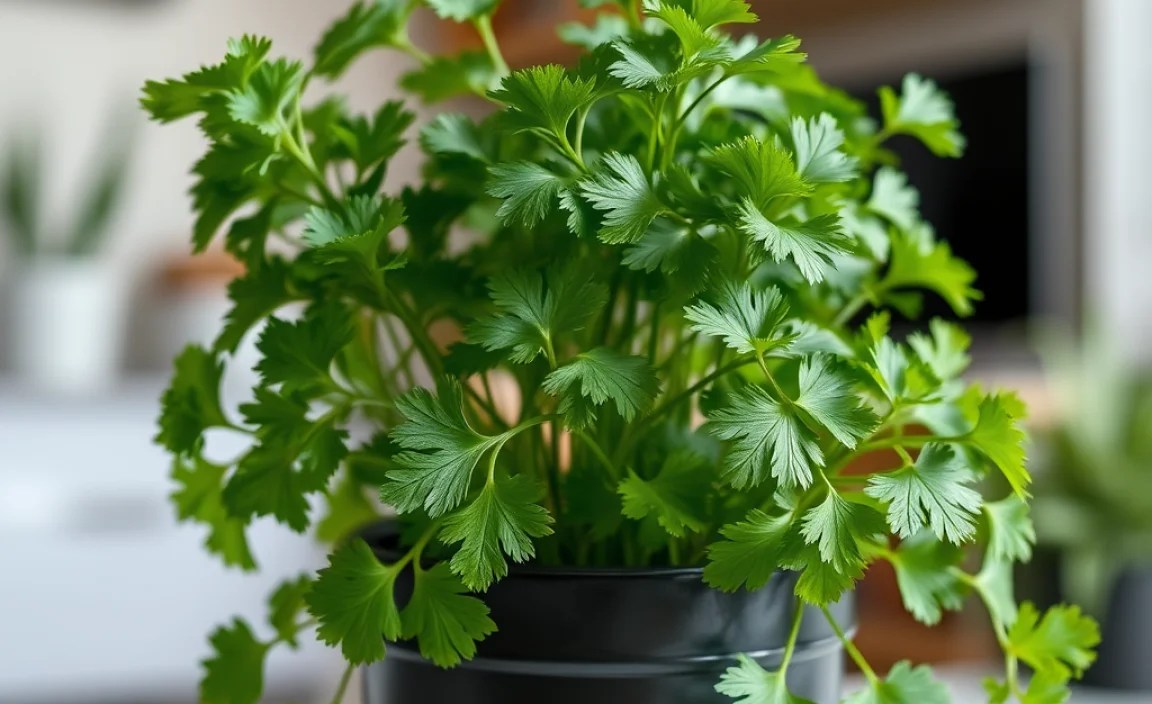
Key Takeaways
- Proper watering is essential to how to care for cilantro plant indoors successfully.
- Choose a sunny spot or use a grow light for best cilantro growth.
- Well-draining soil helps prevent root rot in your indoor cilantro.
- Harvest cilantro leaves regularly to encourage more growth.
- Use fertilizer sparingly to avoid leggy and weak cilantro plants.

Best Potting Mix for Indoor Cilantro
Choosing the right potting mix is very important. It’s the base for your cilantro plant’s life! The soil gives your plant the nutrients it needs. Good soil also helps with drainage. Cilantro doesn’t like to sit in soggy soil. Soggy soil can cause the roots to rot. Root rot can kill your plant. You want a potting mix that is light and airy. A mix with perlite or vermiculite is good. These help with drainage. You can also add some compost. Compost adds extra nutrients. Avoid using soil from your garden. Garden soil can be too heavy. It might also have pests or diseases. These things can hurt your cilantro. Start with a good potting mix, and your cilantro will be happy!
- Use a well-draining potting mix.
- Add perlite or vermiculite for drainage.
- Mix in some compost for nutrients.
- Avoid heavy garden soil.
- Make sure the mix is light and airy.
- Good soil helps prevent root rot.
Potting mix is important, but don’t overthink it. Most potting mixes for herbs will work. The key is to ensure good drainage. You don’t want your cilantro sitting in water. Waterlogged soil leads to problems. Your cilantro will tell you if it’s not happy. The leaves might turn yellow or droop. If this happens, check the soil. It might be too wet. Let the soil dry out a bit before watering again. You can also add more perlite to improve drainage. Remember, happy soil equals happy cilantro!
What Nutrients Does Cilantro Need?
Have you ever wondered what plants eat? They don’t eat pizza or candy! Plants need nutrients to grow. These nutrients are like vitamins for plants. Cilantro needs nutrients like nitrogen, phosphorus, and potassium. Nitrogen helps with leaf growth. Phosphorus helps with root growth. Potassium helps with overall plant health. You can give your cilantro these nutrients with fertilizer. But be careful! Too much fertilizer can hurt your plant. Use a fertilizer that is made for herbs. Follow the directions on the package. Usually, you only need to fertilize every few weeks. Watch your cilantro. If the leaves are yellow, it might need more nutrients. If the leaves are too dark green, you might be using too much fertilizer.
Can I Reuse Potting Soil?
Imagine using the same plate over and over without washing it! It would get pretty dirty, right? The same is true for potting soil. Over time, potting soil loses its nutrients. It can also build up salts and minerals. These things can hurt your cilantro. It’s best to use fresh potting soil each time you plant. If you want to reuse soil, you can. But you need to prepare it first. Remove any old roots or plant debris. Then, sterilize the soil. You can do this by baking it in the oven. Bake it at 200 degrees Fahrenheit for 30 minutes. This will kill any pests or diseases. After baking, add some fresh compost. This will add nutrients back to the soil. Even with these steps, fresh soil is always best.
How Often Should I Replace the Soil?
Think of your cilantro’s soil like its home. Over time, homes need cleaning and sometimes need to be rebuilt. The same goes for your cilantro’s soil. Even if you fertilize, the soil can become compacted. It can also lose its ability to drain well. It’s a good idea to replace the soil every six months to a year. When you do this, you can also check the roots. If the roots are circling the pot, it’s time to repot. Choose a pot that is a little bigger. This will give the roots more room to grow. Fresh soil and a bigger pot will make your cilantro very happy. It will reward you with lots of tasty leaves!
Fun Fact or Stat: Cilantro is also known as coriander. The leaves are called cilantro, and the seeds are called coriander!

Ideal Lighting Conditions Indoors
Light is like food for plants. Plants use light to make their own food. This process is called photosynthesis. Cilantro needs lots of light. If it doesn’t get enough light, it will become leggy. Leggy means the stems will be long and thin. The leaves will be small and pale. A sunny window is the best place for cilantro. A south-facing window is ideal. This window gets the most sunlight. If you don’t have a sunny window, don’t worry. You can use a grow light. Grow lights give plants the light they need. Place the grow light a few inches above the cilantro. Leave it on for 12-14 hours a day. Watch your cilantro. If it’s getting too much light, the leaves might burn. If this happens, move the plant away from the light.
- Cilantro needs lots of light to grow.
- A sunny, south-facing window is best.
- Use a grow light if you don’t have enough sun.
- Keep the light on for 12-14 hours a day.
- Watch for signs of too much or too little light.
- Leggy growth means not enough light.
Even with a sunny window or grow light, your cilantro might need help. Sometimes the light isn’t strong enough. You can tell if your cilantro isn’t getting enough light. The stems will be weak. The leaves will be small and pale. You can supplement with a grow light. Use a fluorescent or LED grow light. These lights are energy-efficient. They also don’t produce much heat. Heat can burn the leaves. Place the light close to the plant. This will give it the most light. Rotate the plant regularly. This will ensure all sides get enough light. With the right light, your cilantro will thrive indoors.
How Do I Know If My Cilantro Needs More Light?
Imagine you’re trying to read a book in a dark room. It’s hard to see the words, right? Plants are the same way with light. If they don’t get enough light, they can’t grow properly. One sign that your cilantro needs more light is leggy growth. This means the stems are long and thin. The leaves are far apart. Another sign is pale leaves. Healthy cilantro leaves should be bright green. If they are yellow or pale, they need more light. You might also notice that the plant is leaning towards the light source. This is because it’s trying to get more light. If you see these signs, move your cilantro to a sunnier spot or add a grow light.
What Kind of Grow Light Should I Use?
Have you ever seen different kinds of light bulbs? Some are bright, and some are dim. Some are warm, and some are cool. Grow lights are the same way. There are different types of grow lights for different plants. For cilantro, you want a grow light that provides full-spectrum light. This means it provides all the colors of light that plants need. LED grow lights are a good choice. They are energy-efficient and don’t produce much heat. Fluorescent grow lights are another option. They are less expensive than LED lights. But they also use more energy. Choose a grow light that fits your budget and your cilantro’s needs.
Can I Use a Regular Light Bulb?
Imagine trying to grow a garden with just a flashlight! It wouldn’t work very well, would it? Regular light bulbs don’t provide the right kind of light for plants. They might provide some light, but it’s not the full spectrum of light that plants need. Regular light bulbs also produce a lot of heat. This heat can burn your cilantro leaves. It’s best to use a grow light that is specifically designed for plants. These lights provide the right spectrum of light. They also don’t produce as much heat. Your cilantro will thank you for giving it the right kind of light!
Fun Fact or Stat: Plants use red and blue light the most for photosynthesis!

Watering Techniques for Indoor Cilantro
Water is like a drink for plants. Plants need water to grow and stay healthy. But too much water can be bad. It can cause root rot. Root rot is when the roots start to rot. This can kill your cilantro. The best way to water cilantro is to water when the soil is dry. Stick your finger into the soil. If the top inch is dry, it’s time to water. Water the soil until it’s moist. Don’t let the plant sit in water. Empty any water that collects in the saucer. Water in the morning. This gives the leaves time to dry. Wet leaves can lead to fungal problems. Check the soil every day. Adjust your watering schedule as needed.
- Water when the top inch of soil is dry.
- Water until the soil is moist.
- Don’t let the plant sit in water.
- Empty the saucer under the pot.
- Water in the morning.
- Check the soil every day.
Watering is a balancing act. You want to give your cilantro enough water. But you don’t want to overwater it. Overwatering is a common mistake. It can lead to root rot. Underwatering is also bad. It can cause the leaves to wilt. Wilting means the leaves droop down. The best way to water is to check the soil. If it’s dry, water it. If it’s wet, wait a day or two. The amount of water your cilantro needs will depend on the weather. It will also depend on the humidity. In hot, dry weather, you’ll need to water more often. In cool, humid weather, you’ll need to water less often. Pay attention to your plant. It will tell you what it needs.
Should I Use Tap Water or Filtered Water?
Imagine drinking water that tastes like chlorine! It wouldn’t be very pleasant, would it? Tap water can contain chlorine and other chemicals. These chemicals can be harmful to plants. Filtered water is a better choice. It removes the chlorine and other chemicals. You can use a water filter pitcher. Or you can let the tap water sit out overnight. This allows the chlorine to evaporate. Rainwater is also a great option. It’s free and it’s full of nutrients. Just be sure to collect it in a clean container. Your cilantro will appreciate the clean, chemical-free water.
How Do I Know If I’m Overwatering?
Have you ever seen a plant with yellow leaves? That can be a sign of overwatering. Overwatering can suffocate the roots. The roots can’t get the oxygen they need. This can lead to root rot. Other signs of overwatering include wilting leaves. The leaves might also feel soft and mushy. The soil might also be constantly wet. If you see these signs, stop watering. Let the soil dry out completely. Then, water less often in the future. Make sure your pot has good drainage. This will help prevent overwatering.
What About Humidity?
Imagine living in a desert where it’s very dry. Your skin would get dry and cracked, right? Plants are the same way. They need humidity to stay healthy. Humidity is the amount of moisture in the air. Cilantro likes humidity. If the air is too dry, the leaves can turn brown and crispy. You can increase the humidity around your cilantro. You can use a humidifier. Or you can place the pot on a tray of pebbles. Fill the tray with water. As the water evaporates, it will increase the humidity. You can also mist the plant with water. Do this in the morning. This will give the leaves time to dry before night.
Fun Fact or Stat: Cilantro is native to the Middle East and Southern Europe!
Temperature Control for Indoor Cilantro
Temperature is important for plant growth. Think of it like Goldilocks and the Three Bears. Cilantro doesn’t like it too hot or too cold. It likes it just right! The ideal temperature for cilantro is between 60 and 75 degrees Fahrenheit. Avoid placing your cilantro near drafts. Drafts can be cold or hot. They can stress the plant. Keep your cilantro away from heating vents and air conditioners. These can also cause temperature fluctuations. A stable temperature will help your cilantro thrive.
- Keep the temperature between 60 and 75 degrees Fahrenheit.
- Avoid drafts from windows and doors.
- Keep away from heating vents and air conditioners.
- A stable temperature is important.
- Monitor the temperature with a thermometer.
- Sudden changes can stress the plant.
Temperature can affect how to care for cilantro plant indoors. Too much heat can cause the plant to bolt. Bolting means the plant starts to produce seeds. This makes the leaves bitter. Too much cold can stunt the plant’s growth. Stunted growth means the plant doesn’t grow as big as it should. You can control the temperature by moving the plant. Move it to a cooler spot in the summer. Move it to a warmer spot in the winter. You can also use a fan to circulate the air. This will help prevent hot spots. With the right temperature, your cilantro will grow well.
What Happens If It Gets Too Cold?
Imagine being outside in the snow without a coat! You would get very cold, right? Cilantro is the same way. If it gets too cold, it can be damaged. Cold temperatures can slow down growth. The leaves might turn yellow or brown. In severe cases, the plant can die. If you live in a cold climate, protect your cilantro from the cold. Move it away from windows at night. Windows can be drafty. You can also use a grow light. Grow lights produce heat. This can help keep the plant warm.
What Happens If It Gets Too Hot?
Have you ever been outside on a very hot day? You might feel tired and weak, right? Cilantro is the same way. If it gets too hot, it can bolt. Bolting means the plant starts to produce seeds. This makes the leaves bitter. You don’t want your cilantro to bolt! To prevent bolting, keep the plant cool. Move it to a shady spot. Water it regularly. This will help keep the soil cool. You can also mist the leaves with water. This will help cool the plant down.
How Can I Tell If the Temperature Is Right?
Imagine walking into a room and feeling comfortable right away! The temperature is just right. You can tell if the temperature is right for your cilantro. The leaves will be a healthy green color. The plant will be growing steadily. There will be no signs of stress. If the leaves are yellow or brown, the temperature might be too hot or too cold. If the plant is not growing, the temperature might be too cold. Use a thermometer to monitor the temperature. Adjust the location of the plant as needed.
Fun Fact or Stat: Cilantro is a cool-season crop. It grows best in spring and fall!
Harvesting Cilantro Leaves Indoors
Harvesting cilantro is like picking yummy treats from your garden! When you harvest, you are cutting off the leaves. This encourages the plant to grow more leaves. You should start harvesting when the plant is about six inches tall. Use scissors to cut the stems. Cut them close to the base of the plant. Don’t cut more than one-third of the plant at a time. This can stress the plant. Harvest regularly to encourage growth. The more you harvest, the more the plant will grow. Wash the leaves before using them. Enjoy your fresh cilantro!
| Harvesting Step | Description |
|---|---|
| Plant Height | Wait until the plant is about 6 inches tall. |
| Cutting Method | Use scissors to cut stems near the base. |
| Harvest Amount | Don’t cut more than one-third of the plant. |
| Frequency | Harvest regularly to encourage more growth. |
| Post-Harvest | Wash the leaves before using them. |
- Start harvesting when the plant is 6 inches tall.
- Use scissors to cut the stems.
- Cut close to the base of the plant.
- Don’t cut more than one-third at a time.
- Harvest regularly to encourage growth.
- Wash the leaves before using.
Harvesting is important for how to care for cilantro plant indoors. It keeps the plant from bolting. When you harvest, you are removing the top growth. This signals the plant to produce more leaves. If you don’t harvest, the plant will focus on producing seeds. This will make the leaves bitter. Harvest in the morning. This is when the leaves are the most flavorful. Store the harvested leaves in the refrigerator. Wrap them in a damp paper towel. They will stay fresh for a few days. You can also freeze the leaves. This will preserve them for longer. Enjoy your fresh cilantro in your favorite dishes!
When Is the Best Time to Harvest?
Imagine picking fruit that is ripe and juicy! It tastes so much better than fruit that is not ripe. The same is true for cilantro. The best time to harvest cilantro is in the morning. This is when the leaves are the most flavorful. The morning sun helps to develop the oils in the leaves. These oils give the cilantro its flavor. Avoid harvesting in the heat of the day. The leaves can wilt in the hot sun. Harvest when the plant is dry. Wet leaves can be more prone to fungal problems.
How Do I Store Harvested Cilantro?
Have you ever put lettuce in the refrigerator and it turned brown and wilted? That’s because it wasn’t stored properly. Cilantro needs to be stored properly to stay fresh. The best way to store cilantro is to wrap it in a damp paper towel. Place it in a plastic bag. Store it in the refrigerator. This will keep it fresh for a few days. You can also freeze cilantro. Chop the leaves and place them in ice cube trays. Fill the trays with water. Freeze the cubes. Then, transfer the cubes to a freezer bag. You can add the frozen cilantro to soups and stews.
What If My Cilantro Starts to Flower?
Imagine seeing flowers on your lettuce! That would mean it’s starting to bolt. The same is true for cilantro. If your cilantro starts to flower, it’s a sign that it’s bolting. Bolting means the plant is focusing on producing seeds. This will make the leaves bitter. To prevent bolting, harvest the leaves regularly. This will encourage the plant to produce more leaves. If the plant does start to flower, you can still use the flowers. They are edible and have a mild cilantro flavor. You can also collect the seeds. These seeds are called coriander. You can use them as a spice.
Fun Fact or Stat: Cilantro is used in many cuisines around the world, including Mexican, Indian, and Thai!
Pest Control for Indoor Cilantro
Pests are like tiny monsters that can attack your plants! They can suck the sap from the leaves. They can also spread diseases. Common pests for indoor cilantro include aphids, spider mites, and whiteflies. Aphids are small, green insects. They suck the sap from the leaves. Spider mites are tiny, spider-like creatures. They create webs on the leaves. Whiteflies are small, white insects. They fly around the plant when disturbed. You can control pests by inspecting your plants regularly. Look for signs of pests. If you find pests, you can remove them by hand. You can also spray the plant with insecticidal soap. This is a safe and effective way to control pests. Keep your cilantro healthy. Healthy plants are less likely to be attacked by pests.
- Inspect plants regularly for pests.
- Remove pests by hand.
- Spray with insecticidal soap.
- Keep plants healthy and strong.
- Isolate infested plants.
- Clean the area around the plants.
Pest control is important for how to care for cilantro plant indoors. Pests can damage the leaves and weaken the plant. They can also spread diseases. Prevention is the best way to control pests. Keep your plants clean. Remove any dead leaves or debris. Provide good air circulation. This will help prevent fungal diseases. Water your plants properly. Overwatering can attract pests. Use a good potting mix. This will help keep your plants healthy. If you do find pests, act quickly. The sooner you treat the problem, the better.
How Do I Identify Common Pests?
Imagine being a detective and looking for clues! Identifying pests is like being a detective. You need to look for clues. Aphids are small, green insects. They are often found on the undersides of leaves. Spider mites are tiny, spider-like creatures. They create webs on the leaves. Whiteflies are small, white insects. They fly around the plant when disturbed. Look closely at your plants. Use a magnifying glass if needed. The sooner you identify the pest, the sooner you can treat it.
What Is Insecticidal Soap?
Have you ever used soap to wash your hands? It helps to get rid of germs and dirt, right? Insecticidal soap is like soap for plants. It helps to get rid of pests. Insecticidal soap is made from fatty acids. These fatty acids disrupt the pests’ cell membranes. This causes them to die. Insecticidal soap is safe for plants. It’s also safe for people and pets. You can buy insecticidal soap at most garden centers. Follow the directions on the label. Spray the plant thoroughly. Be sure to spray the undersides of the leaves.
Are There Natural Pest Control Methods?
Imagine using natural ingredients to make a cleaning solution! It would be better for the environment, right? There are also natural ways to control pests on your cilantro. You can use neem oil. Neem oil is a natural insecticide. It’s made from the seeds of the neem tree. You can also use diatomaceous earth. Diatomaceous earth is made from fossilized algae. It’s a natural abrasive. It will cut the pests’ exoskeletons. You can also attract beneficial insects. Beneficial insects eat pests. Ladybugs and lacewings are beneficial insects. You can buy them at garden centers.
Fun Fact or Stat: Some plants, like marigolds, can repel pests. Plant them near your cilantro!
Summary
Growing cilantro indoors can be a fun and rewarding experience. Remember that how to care for cilantro plant indoors involves several key steps. Start with the right potting mix. Make sure it drains well and provides nutrients. Give your cilantro plenty of light. A sunny window or a grow light will work. Water when the top inch of soil is dry. Avoid overwatering. Keep the temperature between 60 and 75 degrees Fahrenheit. Harvest the leaves regularly to encourage growth. Watch out for pests and treat them promptly. With a little care, you can enjoy fresh cilantro all year round!
Conclusion
You can grow cilantro indoors with the right knowledge. It needs good light, water, and soil. Watch for pests and harvest often. Growing cilantro is fun and rewarding. Now you know how to care for cilantro plant indoors. Enjoy your fresh herbs!
Frequently Asked Questions
Question No 1: How often should I water my indoor cilantro plant?
Answer: You should water your indoor cilantro plant when the top inch of soil feels dry. Stick your finger into the soil to check. If it’s dry, water the plant until the soil is moist. Be sure to empty any excess water that collects in the saucer under the pot. Overwatering can lead to root rot, so it’s important to let the soil dry out slightly between waterings. The frequency of watering will depend on the temperature, humidity, and light conditions in your home. Check the soil daily and adjust your watering schedule as needed to properly how to care for cilantro plant indoors.
Question No 2: What kind of light does my indoor cilantro plant need?
Answer: Cilantro needs plenty of light to grow well indoors. A sunny, south-facing window is ideal. If you don’t have a sunny window, you can use a grow light. Place the grow light a few inches above the plant. Leave it on for 12-14 hours a day. Insufficient light can cause the plant to become leggy, with long, thin stems and small leaves. If you notice this happening, move your cilantro to a sunnier spot or increase the amount of time it spends under the grow light. Providing adequate light is essential for how to care for cilantro plant indoors.
Question No 3: Why is my cilantro plant turning yellow?
Answer: There are several reasons why your cilantro plant might be turning yellow. Overwatering is a common cause. Yellow leaves can also indicate a nutrient deficiency. Cilantro needs nitrogen, phosphorus, and potassium to grow properly. You can use a balanced fertilizer to provide these nutrients. Insufficient light can also cause yellowing leaves. Make sure your plant is getting enough light. Check the soil and adjust your watering schedule as needed. Consider adding fertilizer and ensure adequate light to address the yellowing issues and learn how to care for cilantro plant indoors.
Question No 4: How do I prevent my cilantro plant from bolting?
Answer: Bolting is when the plant starts to produce seeds. This makes the leaves bitter. To prevent bolting, keep the plant cool. The ideal temperature for cilantro is between 60 and 75 degrees Fahrenheit. Harvest the leaves regularly. This encourages the plant to produce more leaves. Make sure your plant is getting enough water. Dry soil can cause the plant to bolt. By managing the temperature, harvesting frequently, and watering properly, you can extend the life of your cilantro plant and prevent bolting as part of how to care for cilantro plant indoors.
Question No 5: What are some common pests that attack indoor cilantro plants?
Answer: Common pests that can attack indoor cilantro plants include aphids, spider mites, and whiteflies. Aphids are small, green insects that suck the sap from the leaves. Spider mites are tiny, spider-like creatures that create webs on the leaves. Whiteflies are small, white insects that fly around the plant when disturbed. You can control these pests by inspecting your plants regularly. Remove pests by hand or spray the plant with insecticidal soap. Maintaining a healthy plant and providing good air circulation can also help prevent pest infestations. Regular inspection is key to how to care for cilantro plant indoors.
Question No 6: Can I grow cilantro from seed indoors?
Answer: Yes, you can absolutely grow cilantro from seed indoors! Start by sowing the seeds in a well-draining potting mix. Keep the soil moist but not soggy. Place the pot in a warm, sunny location or under a grow light. The seeds should germinate in about 7-10 days. Once the seedlings emerge, thin them out so that there is only one plant per pot. As the plants grow, provide them with adequate light, water, and nutrients. Growing cilantro from seed indoors is a rewarding way to enjoy fresh herbs year-round and a great way to learn how to care for cilantro plant indoors from the very beginning.
