Do you love plants and pretty flowers? Do you want to make your yard look amazing? Outdoor hanging pots for plants might be perfect for you. They are a great way to add color and life to any space.
Imagine walking outside and seeing beautiful plants hanging all around. It sounds like a dream, right? Well, it can easily become your reality. Let’s learn all about outdoor hanging pots for plants. We will explore why they are so cool.
Outdoor hanging pots for plants can make even a small space feel like a garden. They can hang from your porch, trees, or even a fence. Get ready to discover the magic of hanging plants!
Key Takeaways
- Outdoor hanging pots for plants add beauty and save ground space.
- Choose pots made of weather-resistant materials like plastic or metal.
- Consider the weight of the pot, soil, and plant for safe hanging.
- Water your hanging plants regularly, as they can dry out quickly.
- Hanging baskets bring color and life to any outdoor area.

Choosing the Right Outdoor Hanging Pots for Plants
Picking the perfect outdoor hanging pots for plants is super important. You want something that looks good. But, you also need something that can handle the weather. Think about where you will hang your pots. Will they be in direct sunlight? Or in a shady spot? The type of plant you choose matters too. Some plants need more water than others. Some plants grow bigger than others. You don’t want a pot that is too small. You also don’t want a pot that is too heavy to hang. Plastic pots are lightweight and durable. Metal pots can add a fancy touch. Terracotta pots look nice but can dry out quickly. Always check the weight limit of your hanging hardware. Make sure it can hold the weight of the pot, soil, and plant. Have fun picking out your new hanging pots!
- Consider the size and weight of the pot.
- Think about the material: plastic, metal, or terracotta.
- Check the weather conditions in your area.
- Choose pots with drainage holes.
- Match the pot to your plant’s needs.
- Make sure your hanging hardware is strong enough.
Think about drainage when choosing your pots. Plants don’t like sitting in water. Pots with holes in the bottom let extra water escape. This helps keep your plants healthy. You can also add a layer of rocks to the bottom of the pot. This helps with drainage too. Remember, happy plants make a happy garden. Choosing the right outdoor hanging pots for plants sets you up for success. So, take your time and have fun with it. Your plants will thank you for it!
What Size Pot Do I Need?
Choosing the right size pot is like finding the perfect shoe. Too small, and your toes feel cramped. Too big, and your foot slides around. Plants are the same way! If the pot is too small, the roots won’t have enough room to grow. The plant might get stressed and not grow well. If the pot is too big, the soil can stay too wet. This can lead to root rot, which is bad news for your plant. A good rule of thumb is to choose a pot that is about two inches wider than the plant’s root ball. This gives the roots enough room to spread out and grow. As the plant grows, you might need to repot it into a bigger container. Keep an eye on your plant and see how it’s doing. If it looks crowded or the roots are coming out of the bottom, it’s time for a new home!
Plastic, Metal, or Terracotta?
Imagine you are picking out a new outfit. Do you go for something comfy and casual? Or something fancy and stylish? The same goes for choosing the material of your outdoor hanging pots for plants. Plastic pots are like the comfy t-shirt of the plant world. They are lightweight, durable, and come in all sorts of colors. Metal pots are like a stylish jacket. They can add a touch of elegance to your garden. Terracotta pots are like a classic pair of jeans. They have a natural, earthy look. But, they can also dry out quickly. Each material has its pros and cons. Think about what’s most important to you. Do you want something that’s easy to care for? Or something that looks really cool? The choice is yours!
How Drainage Affects Your Plant
Have you ever taken a bath and stayed in the water too long? Your skin gets all wrinkly and prune-like. Plants don’t like being soggy either! Good drainage is super important for healthy plants. When water can’t escape from the pot, the soil stays wet. This can cause the roots to rot. Root rot is like a bad cold for plants. It makes them weak and sick. Pots with drainage holes let extra water drain out. This helps keep the soil healthy and happy. You can also add rocks or gravel to the bottom of the pot. This helps improve drainage too. Happy roots mean a happy plant! So, make sure your outdoor hanging pots for plants have good drainage.
Fun Fact or Stat: Did you know that hanging plants can help purify the air? They remove toxins and make your home healthier!

Best Plants for Outdoor Hanging Pots
Picking the right plants for outdoor hanging pots for plants can be fun. Some plants love to spill over the edges of the pot. These are called trailing plants. They look great in hanging baskets. Other plants stand up tall and add height. Think about the colors you like. Do you want bright and bold flowers? Or do you prefer green and leafy plants? Some plants need lots of sunlight. Others prefer shady spots. Make sure to choose plants that will thrive in your area. Petunias are a popular choice. They come in many colors and bloom all summer long. Geraniums are also easy to care for. They are great for beginners. Trailing plants like ivy and verbena add a touch of elegance. Have fun creating your own hanging garden!
- Petunias are colorful and bloom for a long time.
- Geraniums are easy to care for and come in many colors.
- Trailing plants like ivy add a touch of elegance.
- Verbena is drought-tolerant and attracts butterflies.
- Fuchsias have unique, bell-shaped flowers.
- Lobelia is a delicate, trailing plant with blue flowers.
Consider the mature size of your plants. Some plants can get quite large. You don’t want them to outgrow their hanging pots. Regular pruning can help keep your plants in shape. Pinch off dead flowers to encourage new growth. Fertilize your plants regularly. This will help them stay healthy and strong. Don’t be afraid to experiment with different combinations. You can create stunning displays with outdoor hanging pots for plants. Enjoy the beauty and joy that plants bring to your life. They are a wonderful addition to any outdoor space.
Trailing Plants for Cascading Beauty
Imagine a waterfall of flowers spilling over the edge of your hanging pot. That’s the magic of trailing plants! These plants have long, flowing stems that cascade down. They create a beautiful, romantic look. Trailing plants are perfect for adding drama to your outdoor hanging pots for plants. Some popular trailing plants include ivy, verbena, and petunias. Ivy is a classic choice. It has lush green leaves that look great all year round. Verbena comes in many colors and attracts butterflies. Petunias are known for their bright, cheerful flowers. When choosing trailing plants, consider the length of the stems. Make sure they won’t get too long and drag on the ground. With a little care, trailing plants can transform your hanging pots into stunning works of art.
Colorful Flowers That Attract Pollinators
Do you want to attract butterflies and bees to your garden? Then choose colorful flowers for your outdoor hanging pots for plants! Pollinators love bright, vibrant colors. They are drawn to flowers that are rich in nectar and pollen. Some great choices include petunias, geraniums, and fuchsias. Petunias come in a rainbow of colors and bloom all summer long. Geraniums are easy to care for and attract butterflies. Fuchsias have unique, bell-shaped flowers that hummingbirds adore. When choosing flowers, consider the amount of sunlight your hanging pots will get. Some flowers need full sun, while others prefer shade. By planting colorful flowers, you can create a beautiful and buzzing garden.
Low-Maintenance Greenery for Easy Care
Are you looking for plants that are easy to care for? Then consider low-maintenance greenery for your outdoor hanging pots for plants. These plants don’t need a lot of watering or fertilizing. They are perfect for busy people or beginners. Some great choices include ivy, ferns, and succulents. Ivy is a classic choice that is very easy to grow. Ferns add a touch of lush greenery to any space. Succulents are drought-tolerant and come in many shapes and sizes. When choosing low-maintenance plants, consider the amount of sunlight your hanging pots will get. Some plants can tolerate shade, while others need more sun. With a little planning, you can create a beautiful and easy-to-care-for hanging garden.
Fun Fact or Stat: A single petunia plant can produce over 100 flowers in a season!

Different Types of Hanging Pots for Plants
There are many different types of outdoor hanging pots for plants. Each type has its own unique look and feel. Some pots are made of plastic, which is lightweight and durable. Others are made of metal, which can add a touch of elegance. Terracotta pots have a natural, earthy look. You can also find hanging baskets made of wire or wicker. These baskets are often lined with coco coir. Coco coir helps retain moisture and provides good drainage. Self-watering pots are a great option for busy people. They have a reservoir that slowly releases water to the plants. No matter what your style, there’s a hanging pot out there for you. Choose one that complements your plants and your outdoor space.
- Plastic pots are lightweight and durable.
- Metal pots add a touch of elegance.
- Terracotta pots have a natural, earthy look.
- Wire baskets are often lined with coco coir.
- Self-watering pots are great for busy people.
- Wicker baskets have a rustic charm.
Consider the size and shape of your hanging pots. Round pots are a classic choice. Square pots can add a modern touch. Oval pots are great for trailing plants. Make sure the pot is large enough for your plants to grow. You don’t want them to become root-bound. Also, think about the weight of the pot. Heavy pots can be difficult to hang. Choose a pot that is easy to handle and hang securely. With a little research, you can find the perfect hanging pots for your plants.
Plastic Pots: Lightweight and Durable
Imagine you are carrying a heavy backpack full of books. It can be tiring and uncomfortable. Plastic pots are like lightweight backpacks for your plants. They are easy to carry and won’t weigh down your hanging hardware. Plastic pots are also very durable. They can withstand the elements without cracking or breaking. Plus, they come in a wide variety of colors and styles. You can find plastic pots that look like terracotta or metal. This gives you the look you want without the extra weight. Plastic pots are a great choice for outdoor hanging pots for plants because they are affordable and easy to care for. Just wipe them down with a damp cloth to keep them looking their best.
Metal Pots: Adding a Touch of Elegance
Do you want to add a touch of sophistication to your outdoor space? Then consider metal pots for your outdoor hanging pots for plants. Metal pots have a sleek, modern look that can elevate any garden. They come in a variety of finishes, such as copper, brass, and stainless steel. Metal pots are also very durable and can withstand the elements. However, they can get hot in direct sunlight. This can damage the roots of your plants. To prevent this, choose a light-colored metal pot or hang it in a shady spot. You can also line the pot with coco coir or burlap. This will help insulate the roots and keep them cool. With a little care, metal pots can add a touch of elegance to your hanging garden.
Terracotta Pots: A Natural, Earthy Look
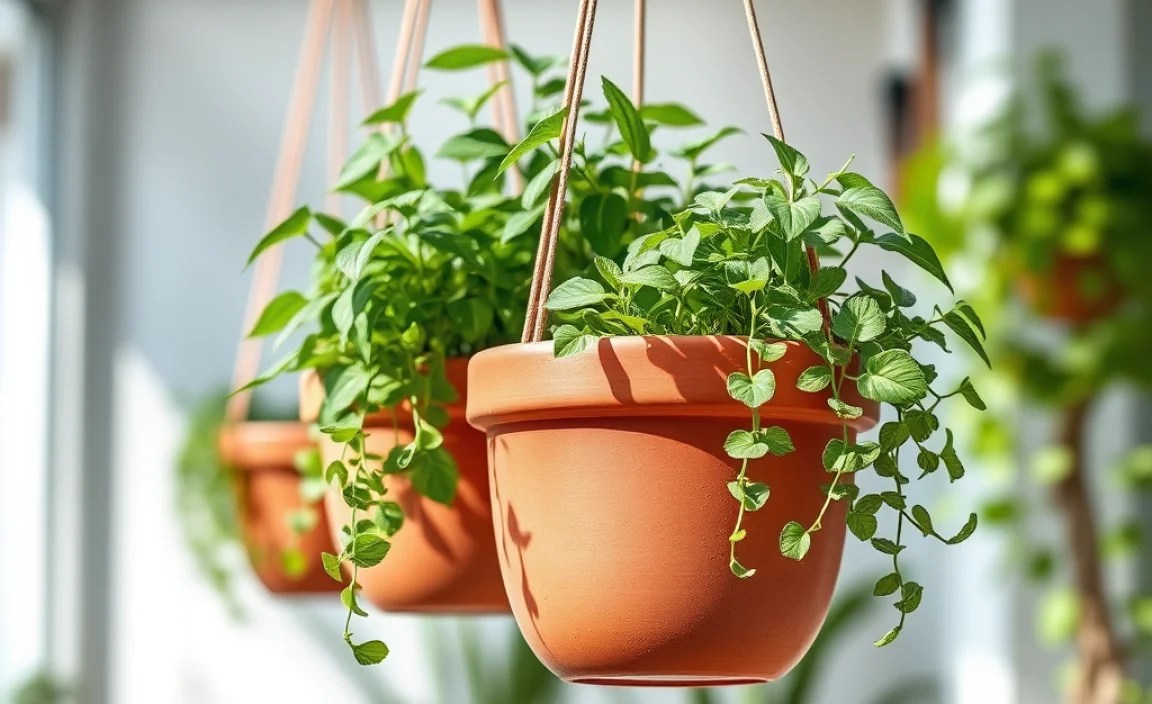
Imagine you are walking through a Tuscan garden. The air is warm, and the sun is shining. Terracotta pots are a classic choice for outdoor hanging pots for plants. They have a natural, earthy look that complements any garden. Terracotta is a type of clay that is baked at high temperatures. This makes it porous, which means it allows air and water to pass through. This can be good for plants because it prevents the soil from becoming waterlogged. However, it can also mean that the soil dries out quickly. To prevent this, water your terracotta pots regularly. You can also line them with plastic or coco coir to help retain moisture. With a little care, terracotta pots can add a touch of rustic charm to your hanging garden.
| Pot Type | Pros | Cons | Best Plants |
|---|---|---|---|
| Plastic | Lightweight, durable, affordable | Can look less elegant | Petunias, geraniums |
| Metal | Elegant, durable | Can get hot in sun, more expensive | Ivy, verbena |
| Terracotta | Natural look, good drainage | Dries out quickly, can be heavy | Succulents, herbs |
| Self-Watering | Easy to care for, retains moisture | Can be more expensive | Fuchsias, lobelia |
Fun Fact or Stat: Terracotta pots have been used for thousands of years, dating back to ancient civilizations!

Hanging Hardware for Outdoor Plants
Hanging hardware is what keeps your outdoor hanging pots for plants safely in the air. It’s important to choose hardware that is strong and durable. You don’t want your pots to fall down! There are many different types of hanging hardware available. Some common options include hooks, chains, and brackets. Hooks are easy to install and can be used to hang pots from ceilings or beams. Chains allow you to adjust the height of your hanging pots. Brackets are mounted to walls or fences and provide a stable base for your pots. When choosing hanging hardware, consider the weight of your pots. Make sure the hardware is rated to hold the weight of the pot, soil, and plant. Safety is always the top priority!
- Hooks are easy to install and versatile.
- Chains allow you to adjust the height of the pots.
- Brackets provide a stable base for wall mounting.
- Check the weight rating of the hardware.
- Use strong, durable materials like steel.
- Install hardware securely to prevent accidents.
Think about the location where you will be hanging your pots. If you are hanging them from a wooden beam, you can use screw-in hooks. If you are hanging them from a concrete ceiling, you will need to use concrete anchors. Always follow the manufacturer’s instructions when installing hanging hardware. It’s also a good idea to inspect your hanging hardware regularly. Look for signs of wear and tear, such as rust or cracks. Replace any damaged hardware immediately. By taking these precautions, you can ensure that your outdoor hanging pots for plants are safe and secure.
Choosing Strong Hooks and Chains
Imagine you are building a swing set for your little brother. You wouldn’t want to use flimsy ropes that could break, right? The same goes for hanging hardware! Choosing strong hooks and chains is essential for the safety of your outdoor hanging pots for plants. Look for hooks and chains that are made of durable materials like steel. Check the weight rating to make sure they can handle the weight of your pots. It’s always better to choose hardware that is rated for more weight than you need. This provides an extra margin of safety. When installing hooks, make sure they are screwed in securely. If you are using chains, check the links to make sure they are not damaged or weakened. With strong hooks and chains, you can rest assured that your hanging pots are safe and secure.
Using Brackets for Wall Mounting
Do you want to add some greenery to your walls or fences? Then consider using brackets for wall mounting your outdoor hanging pots for plants. Brackets provide a stable base for your pots and allow you to create a vertical garden. There are many different types of brackets available. Some brackets are designed to hold a single pot. Others can hold multiple pots. When choosing brackets, consider the weight of your pots. Make sure the brackets are strong enough to support the weight. Also, think about the style of your brackets. Do you want something simple and functional? Or something decorative and ornate? Once you have chosen your brackets, install them securely to the wall or fence. Use screws or bolts that are appropriate for the material you are mounting to. With brackets, you can transform your walls and fences into beautiful, living works of art.
Safety Tips for Hanging Pots
Safety is always the top priority when hanging outdoor hanging pots for plants. You don’t want anyone to get hurt! Here are some important safety tips to keep in mind. First, always check the weight rating of your hanging hardware. Make sure it can handle the weight of the pot, soil, and plant. Second, install your hanging hardware securely. Follow the manufacturer’s instructions carefully. Third, inspect your hanging hardware regularly. Look for signs of wear and tear, such as rust or cracks. Fourth, avoid hanging pots in high-traffic areas. You don’t want anyone to bump into them or knock them down. Fifth, water your plants carefully to avoid spills. With these safety tips, you can enjoy your hanging garden without any worries.
Fun Fact or Stat: A fully saturated hanging basket can weigh up to 50 pounds!
Watering and Maintenance Tips
Watering and maintaining outdoor hanging pots for plants is key. Hanging pots tend to dry out faster than pots on the ground. The wind and sun can quickly evaporate moisture. Check your plants regularly to see if they need water. Stick your finger into the soil. If it feels dry, it’s time to water. Water slowly and thoroughly. Make sure the water drains out of the bottom of the pot. Fertilize your plants regularly to keep them healthy and strong. Use a balanced fertilizer that is designed for flowering plants. Remove dead flowers and leaves to encourage new growth. Prune your plants as needed to keep them in shape. With a little care, your hanging garden will thrive.
- Check soil moisture regularly with your finger.
- Water slowly and thoroughly until water drains.
- Fertilize regularly with balanced fertilizer.
- Remove dead flowers and leaves.
- Prune plants to maintain shape and encourage growth.
- Protect plants from extreme weather conditions.
Consider using a watering can with a long spout. This will make it easier to reach your hanging pots. You can also use a hose with a spray nozzle. Be careful not to overwater your plants. Soggy soil can lead to root rot. During hot weather, you may need to water your plants every day. During cooler weather, you can water them less often. Pay attention to the needs of your plants. They will tell you when they are thirsty. By following these watering and maintenance tips, you can keep your outdoor hanging pots for plants looking their best.
How Often Should I Water?
Imagine you are running a marathon. You need to drink water regularly to stay hydrated. Plants are the same way! They need water to survive and thrive. But how often should you water your outdoor hanging pots for plants? The answer depends on several factors, such as the type of plant, the weather, and the type of pot. As a general rule, check the soil moisture every day. Stick your finger into the soil. If it feels dry, it’s time to water. During hot weather, you may need to water your plants every day. During cooler weather, you can water them less often. Overwatering can be just as harmful as underwatering. Soggy soil can lead to root rot. So, water carefully and pay attention to the needs of your plants.
Fertilizing for Healthy Growth
Do you want your plants to grow big and strong? Then you need to fertilize them regularly! Fertilizing is like giving your plants a vitamin boost. It provides them with the nutrients they need to thrive. There are many different types of fertilizers available. Some fertilizers are designed for flowering plants. Others are designed for leafy plants. Choose a fertilizer that is appropriate for your outdoor hanging pots for plants. Follow the instructions on the fertilizer package carefully. Over-fertilizing can damage your plants. Fertilize your plants every few weeks during the growing season. This will help them stay healthy and produce lots of beautiful flowers and leaves.
Dealing with Pests and Diseases
Uh oh, it looks like your plants have some unwanted visitors! Pests and diseases can sometimes attack outdoor hanging pots for plants. But don’t worry, there are things you can do to protect your plants. Inspect your plants regularly for signs of pests or diseases. Look for insects, spots, or discoloration on the leaves. If you find any problems, take action immediately. You can try spraying your plants with insecticidal soap or neem oil. These are natural and safe ways to control pests. You can also remove any infected leaves or stems. Make sure to dispose of them properly so the disease doesn’t spread. With a little vigilance, you can keep your plants healthy and pest-free.
Fun Fact or Stat: Hanging plants can dry out up to three times faster than plants in the ground!
Creative Ideas for Displaying Hanging Pots
There are so many creative ways to display outdoor hanging pots for plants! You can hang them from your porch, patio, or balcony. You can also hang them from trees or fences. Create a vertical garden by hanging pots at different heights. Use colorful pots to add pops of color to your outdoor space. Hang pots filled with herbs near your kitchen for easy access. Create a welcoming entrance by hanging pots on either side of your front door. Use hanging pots to define different areas of your yard. The possibilities are endless! Let your imagination run wild and create a hanging garden that is uniquely yours.
- Hang pots from your porch or patio.
- Hang pots from trees or fences.
- Create a vertical garden with varying heights.
- Use colorful pots to add pops of color.
- Hang herb-filled pots near your kitchen.
- Create a welcoming entrance with pots by the door.
Consider using different types of hanging hardware to create visual interest. Mix and match hooks, chains, and brackets. Add decorative touches to your hanging pots. Paint them, stencil them, or add mosaic tiles. Use different types of plants to create unique combinations. Combine flowering plants with trailing plants and foliage plants. Don’t be afraid to experiment and try new things. Your hanging garden is a reflection of your personal style. Have fun with it and create something that you love.
Creating a Vertical Garden
Imagine a wall covered in lush greenery and colorful flowers. That’s the beauty of a vertical garden! Creating a vertical garden with outdoor hanging pots for plants is a great way to add visual interest to your outdoor space. It’s also a great way to save space. You can use a variety of different methods to create a vertical garden. One popular method is to use a trellis or lattice. Hang your pots from the trellis to create a living wall. Another method is to use a pallet. Attach pots to the pallet to create a rustic vertical garden. You can also use a wall-mounted planter system. These systems come with pre-made pockets or shelves for your pots. No matter which method you choose, a vertical garden is sure to impress.
Adding Color and Texture with Pots
Do you want to make your outdoor space more visually appealing? Then consider adding color and texture with your outdoor hanging pots for plants. Choose pots in a variety of colors and materials. Use bright colors to add pops of excitement. Use muted colors to create a calming atmosphere. Mix and match different textures to add depth and interest. Combine smooth pots with rough pots. Combine shiny pots with matte pots. You can also add texture with the plants themselves. Choose plants with different leaf shapes and sizes. Combine flowering plants with foliage plants. By adding color and texture, you can create a hanging garden that is truly stunning.
Hanging Pots for Herbs and Vegetables
Do you love fresh herbs and vegetables? Then why not grow them in hanging pots? Hanging pots are a great way to grow herbs and vegetables in a small space. They also keep your plants away from pests and diseases. Some great herbs to grow in hanging pots include basil, mint, and thyme. Some great vegetables to grow in hanging pots include tomatoes, peppers, and strawberries. Make sure to choose a pot that is large enough for your plants to grow. Also, make sure the pot has good drainage. Water your plants regularly and fertilize them as needed. With a little care, you can enjoy fresh herbs and vegetables all season long from your outdoor hanging pots for plants.
Fun Fact or Stat: Hanging baskets can create a focal point, drawing the eye and adding visual interest to your outdoor space!
Summary
Outdoor hanging pots for plants are a fantastic way to beautify any space. They save ground space and add visual appeal. Choosing the right pots, plants, and hardware is crucial. Proper watering and maintenance will keep your plants healthy. There are many creative ways to display hanging pots. You can create vertical gardens or hang them from trees. Consider plastic, metal, or terracotta pots based on your style. Select plants that thrive in hanging conditions. Regular care ensures a vibrant and thriving hanging garden. These tips help create a stunning outdoor display.
Conclusion
Outdoor hanging pots for plants are a simple yet effective way to elevate your outdoor decor. They bring color, life, and beauty to any space. They are easy to set up and maintain. With the right choices, you can create a stunning display. Enjoy the beauty and joy that hanging plants bring. They add a touch of magic to your outdoor living.
Frequently Asked Questions
Question No 1: What are the best plants for outdoor hanging pots?
Answer: The best plants for outdoor hanging pots are those that trail or cascade. Petunias, verbena, and ivy geraniums are popular choices. They come in a variety of colors and bloom throughout the season. Consider your local climate and sunlight conditions when selecting plants. Succulents are a great option for drier climates. Trailing fuchsias and lobelia thrive in partial shade. Choose plants that complement each other in terms of color and texture. With the right plants, your hanging pots will be a stunning display of beauty.
Question No 2: How do I choose the right size pot for my hanging plants?
Answer: Choosing the right size pot is important for the health of your plants. A pot that is too small will restrict root growth. A pot that is too large can retain too much moisture. Start with a pot that is slightly larger than the plant’s root ball. As the plant grows, you may need to repot it into a larger container. Consider the mature size of the plant when selecting a pot. Trailing plants may need a wider pot to accommodate their growth. Make sure the pot has drainage holes to prevent waterlogging. With the right size pot, your plants will have plenty of room to thrive in your outdoor hanging pots for plants.
Question No 3: What type of soil should I use in my outdoor hanging pots?
Answer: The best type of soil for outdoor hanging pots is a lightweight potting mix. This type of mix is designed to retain moisture while providing good drainage. Avoid using garden soil, as it can be too heavy and compact. Look for a potting mix that contains peat moss, perlite, and vermiculite. These ingredients help to improve drainage and aeration. You can also add slow-release fertilizer to the mix to provide nutrients to your plants. When filling your pots, leave some space at the top to allow for watering. With the right soil, your plants will have a healthy foundation for growth in your outdoor hanging pots for plants.
Question No 4: How often should I water my outdoor hanging pots?
Answer: Hanging pots tend to dry out more quickly than pots on the ground. The frequency of watering will depend on the weather, the type of plant, and the type of pot. Check the soil moisture regularly by sticking your finger into the soil. If the soil feels dry, it’s time to water. Water thoroughly until water drains out of the bottom of the pot. During hot weather, you may need to water your plants every day. During cooler weather, you can water them less often. Avoid overwatering, as this can lead to root rot. With practice, you’ll learn to recognize when your plants need water.
Question No 5: How can I protect my hanging plants from pests and diseases?
Answer: To protect your hanging plants from pests and diseases, start by choosing healthy plants. Inspect your plants regularly for signs of problems. Look for insects, spots, or discoloration on the leaves. If you find any pests, try spraying your plants with insecticidal soap or neem oil. These are natural and safe ways to control pests. Remove any infected leaves or stems to prevent the spread of disease. Make sure your plants have good air circulation to prevent fungal problems. With a little vigilance, you can keep your plants healthy and pest-free in their outdoor hanging pots for plants.
Question No 6: How do I choose the right hanging hardware for my pots?
Answer: When choosing hanging hardware, consider the weight of your pots. Make sure the hardware is strong enough to support the weight of the pot, soil, and plant. Look for hooks, chains, or brackets that are made of durable materials like steel. Check the weight rating of the hardware before you buy it. Install the hardware securely to prevent accidents. If you are hanging pots from a ceiling, make sure to use a stud finder to locate a solid beam. With the right hanging hardware, you can ensure that your outdoor hanging pots for plants are safe and secure.
